
Legio X Equestris had been one of…
103 CE
Legio X Equestris had been one of the four legions used by Julius Caesar in 58 BCE, for his invasion of Gaul.
They had remained faithful to Caesar in the civil war against Pompey, being present in the battles of Pharsalus (49 BCE) and Munda (45 BCE).
In 45 BCE, Caesar had disbanded the legion, giving the veterans farmlands near Narbonne.
The legion had been reconstituted in 42 BCE and fought for Augustus (then Octavian), Lepidus and Mark Antony in the Battle of Philippi against the murderers of Caesar.
After this, they had followed Mark Antony in his campaign against Parthia and were defeated with him at Actium.
Augustus then took control of the legion and settled the veterans in Patras.
The legion rebelled and lost its cognomen Equestris as punishment.
Reinforcements had been added from other legions, and the Tenth was rebaptized Gemina.
The newly formed X Gemina had been relocated to Hispania Tarraconensis, where Augustus was preparing a campaign against the Cantabrians.
They stayed in Hispania for many years and their veterans were among the first inhabitants of modern Zaragoza.
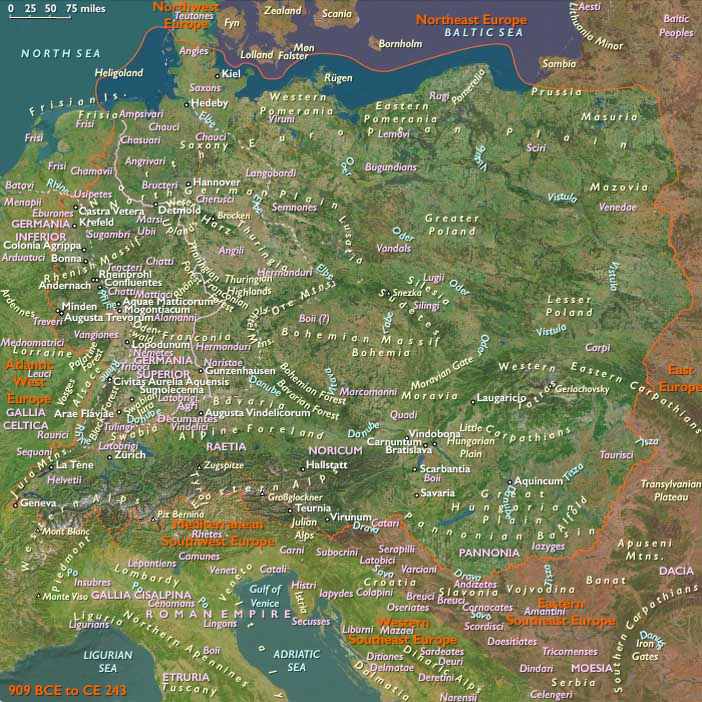
In 70, after the Batavian rebellion had been suppressed by Vespasian, X Gemina was sent to Batavia in Germania Inferior to police the lands and prevent new revolts.
From 71 to 103, the legion has been stationed at the base built by II Adiutrix at Oppidum Batavorum, the present day Dutch city of Nijmegen.
As part of the army of Germania Inferior, X Gemina had fought against the rebellion of the governor of Germania Superior, L. Antonius Saturninus, against Emperor Domitian.
For this reason, the Tenth — as well as the other legions of the army, I Minervia, VI Victrix, and XXII Primigenia — had received the title Pia Fidelis Domitiana, "faithful and loyal to Domitian", with the reference to the Emperor dropped at his death.
In 103, it is moved to Aquincum and later to …
Groups
Commodities
Subjects
Regions
Central Europe
View →Subregions
