The Brandenburg Gate, commissioned by Frederick William…
August 1791 CE
The Gate is designed by Carl Gotthard Langhans, the Court Superintendent of Buildings, and built between 1788 and 1791, replacing the earlier simple guardhouses that had flanked the original gate in the Customs Wall.
The gate consists of twelve Doric columns, six to each side, forming five passageways.
Citizens originally are allowed to use only the outermost two on each side.
Atop the gate is a Quadriga, a chariot drawn by four horses, sculpted by Johann Gottfried Schadow.
The new gate is originally named the Peace Gate (German: Friedenstor) and the goddess is Eirene, the goddess of peace.
The gate's design is based upon the Propylaea, the gateway to the Acropolis in Athens, Greece, and is consistent with Berlin's history of architectural classicism (first, Baroque, and then neo-Palladian).
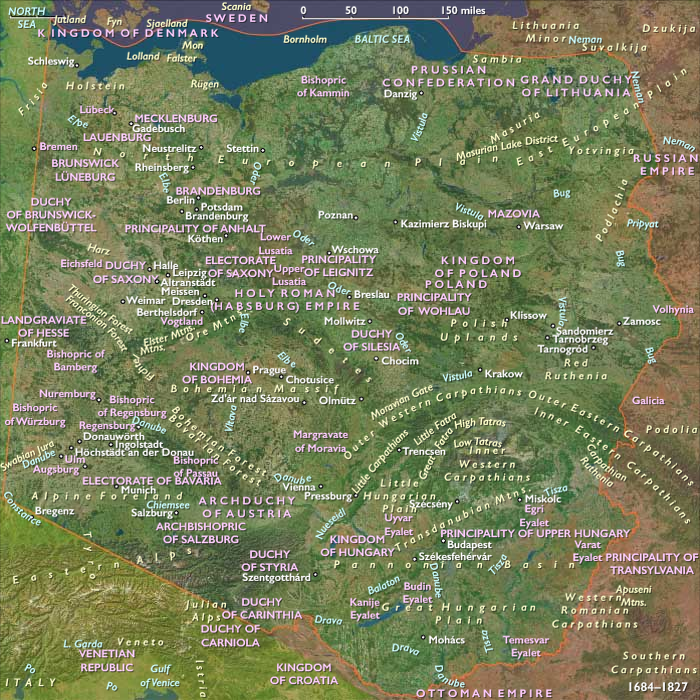
In the time of Frederick William I (1688), shortly after the Thirty Years' War, Berlin had been a small walled city within a star fort with several named gates: Spandauer Tor, St. Georgen Tor, Stralower Tor, Cöpenicker Tor, Neues Tor, and Leipziger Tor.
Relative peace, a policy of religious tolerance, and status as capital of the Kingdom of Prussia have facilitated the growth of the city.
Locations
Groups
Regions
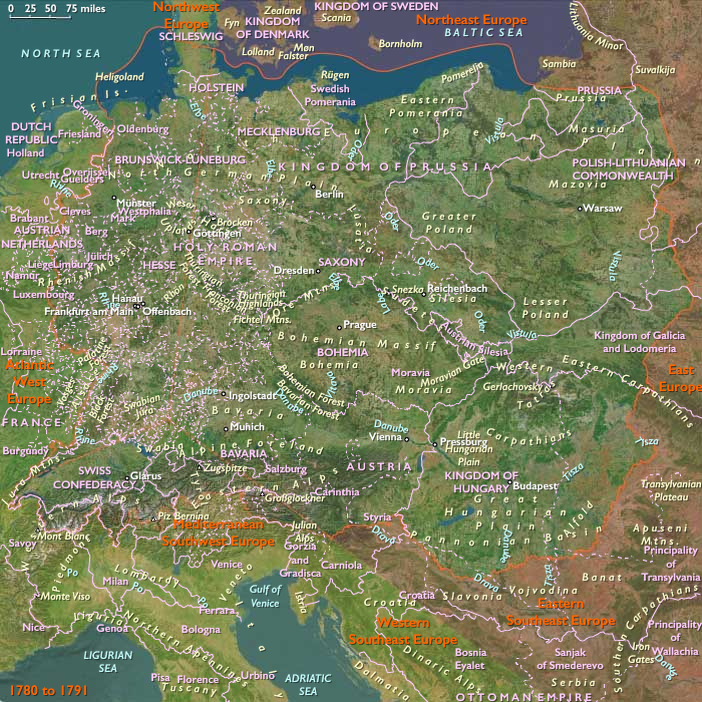
Central Europe
View →Subregions