
Maritime East Asia (820 – 963 CE): …
Years: 820 - 963
Maritime East Asia (820 – 963 CE): Tang Twilight, Silla’s Last Century, Heian Flourishing, and Austronesian Taiwan
Geographic and Environmental Context
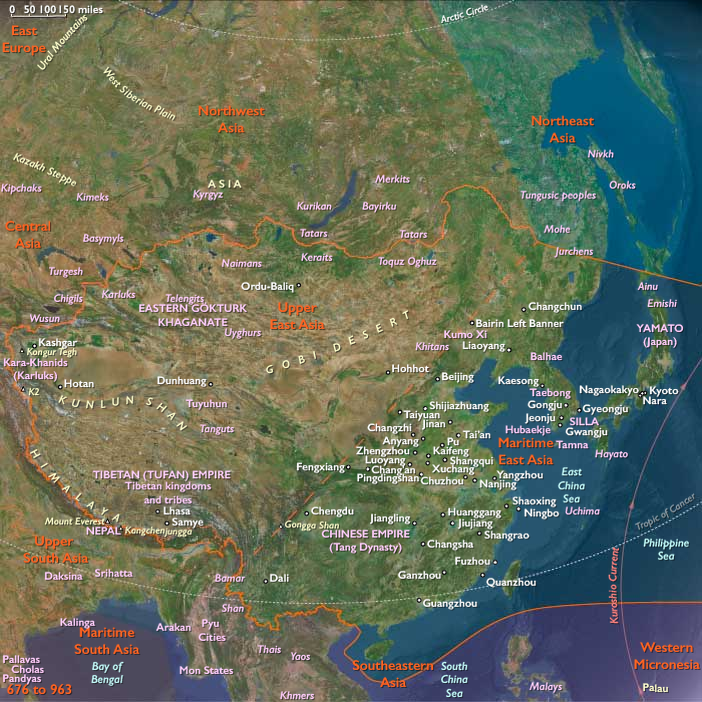
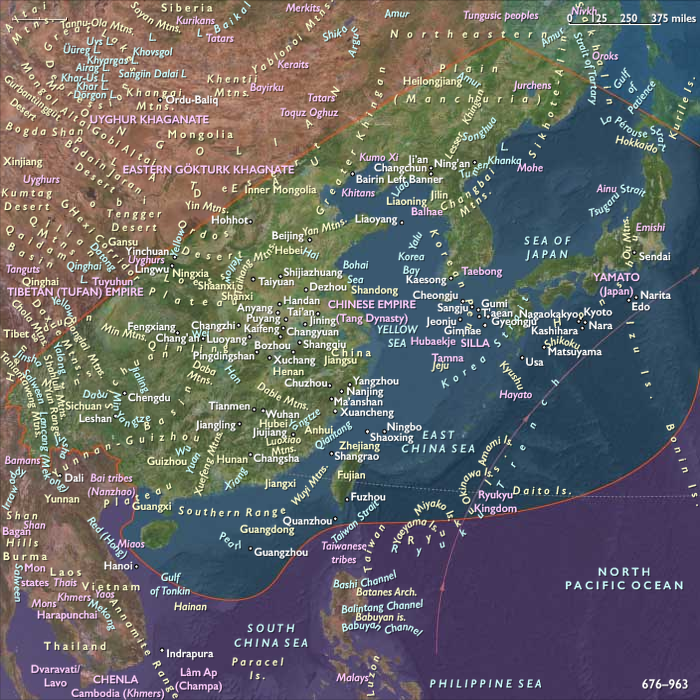
Maritime East Asia includes Japan, the Korean Peninsula, Taiwan, southern China (including Yunnan and Guangxi), northeastern China (including Liaoning, Jilin, and Manchuria/Heilongjiang), and the Sichuan Basin.
-
Southern China: rice-farming Yangtze basin, coastal provinces (Fujian, Guangdong, Zhejiang), and the upland frontiers of Yunnan and Guangxi, where hill peoples interacted with Tang garrisons and Southeast Asian polities.
-
Northeastern China: Yellow River heartland, Shandong peninsula, Liaoning plain, and Jilin–Manchuria, where Tang outposts and Khitan–Mohe tribes contested control.
-
Japan: Heian-period Kyoto as the political center.
-
Korea: Unified Silla controlled the peninsula, though weakening internally.
-
Taiwan: Austronesian villages linked coasts and rivers.
Societies and Political Developments
-
China (Tang, 618–907):
-
Southern prefectures (Fujian, Guangdong) prospered; rice expansion in Yangtze + Sichuan Basin created surpluses.
-
Yunnan and Guangxi uplands: Tang encountered frontier states like Nanzhao (738–902) in Yunnan, which resisted Tang authority and linked to Southeast Asia.
-
Northeast (Liaoning–Jilin–Manchuria): Khitan and Mohe tribes challenged Tang garrisons; frontier instability grew.
-
Collapse of Tang in 907 led to the Five Dynasties and Ten Kingdoms (north vs. south).
-
-
Korea: Unified Silla weakened, and by 918 Wang Geon founded Goryeo, replacing Silla in 935.
-
Japan: The Fujiwara clan dominated court politics; kana writing systems enabled new literature.
-
Taiwan: Austronesian-speaking peoples practiced swidden horticulture and coastal fishing, tied into Luzon and Fujian trade.
Long-Term Significance
By 963 CE, Maritime East Asia stood divided:
-
Tang China collapsed, but Yangtze/Sichuan surpluses and southern ports ensured prosperity.
-
Nanzhao in Yunnan exemplified rising frontier powers outside Tang control.
-
Khitan and Mohe pressure in Jilin–Manchuria foreshadowed the Liao dynasty.
-
Goryeo Korea emerged, Heian Japan flourished culturally, and Taiwan’s Austronesians remained part of South China Sea voyaging networks.

Lower East Asia (with civilization) ©2024-25 Electric Prism, Inc. All rights reserved.
Groups
- Austronesian peoples
- Confucianists
- Shinto
- Buddhism
- Taoism
- Mohe people
- Khitan people
- Chaná
- Buddhists, Zen or Chán
- Chinese Empire, Tang Dynasty
- Silla, Unified or Later
- Balhae (Bohai, or Pohai), Kingdom of
- Nanzhao, or Nanchao, Bai Kingdom of
- Japan, Heian Period
- Hubaekje
- Taebong
- Taebong
- Liao Dynasty, or Khitan Empire
- Wuyue, or Wu-Yüeh, Kingdom of
- Min
- Goryeo
- Tang, Southern
- Chinese Empire, Pei (Northern) Song Dynasty
Topics
Commodoties
- Fish and game
- Hides and feathers
- Domestic animals
- Grains and produce
- Textiles
- Ceramics
- Strategic metals
- Aroma compounds
- Spices
Subjects
Regions
Subregions
Related Events
Showing 10 events out of 58 total
Years: 820 - 963
Lower East Asia (with civilization) ©2024-25 Electric Prism, Inc. All rights reserved.
Groups
- Austronesian peoples
- Confucianists
- Shinto
- Buddhism
- Taoism
- Mohe people
- Khitan people
- Chaná
- Buddhists, Zen or Chán
- Chinese Empire, Tang Dynasty
- Silla, Unified or Later
- Balhae (Bohai, or Pohai), Kingdom of
- Nanzhao, or Nanchao, Bai Kingdom of
- Japan, Heian Period
- Hubaekje
- Taebong
- Taebong
- Liao Dynasty, or Khitan Empire
- Wuyue, or Wu-Yüeh, Kingdom of
- Min
- Goryeo
- Tang, Southern
- Chinese Empire, Pei (Northern) Song Dynasty
Topics
Commodoties
- Fish and game
- Hides and feathers
- Domestic animals
- Grains and produce
- Textiles
- Ceramics
- Strategic metals
- Aroma compounds
- Spices
Subjects
Regions
Subregions