
Magnentius' Rise to Power and the Overthrow …
Years: 350 - 350
January
Magnentius' Rise to Power and the Overthrow of Constans (350 CE)
Magnus Magnentius, a pagan of German descent, was born in Samarobriva (modern Amiens, Gaul) and rose to prominence as a distinguished soldier. By 350 CE, he commanded the Herculians and Iovians, two elite imperial guard units, giving him significant military influence (Zosimus, ii.58).
1. Growing Discontent with Constans
- Emperor Constans, ruler of the Western Roman Empire, had become increasingly unpopular among the legions.
- His arbitrary rule and favoritism alienated both the army and the Roman elite.
- By 350 CE, discontent in the ranks of the military had reached a breaking point.
2. The Army Proclaims Magnentius Emperor (January 18, 350 CE)
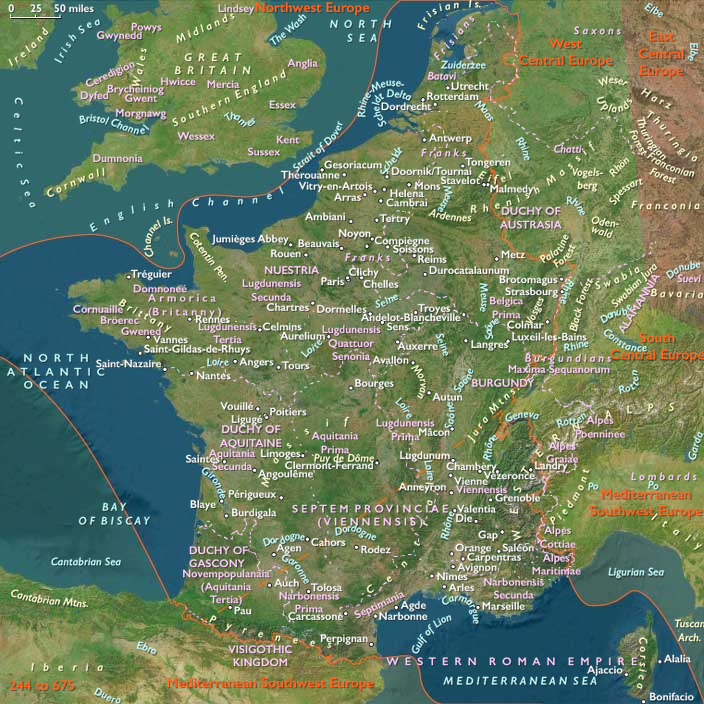
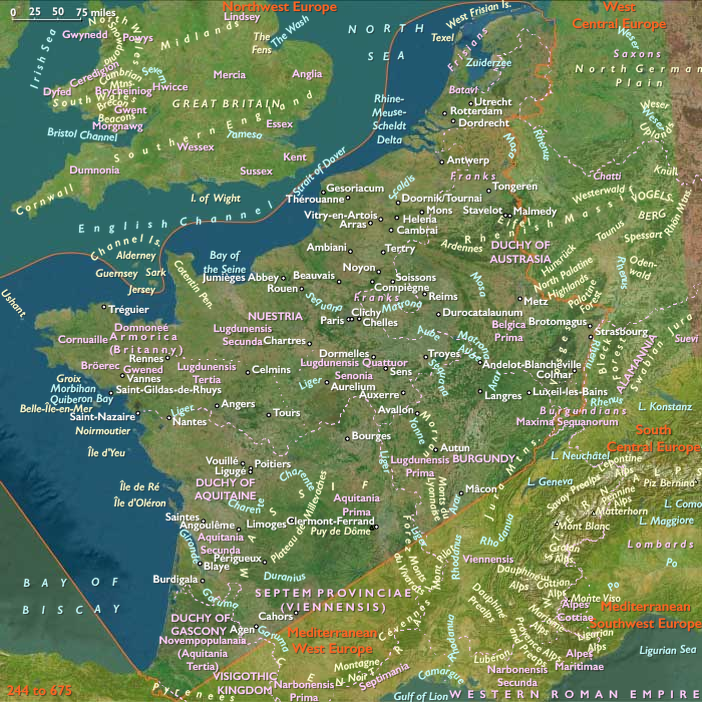
- On January 18, 350 CE, in Autun (modern France), the army elevated Magnentius to the rank of Augustus, openly declaring rebellion against Constans.
- Magnentius, a capable general and popular leader, quickly gained support from the military and key western provinces.
3. The Fall of Constans and the Beginning of Civil War
- Upon learning of Magnentius’ usurpation, Constans fled southward toward Spain, seeking refuge.
- He was caught and executed by Magnentius' forces in early 350 CE, leaving Magnentius in control of the Western Roman Empire.
- This triggered a civil war with Constantius II, who, as the last surviving son of Constantine the Great, vowed to avenge his brother’s death.
4. The Struggle for the Empire
- The civil war between Magnentius and Constantius II lasted from 350 to 353 CE, culminating in:
- The Battle of Mursa (351 CE)—one of the bloodiest battles in Roman history, where Magnentius was defeated.
- The final Roman campaign in Gaul (353 CE), where Magnentius, losing support, fled into exile and committed suicide.
5. Conclusion: A Failed Bid for Power
- Though Magnentius successfully overthrew Constans, he was ultimately unable to defeat Constantius II, leading to his downfall in 353 CE.
- His pagan beliefs and anti-Christian stance may have also contributed to his loss of elite and imperial support.
- The civil war significantly weakened the Western Roman military, paving the way for future instability and external invasions.
Magnentius' brief rule and ultimate defeat exemplified the power struggles and fragmentation that plagued the Roman Empire in the 4th century, foreshadowing further internal conflicts and the eventual fall of the Western Roman Empire.
Locations
People
Groups
- Polytheism (“paganism”)
- Gallia Lugdunensis (Roman province)
- Gaul, Diocese of
- Christianity, Nicene
- Roman Empire: Constantinian dynasty (Constantinople)
- Gaul, Praetorian prefecture of
Topics
- Roman Age Optimum
- Late Antiquity
- Migration Period
- Roman-Persian War of 337-63
- Roman Civil War of 350-51
Commodoties
Subjects
Regions
Subregions
Related Events
Showing 10 events out of 59805 total
Years: 350 - 350
January
Locations
People
Groups
- Polytheism (“paganism”)
- Gallia Lugdunensis (Roman province)
- Gaul, Diocese of
- Christianity, Nicene
- Roman Empire: Constantinian dynasty (Constantinople)
- Gaul, Praetorian prefecture of
Topics
- Roman Age Optimum
- Late Antiquity
- Migration Period
- Roman-Persian War of 337-63
- Roman Civil War of 350-51
Commodoties
Subjects
Regions
Subregions