Singapore's position as a major port and…
1888 CE to 1899 CE
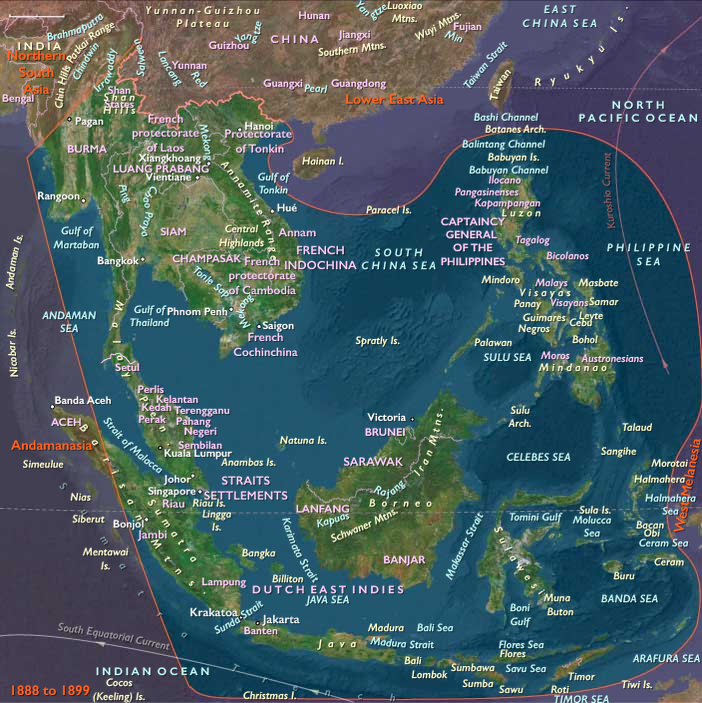
Singapore's position as a major port and industrial center is strengthened by a number of events beginning in the late nineteenth century.
When the Suez Canal opened in 1869, the Strait of Malacca had become the preferred route to East Asia.
Steamships had begun replacing sailing ships, necessitating a chain of coaling stations, including Singapore.
Most of the major European steamship companies had established offices in Singapore by the 1880s.
The expansion of colonialism in Southeast Asia and the opening of Siam (as Thailand is known at this time) to trade under King Chulalongkorn (Rama V) brings even more trade to Singapore.
The spread of British influence in Malaya increases the flow of rubber, tin, copra, and sugar through the island port, and Singapore moves into processing and light manufacturing, some of which is located on its offshore islands.
To serve the growing American canning industry a tin smelter is built in 1890 on Pulau Brani (pulau means island).
Rubber processing expands rapidly in response to the demands of the young automobile industry.
Oil storage facilities established on Pulau Bukum will make it the supply center for the region by 1902.
Locations
People
Groups
Commodities
Regions
Southeast Asia
View →Subregions