
Many other senators attempt different conspiracies and …
Years: 47 - 47
Many other senators attempt different conspiracies and are condemned.
Claudius' son-in-law Pompeius Magnus is executed for his part in a conspiracy with his father Crassus Frugi.
Another plot involves the consulars Lusiius Saturninus, Cornelius Lupus, and Pompeius Pedo.
Suetonius states that a total of thirty-five senators and three hundred knights were executed for offenses during Claudius' reign, which could not have helped Senate-emperor relations.
In 47 CE, Claudius assumes the office of Censor with Lucius Vitellius, which had been allowed to lapse for some time.
He strikes the names of many senators and equites who no longer meet qualifications, but shows respect by allowing them to resign in advance.
At the same time, he seeks to admit eligible men from the provinces.
The Lyon Tablet preserves his speech on the admittance of Gallic senators, in which he addresses the Senate with reverence but also with criticism for their disdain of these men.
He also increases the number of Patricians by adding new families to the dwindling number of noble lines.
Here he follows the precedent of Lucius Junius Brutus and Julius Caesar.
Nevertheless, many in the Senate remain hostile to Claudius, and many plots are made on his life.
This hostility carries over into the historical accounts.
As a result, Claudius is forced to reduce the Senate's power for efficiency.
The administration of Ostia is turned over to an Imperial Procurator after construction of the port.
Administration of many of the empire's financial concerns is turned over to Imperial appointees and freedmen.
This leads to further resentment and suggestions that these same freedmen are ruling the Emperor.
According to Suetonius, Claudius was extraordinarily fond of games.
He is said to have risen with the crowd after gladiatorial matches and given unrestrained praise to the fighters.
Claudius also presides over many new and original events.
Soon after coming into power, Claudius had instituted games to be held in honor of his father on the latter's birthday.
Annual games were also held in honor of his accession, and took place at the Praetorian camp where Claudius had first been proclaimed Emperor.
Claudius performs the Secular games, marking the eight hunredth anniversary of the founding of Rome.
Augustus had performed the same games less than a century prior.
Augustus' excuse is that the interval for the games is one hundred and ten years, not one hundred, but his date actually does not qualify under either reasoning.
Claudius also presents naval battles to mark the attempted draining of the Fucine lake, as well as many other public games and shows.
Claudius also restores and adorns many of the venues around Rome.
The old wooden barriers of the Circus Maximus are replaced with ones made of gold-ornamented marble.
A new section of the Circus is designated for seating the senators, who previously had sat among the general public.
Claudius rebuilds Pompey's Theater after it had been destroyed by fire, throwing special fights at the re-dedication, which he observes from a special platform in the orchestra box.
Locations
People
Groups
Topics
Commodoties
Subjects
- Commerce
- Watercraft
- Environment
- Labor and Service
- Decorative arts
- Conflict
- Mayhem
- Games and Sports
- Faith
- Government
- Technology
Regions
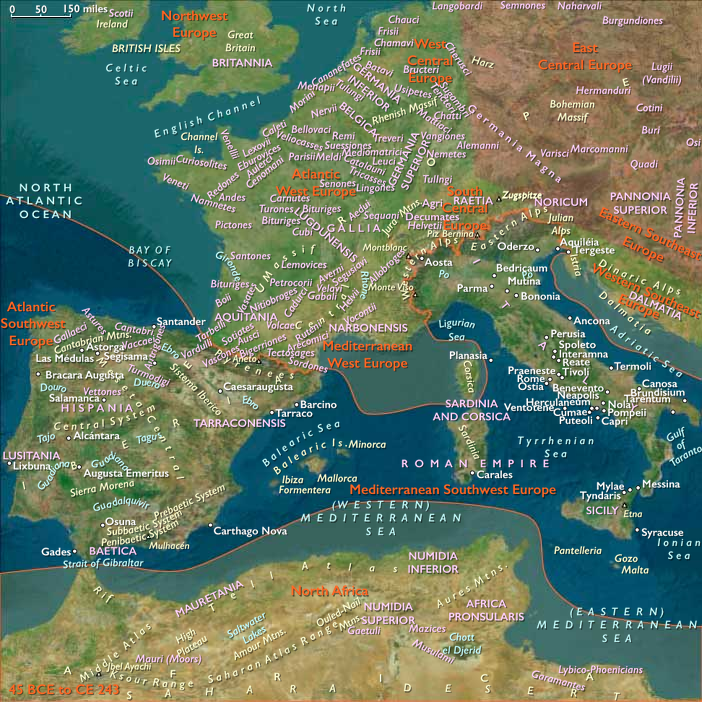
Subregions
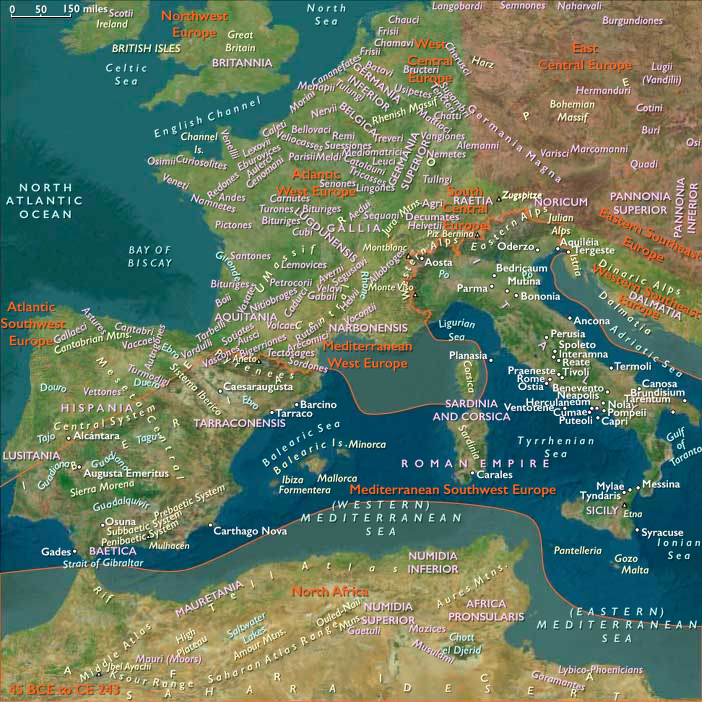
Related Events
Showing 10 events out of 61785 total
Years: 47 - 47
Locations
People
Groups
Topics
Commodoties
Subjects
- Commerce
- Watercraft
- Environment
- Labor and Service
- Decorative arts
- Conflict
- Mayhem
- Games and Sports
- Faith
- Government
- Technology
Regions
Subregions