
Maritime East Africa (1900–1911 CE): Colonial Consolidation,…
1900 CE to 1911 CE
Maritime East Africa (1900–1911 CE): Colonial Consolidation, Resistance Movements, and Strategic Infrastructure
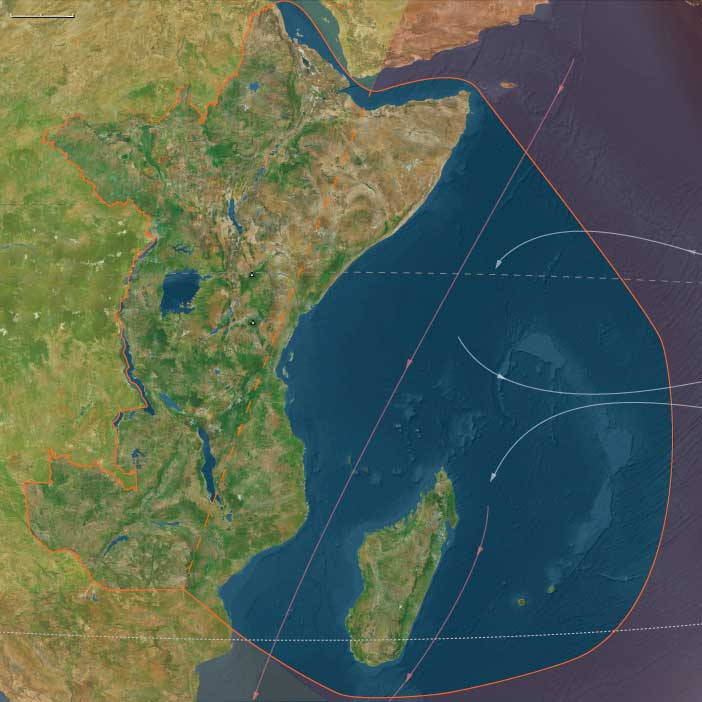
From 1900 to 1911 CE, Maritime East Africa—including the Swahili Coast, Comoros, Madagascar, Mauritius, Seychelles, and Somali coastal territories—experiences intensified colonial consolidation, resilient indigenous resistance, significant infrastructural developments, and intricate geopolitical maneuvering among European powers.
European Colonial Consolidation
In this era, colonial powers intensify their administrative and economic control throughout East Africa. The British consolidate their presence in Kenya, significantly expanding infrastructure, particularly through the ongoing construction and completion of the strategic Uganda Railway by 1901, which facilitates the migration of European settlers into the fertile highlands. The railway's completion profoundly reshapes regional economic patterns and accelerates the integration of Kenya into the British colonial economy.
Germany strengthens its administration of German East Africa, constructing infrastructure and aggressively suppressing indigenous revolts. Despite earlier resistance, notably from the Hehe people, German control stabilizes through stringent military oversight and administrative restructuring, enforcing plantation economies focused on cotton and sisal.
Madagascar Under French Administration
In Madagascar, France deepens its colonial grip by solidifying administrative structures and expanding economic extraction. Resistance movements persist sporadically, but French dominance remains largely unchallenged during this period, facilitating an increased influx of settlers and economic exploitation of agricultural resources, particularly vanilla and other cash crops.
Somalia: Persistent Resistance and Division
The Somali Peninsula remains fragmented, divided among British, Italian, French, and Ethiopian control. Italian Somaliland sees increased settlement and economic exploitation, though the administration faces continual resistance from Somali clans. British Somaliland likewise witnesses internal tensions, despite stable administrative control aimed at securing Aden’s strategic naval route. French Somaliland (Djibouti) experiences steady colonial governance with a focus on port and railway infrastructure. Ethiopia's grip on the Ogaden solidifies despite persistent Somali opposition.
Portuguese Mozambique: Struggles for Stability
Portuguese authority in Mozambique remains focused on coastal and strategic inland areas, notably the expansion of the port city of Beira and railway infrastructure designed to facilitate trade with British-controlled Rhodesia. Yet Portugal struggles with local rebellions and the maintenance of authority over expansive rural hinterlands, often resorting to forced labor systems to support its colonial economy.
Central and northern Mozambique’s forced-labor plantations and mines become critical to Portugal’s colonial economy, with the city of Beira emerging as a vital gateway port, connecting landlocked territories like Malawi and Zimbabwe (Southern Rhodesia) with global markets.
Malawi
Southern Malawi (Nyasaland) sees considerable growth in plantation agriculture, particularly tobacco and tea, around Blantyre, fueled by increasing British colonial investment and infrastructure expansion.
Comoros and Seychelles: Colonial Integration
France strengthens its administration of the Comoros Islands, moving closer to formal annexation and integrating them more thoroughly into the colonial economic system. Similarly, the British administration in the Seychelles focuses on integrating the islands economically into broader colonial networks, promoting copra, cinnamon, and vanilla exports while addressing limited infrastructure improvements.
Economic Expansion and Social Impact
Economic transformations profoundly impact local societies across Maritime East Africa. The Mauritian sugar industry sees continued expansion, becoming deeply integrated into British economic networks, despite increasing international competition and fluctuating sugar prices. Indigenous populations across the region experience significant disruptions due to land expropriations, forced labor systems, and economic exploitation, prompting ongoing local resistance and adaptations.
Cultural Resilience Amid Colonial Pressures
Despite substantial colonial influence, indigenous cultural identities, languages, and traditions persist across Maritime East Africa. The Swahili Coast, in particular, maintains a vibrant cultural identity, adapting to external pressures yet retaining its distinctive social structures, religious traditions, and trade practices.
Legacy of the Era
Between 1900 and 1911 CE, Maritime East Africa is marked by intensified colonial rule, infrastructural transformations, and ongoing indigenous resistance. These developments shape the socio-economic and geopolitical landscapes profoundly, setting critical precedents for the region’s subsequent historical trajectories.
Groups
Commodities
Regions
East Africa
View →Subregions
