
Maritime East Africa (1936–1947 CE): Colonial Realignment,…
1936 CE to 1947 CE
Maritime East Africa (1936–1947 CE): Colonial Realignment, World War II, and Emerging Independence Movements
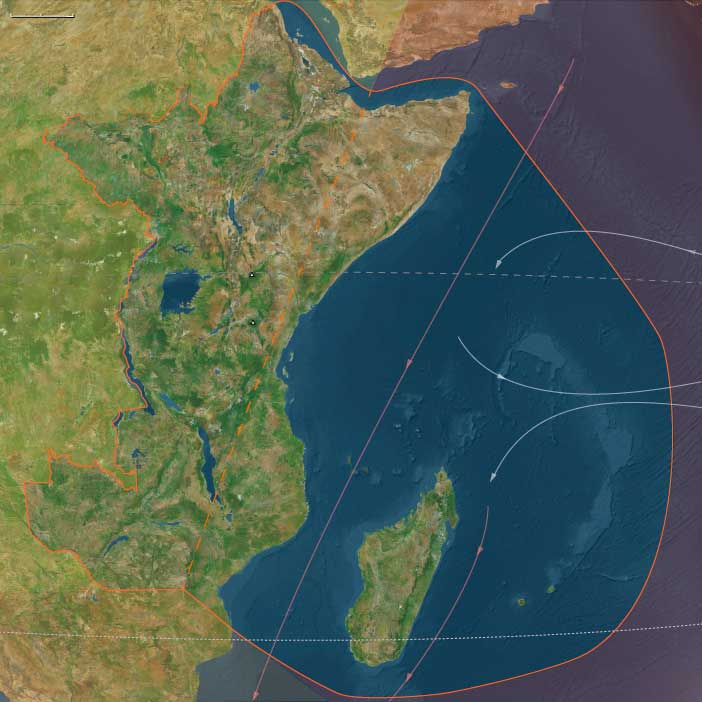
Between 1936 and 1947 CE, Maritime East Africa—including the Swahili Coast, Comoros, Madagascar, Mauritius, Seychelles, and Somali coastal territories—experiences significant geopolitical shifts, intensified wartime economic demands, increased infrastructural development, and accelerated nationalist mobilization stemming from the impacts of World War II and its aftermath.
World War II and Colonial Realignment
World War II profoundly reshapes Maritime East Africa. British-controlled territories, notably Kenya and Tanganyika, become strategically important to Allied operations. British authorities intensify resource extraction, significantly expanding the production of essential war commodities such as sisal, rubber, and food crops. Ports like Mombasa and Dar es Salaam witness increased militarization, becoming vital logistics hubs supporting Allied forces in North Africa and the Indian Ocean.
Similarly, Madagascar faces a dramatic wartime occupation by British forces in 1942 (Operation Ironclad) to preclude potential Japanese access, reflecting the strategic importance of the region. Though returned to French control post-war, the occupation raises Malagasy expectations for post-war political reform.
Economic Impact and Labor Mobilization
Colonial economies in Maritime East Africa experience heightened demands due to wartime production. In Mauritius, sugar production surges to meet global shortages, while workers face deteriorating conditions, spurring increased labor unrest. Labor strikes and protests become more frequent, leading to early organization and activism advocating better wages and working conditions.
In Mozambique, Portuguese authorities continue exploiting forced labor for plantations and rail infrastructure essential for wartime logistics. The intensified economic hardship drives early organized resistance movements, heightening the colonial regime’s challenges in maintaining control.
In central Mozambique, forced labor conditions worsen under Portuguese rule, though economic activities around Beira’s port expand due to increased wartime demands, reinforcing Mozambique’s strategic importance as a regional transport corridor.
During the Second World War, Malawi’s economy, centralized in Blantyre, contributes significantly to Britain’s wartime efforts, particularly in supplying agricultural goods.
Nationalist Mobilization and Anti-Colonial Activism
Wartime conditions accelerate nationalist movements across Maritime East Africa. In Kenya, grievances over intensified British control and resource extraction lay the groundwork for future resistance movements. Kenyan nationalists such as Jomo Kenyatta and others begin advocating more explicitly for independence.
In Tanganyika, increased demands for colonial manpower and resources stimulate the growth of early nationalist groups. Leaders like Julius Nyerere emerge during this period, actively challenging colonial policies and fostering political awareness among the local population.
Political Developments in Madagascar and Comoros
Madagascar witnesses increased nationalist activism following the wartime British occupation. The political atmosphere becomes increasingly charged, culminating in the 1947 Malagasy Uprising. This massive nationalist revolt against French colonial rule results in severe repression by French forces, but fundamentally reshapes Madagascar's political consciousness, fueling demands for autonomy and independence.
In the Comoros, discontent continues to build under French colonial administration, with emerging local elites and intellectuals increasingly questioning colonial economic practices and advocating political reform. This era establishes a foundation for the more pronounced anti-colonial movements that follow.
Somali Territories: Diverging Colonial Policies
Colonial rule in the Somali coastal regions remains fragmented, with divergent British and Italian administrative policies. Italian Somaliland experiences intensified resource exploitation and forced labor policies to meet wartime economic needs. Post-war, Italy loses control, and the region briefly comes under British Military Administration, fueling aspirations for unified Somali nationhood.
British Somaliland, though less intensely exploited economically, becomes increasingly politicized as Somali nationalism gains momentum. Somali political consciousness heightens, and calls for independence and reunification of the Somali territories become increasingly explicit.
Seychelles and Wartime Isolation
The Seychelles face severe wartime isolation, heavily reliant on trade routes disrupted by conflict. Economic hardship intensifies, exacerbating poverty and dissatisfaction among islanders. Limited infrastructural developments focus predominantly on military and strategic installations, further underscoring local economic stagnation.
Legacy of the Era
The period from 1936 to 1947 CE significantly reshapes Maritime East Africa through wartime economic pressures, intensified colonial exploitation, strategic militarization, and heightened nationalist consciousness. These transformations lay a critical foundation for post-war anti-colonial movements, significantly accelerating the region’s trajectory toward independence and setting the stage for profound socio-political shifts in subsequent decades.
Groups
Regions
East Africa
View →Subregions
