Event
Maritime East Africa (676–819 CE): Early Medieval…
Maritime East Africa (676–819 CE): Early Medieval — The Afro–Austronesian Maritime Frontier
Geographic and Environmental Context
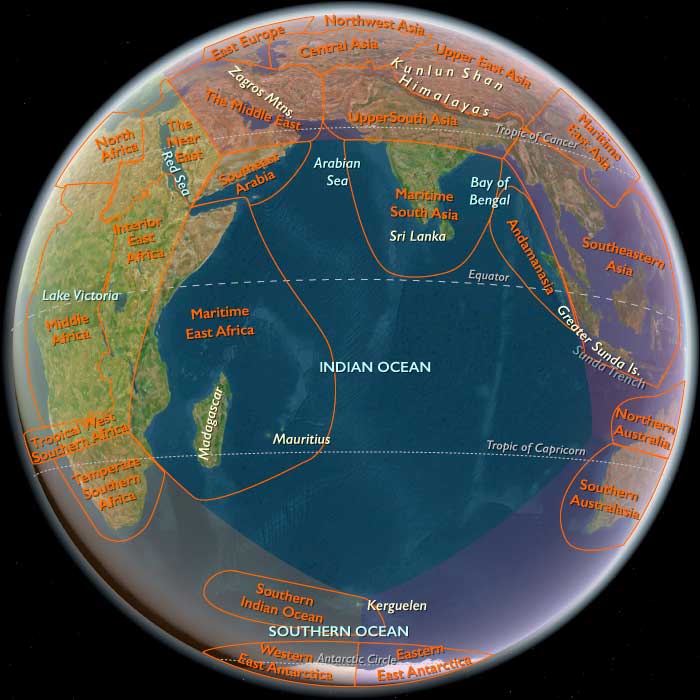
Maritime East Africa occupied one of the world's richest monsoon coastlines. Mangrove estuaries, coral lagoons, tidal creeks, river deltas, coconut groves, tropical forests, and productive agricultural landscapes formed a continuous environmental corridor linking eastern Africa with Madagascar and the western Indian Ocean.
Societies and Political Developments
Coastal chiefdoms became increasingly stable throughout the mainland littoral while Madagascar developed enduring Afro–Austronesian communities whose agricultural systems, maritime technologies, and environmental adaptations reflected centuries of cultural interaction. Political authority increasingly centered upon managing productive estuaries, canoe exchange, and coastal commerce rather than territorial conquest.
Economy and Exchange
Regular maritime exchange connected East Africa with Arabia, India, and the wider Indian Ocean. Rice, bananas, coconuts, sorghum, iron, beads, resins, timber, fish, salt, and marine products circulated through highly organized canoe and sewn-plank vessel networks linking coastal settlements, offshore islands, and inland river systems.
Technology and Material Culture
Hybrid African–Austronesian maritime traditions matured through sophisticated outrigger canoes, sewn-plank vessels, advanced ironworking, diversified agriculture, and increasingly standardized pottery traditions. Coastal landing places and canoe infrastructure became more permanent while remaining closely integrated with surrounding ecosystems.
Belief and Cultural Life
Ancestor veneration continued to dominate religious life as African and Austronesian traditions blended within shared coastal ceremonial landscapes. Canoe shrines, sacred groves, estuarine sanctuaries, and maritime ritual sites reinforced both local identity and long-distance exchange.
Environmental Adaptation and Resilience
Integrated fisheries, agroforestry, mixed tropical agriculture, mangrove management, livestock, and maritime exchange enabled remarkable resilience throughout the western Indian Ocean frontier. Monsoon navigation allowed communities to redistribute resources efficiently across great distances while maintaining productive local ecosystems.
Legacy of the Age
By 819 CE, Maritime East Africa had become a mature Afro–Austronesian maritime frontier whose estuaries, coral coasts, canoe networks, and blended agricultural systems formed the environmental and cultural foundations from which the Swahili city-states would emerge during the following centuries.
-
{# Image navigates to the detail page; the magnifying-glass chip is the only Fancybox lightbox trigger (kept a separate sibling — anchors can't nest). #}
 The Indian Ocean Lands
World
-
{# Image navigates to the detail page; the magnifying-glass chip is the only Fancybox lightbox trigger (kept a separate sibling — anchors can't nest). #}
 East Africa
Region
-
{# Image navigates to the detail page; the magnifying-glass chip is the only Fancybox lightbox trigger (kept a separate sibling — anchors can't nest). #}
 Maritime East Africa
Subregion