Mary, as a Roman Catholic, had immediately…
December 1569 CE
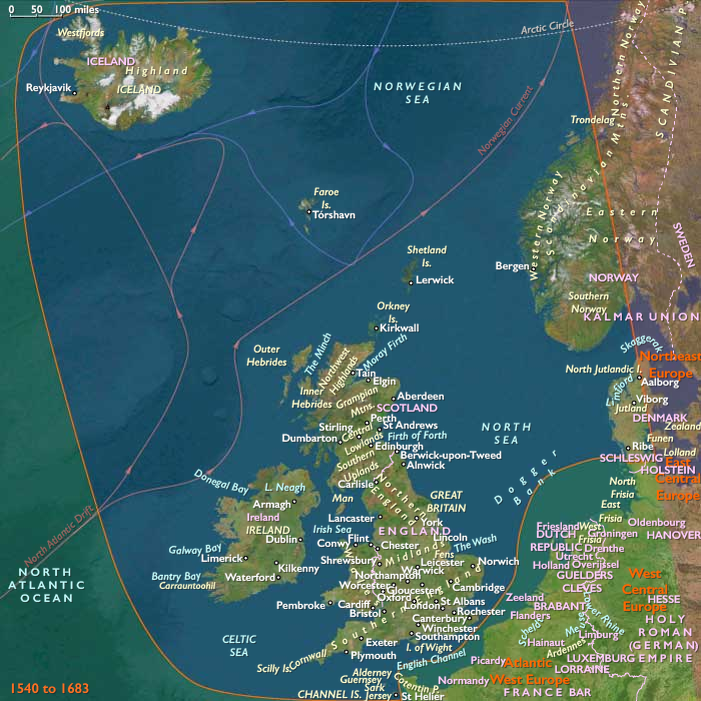
Mary, as a Roman Catholic, had immediately become the focus for a number of conspiracies by English Roman Catholics and foreign agents; the first such is the so-called Rising of the North, or Northern Rebellion, of 1569, led by two members of the great Northern nobility: Charles Neville, 6th Earl of Westmorland and Thomas Percy, 7th Earl of Northumberland.
They are instigated in part by Leonard Dacre, who is playing a double game.
As heir-male of George Dacre, 5th Baron Dacre of Gillesland, he hopes to betray the conspirators and obtain, as a reward, the lands held by his nieces, the coheirs of Lord Dacre.
Yorkshire’s Percy family had retained strong attachments to the Roman Catholic church after the Reformation: Northumberland’s father, Sir Thomas Percy, had been executed in 1537 for supporting the Catholic uprising known as the Pilgrimage of Grace.
The rebel Earls, expecting the support of Pope Pius V, occupy Durham and have Mass sung in the cathedral there by the old rites.
They march south to Bramham Moor, while Elizabeth struggles to raise forces sufficient to confront them.
However, hearing of a large force being raised by Walter Devereux, Viscount Hereford, serving as as “high marshal in the field,” the rebels abandon plans to besiege York, and capture Barnard Castle instead.
They proceed to Clifford Moor, but find little popular support.
Devereux marches out from York on December 13, 1569 with seven thousand men to their forty-six hundred, soon followed by twelve thousand under Lord Clinton.
The rebel Earls retreat northward before him and finally disperse their forces, ...
Images

Steven van der Meulen: Thomas Percy, Earl of Northumberland (1566) Oil on panel, 123 by 89 cm., 48½ by 35 in. Sold at Sotheby's, London, in November 2007
People
Groups
Topics
Commodities
Subjects
Regions
North Europe
View →Subregions