
The Foundation of the Abbaye aux Dames …
Years: 1066 - 1066
The Foundation of the Abbaye aux Dames in Caen (1066)
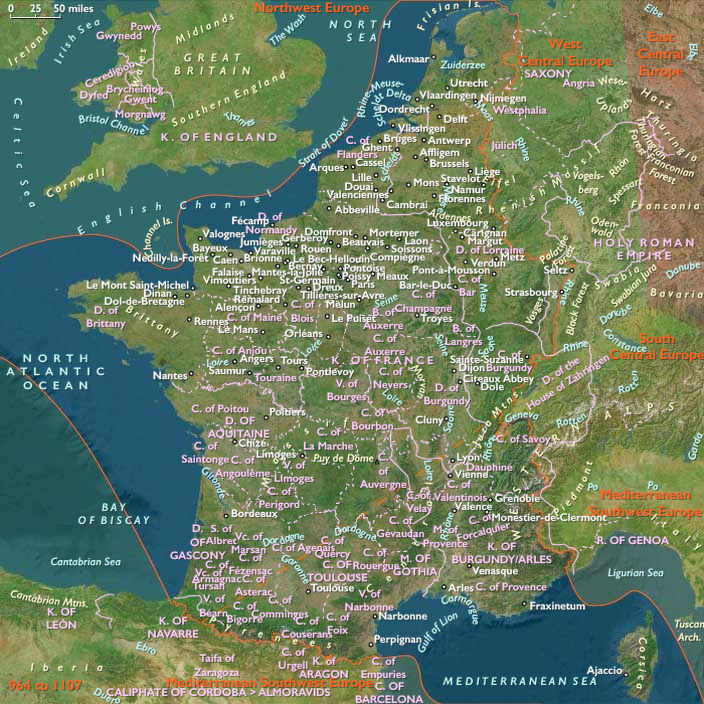
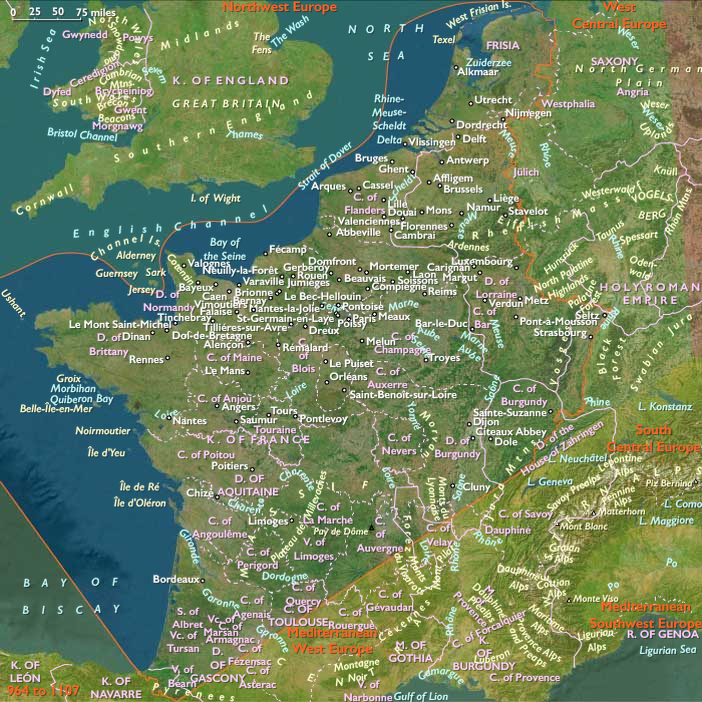
In 1066, Matilda of Flanders, the wife of Duke William of Normandy (later William the Conqueror), established the Abbaye aux Dames ("Women's Abbey") in Caen, the Norman capital. This abbey, dedicated to the Holy Trinity, became one of the most important religious institutions in Normandy, serving both spiritual and political functions.
Context: A Penance for William and Matilda’s Marriage
- William and Matilda’s marriage had initially been forbidden by Pope Leo IX in 1049 on the grounds of consanguinity (they were distant cousins).
- To secure papal approval, William and Matilda had agreed to perform penance, which led to the founding of two great monastic houses in Caen:
- Abbaye aux Hommes ("Men’s Abbey"), founded by William.
- Abbaye aux Dames ("Women’s Abbey"), founded by Matilda.
Architecture and Influence
- Built in the Norman Romanesque style, the abbey features:
- Massive stone construction, characteristic of Norman architecture.
- Round arches and a symmetrical layout, reflecting the evolving Romanesque tradition.
- A large nave and semicircular apse, designed to accommodate pilgrims and religious ceremonies.
- The abbey was dedicated to the Holy Trinity, reinforcing its religious significance.
- Alongside the Abbaye aux Hommes, it stood as a symbol of Norman power and piety.
Legacy and Importance
- Matilda of Flanders was buried in the Abbaye aux Dames in 1083, making it a dynastic resting place for the Norman ruling family.
- The abbey became a major center of female monasticism in Normandy, housing Benedictine nuns and playing a role in educating noblewomen.
- The Norman Conquest of England in 1066 increased the abbey’s prestige, as it was closely linked to William’s dynasty and his rise to kingship.
- The twin abbeys in Caen—both Abbaye aux Hommes and Abbaye aux Dames—stood as lasting monuments to the Norman ducal family, reinforcing their ties to the Church and their political legitimacy.
The foundation of the Abbaye aux Dames in 1066 was not only a religious act of devotion by Matilda, but also a crucial part of Norman statecraft, solidifying the dynasty’s spiritual and political legacy in Normandy and beyond.
Locations
People
Groups
Topics
Subjects
Regions
Subregions
Related Events
Showing 10 events out of 50908 total
Years: 1066 - 1066
Locations
People
Groups
Topics
Subjects
Regions
Subregions