
Mediterranean Southwest Europe (1084–1095 CE): Turmoil in …
Years: 1084 - 1095
Mediterranean Southwest Europe (1084–1095 CE): Turmoil in Rome, Toledo’s Cultural Synthesis, and Classical Transmission
The era 1084–1095 CE in Mediterranean Southwest Europe is marked by significant upheaval and destruction in Rome, the cultural and economic flourishing of Toledo under Christian rule, and important advances in scholarly transmission to Western Europe.
Turmoil in Rome: German and Norman Assaults
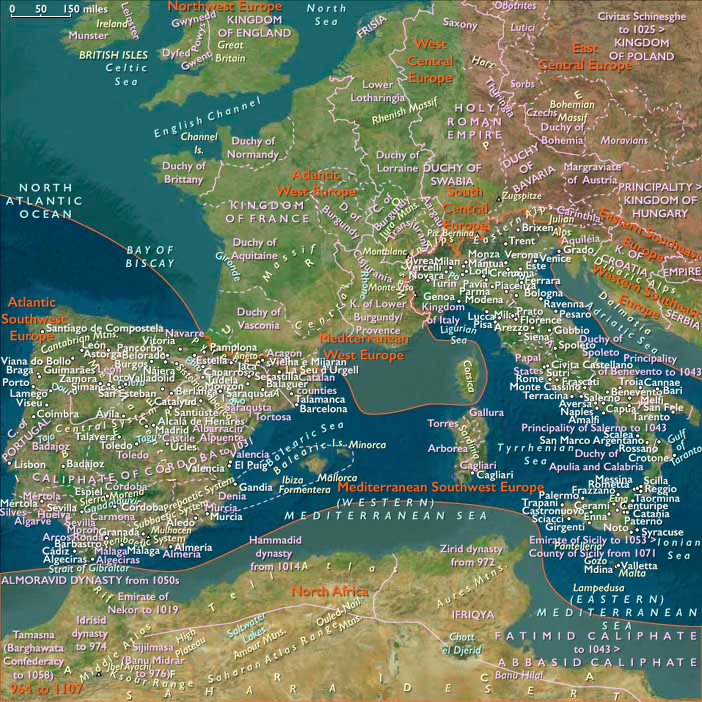
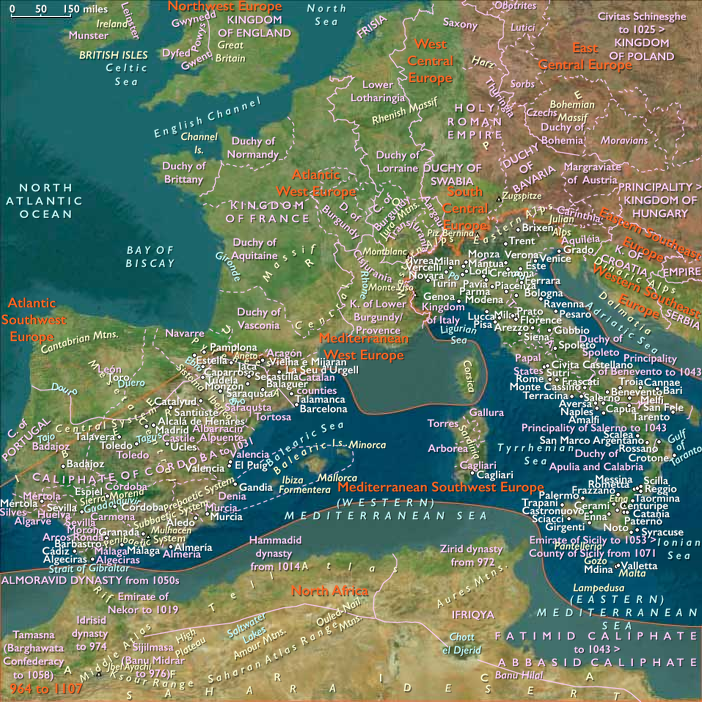
Rome faces devastating turmoil during this era, enduring repeated invasions and destruction. The city is invaded by German forces and subsequently sacked by the Normans, resulting in extensive damage and widespread fires. These invasions severely undermine Rome's stability and further weaken the papacy's temporal authority, exacerbating political tensions in central Italy and underscoring the fragility of papal power.
Toledo’s Cultural and Economic Flourishing under Christian Rule
In Iberia, Toledo, once a prominent Muslim emirate, continues to flourish culturally and economically under Christian rule following its reconquest in 1085 CE by Alfonso VI of Castile and León. The city becomes a vibrant hub of multicultural integration, blending Arab, Jewish, and Christian traditions into a uniquely dynamic social fabric. Toledo’s significance grows as its economic prosperity persists, further enhancing its status as a vital cultural crossroads.
Toledo as a Gateway for Classical Learning
Toledo emerges prominently as a crucial center for translating classical Greek and Arabic works into Latin, becoming instrumental in transmitting ancient knowledge to Western Europe. Scholars, including Mozarabic Christians, Jews, and visiting European intellectuals, collaborate in translating essential texts in philosophy, science, and medicine. This translation movement profoundly impacts European intellectual history, laying essential foundations for the Renaissance centuries later.
Norman Consolidation in Southern Italy and Sicily
Concurrently, the Normans further solidify their dominance in southern Italy and Sicily. Their aggressive territorial expansion continues to challenge and reshape existing political dynamics, with Sicily emerging as a significant Norman stronghold and cultural bridge between Europe, North Africa, and the Eastern Mediterranean.
Continued Scholarly and Cultural Vitality
Despite regional turmoil, Mediterranean Southwest Europe maintains robust cultural and intellectual exchanges, with Jewish and Mozarab communities continuing as vital agents of intercultural scholarship and commerce. This cultural vitality ensures ongoing regional stability and prosperity amid broader political uncertainties.
Legacy of the Era
The era 1084–1095 CE significantly influences Mediterranean Southwest Europe through Rome’s destructive upheaval, Toledo’s intellectual and cultural synthesis, and the critical role in transmitting classical learning. Collectively, these developments foreshadow broader transformations in the European medieval intellectual landscape, setting the stage for the profound cultural and scholarly revival of subsequent centuries.
People
Groups
- Berber people (also called Amazigh people or Imazighen, "free men", singular Amazigh)
- Jews
- Germans
- Moors
- Islam
- Al-Garb Al-Andalus
- al-Andalus (Andalusia), Muslim-ruled
- Mozarabs
- Papal States (Republic of St. Peter)
- León, Kingdom of
- Normans
- Holy Roman Empire
- Toledo, (Muslim statelet, or taifa, of)
- Sevilla, (Abbadid) Muslim statelet, or taifa, of
- Castile, Kingdom of
- Christians, Roman Catholic
- Sicily, County of
- Castile, Kingdom of
Topics
Subjects
Regions
Subregions
Related Events
Showing 4 events out of 4 total
Years: 1084 - 1095
People
Groups
- Berber people (also called Amazigh people or Imazighen, "free men", singular Amazigh)
- Jews
- Germans
- Moors
- Islam
- Al-Garb Al-Andalus
- al-Andalus (Andalusia), Muslim-ruled
- Mozarabs
- Papal States (Republic of St. Peter)
- León, Kingdom of
- Normans
- Holy Roman Empire
- Toledo, (Muslim statelet, or taifa, of)
- Sevilla, (Abbadid) Muslim statelet, or taifa, of
- Castile, Kingdom of
- Christians, Roman Catholic
- Sicily, County of
- Castile, Kingdom of
Topics
Subjects
Regions
Subregions