
Mediterranean Southwest Europe (1300–1311 CE): Giotto’s Artistic …
Years: 1300 - 1311
Mediterranean Southwest Europe (1300–1311 CE): Giotto’s Artistic Revolution and Humanist Innovation
The era 1300–1311 CE in Mediterranean Southwest Europe is marked by revolutionary developments in art, primarily through the groundbreaking work of Florentine artist Giotto di Bondone, signaling a decisive shift towards realism and psychological depth in Western painting.
Giotto and the Revolution in Painting
In this era, Florentine painter Giotto di Bondone fundamentally transforms Western art by breaking decisively from the flat, stylized forms characteristic of Byzantine painting. Giotto introduces vivid realism, depicting human figures as solid, three-dimensional forms set within convincing spatial contexts, reminiscent of classical sculpture and mural painting.
The Arena Chapel Frescoes
Giotto’s masterpiece during this period is the extensive fresco cycle of the Arena Chapel in Padua, painted circa 1305. These frescoes illustrate a profound psychological sensitivity in portraying human facial expressions and body movements, capturing subtle emotional nuances and interactions. Through this innovative approach, Giotto restores narrative interest and spatial depth to mural painting, qualities long absent in medieval European art.
Cultural and Intellectual Impact
Giotto’s work signals a broader cultural shift toward naturalism and humanist ideals, influencing contemporary and subsequent artists profoundly. His innovations set foundational artistic precedents for the later Renaissance, fostering a new appreciation for human experience, emotional expression, and realistic representation in European visual culture.
Continued Economic and Maritime Strength
Mediterranean maritime republics, notably Venice and Genoa, continue to thrive economically, sustaining their commercial dominance and maritime rivalry. Prosperity supports continued artistic patronage, urban expansion, and intellectual exchanges, underpinning broader cultural and economic dynamism throughout the region.
Legacy of the Era
The era 1300–1311 CE significantly shapes Mediterranean Southwest Europe through Giotto’s groundbreaking artistic innovations, representing a turning point toward realism and humanism in European art. These developments establish a lasting legacy that profoundly influences European artistic, cultural, and intellectual traditions well into subsequent centuries.
People
Groups
- Genoa, (Most Serene) Republic of
- Christians, Roman Catholic
- Florence, Republic of
- Venice, (Most Serene) Republic of
Topics
Subjects
Regions
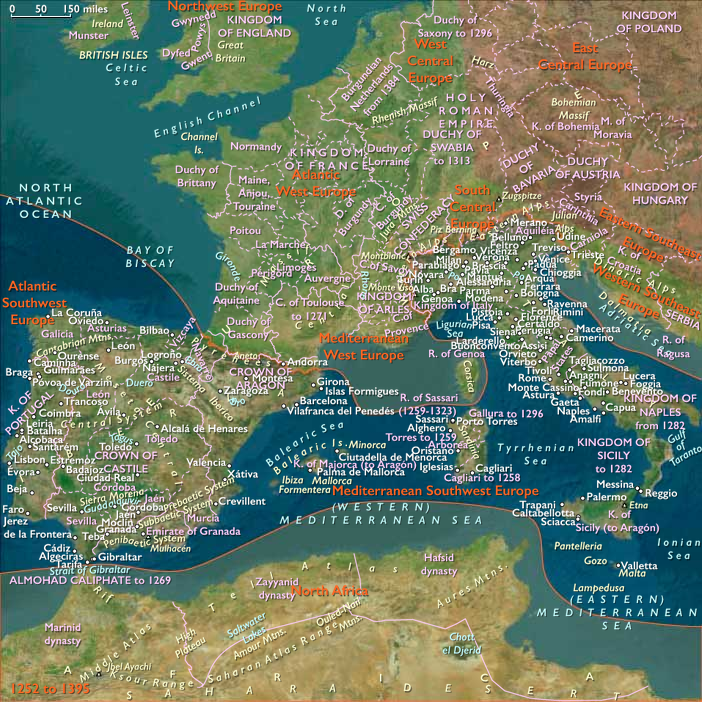
Subregions
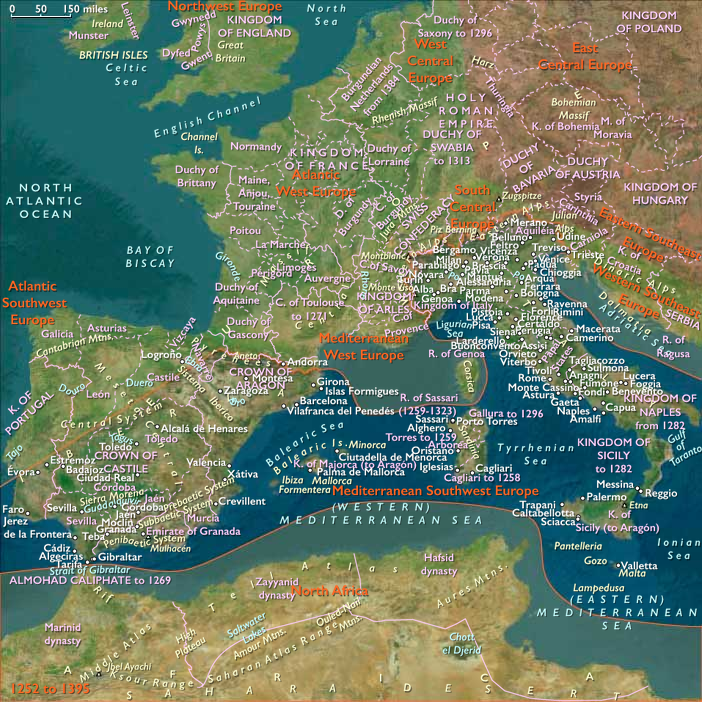
Years: 1300 - 1311
People
Groups
- Genoa, (Most Serene) Republic of
- Christians, Roman Catholic
- Florence, Republic of
- Venice, (Most Serene) Republic of
Topics
Subjects
Regions
Subregions