
Mediterranean Southwest Europe (184–195 CE): Commodus’s Reign …
Years: 184 - 195
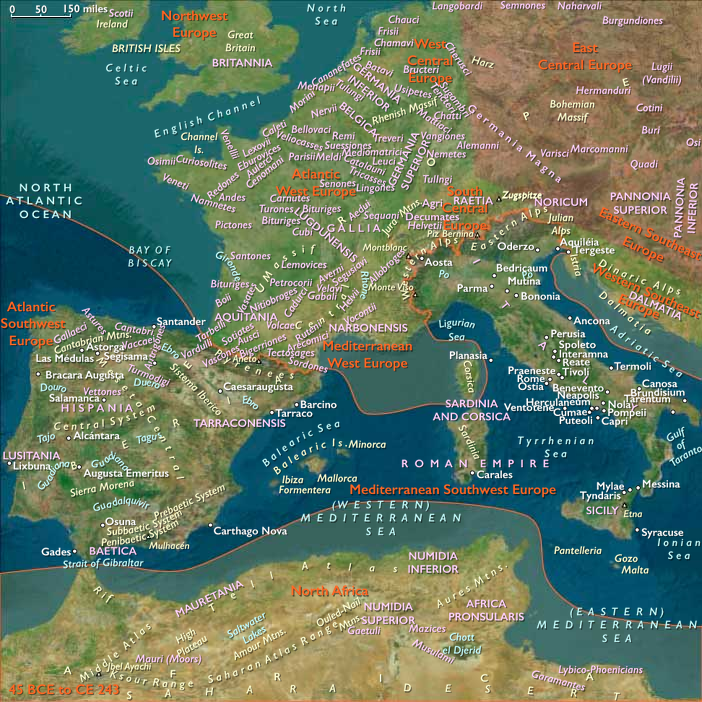
Mediterranean Southwest Europe (184–195 CE): Commodus’s Reign and Growing Imperial Instability
The era 184–195 CE in Mediterranean Southwest Europe marks a significant shift from the philosophical and stable rule of Marcus Aurelius to the troubled and controversial reign of his son, Commodus. This period is characterized by political instability, extravagant governance, and increasing tensions within the Roman Empire.
Ascension of Commodus and Departure from Stoicism
Commodus succeeds Marcus Aurelius in 180 CE, quickly demonstrating a stark departure from his father’s Stoic philosophy and prudent governance. His reign, beginning in his late teenage years, is marked by increasing extravagance, personal excesses, and an apparent disregard for traditional Roman virtues and senatorial authority.
Imperial Extravagance and Public Spectacles
Commodus becomes infamous for his extravagant lifestyle and obsession with gladiatorial combats. Participating personally in public spectacles, he stages elaborate gladiatorial games and wild beast hunts, aiming to bolster his popularity with the Roman masses but greatly alienating the political elite.
Political Instability and Conspiracies
Commodus’s governance fosters widespread political instability and dissatisfaction among senators and aristocrats. His reign is marked by numerous conspiracies and assassination attempts, reflecting deep-rooted discontent and weakening Rome's political cohesion.
Economic Strains and Administrative Challenges
Despite ongoing infrastructure projects and commercial activities, Commodus’s extravagant expenditures and erratic policies place increasing strain on the Roman economy. Economic stability is further undermined by administrative mismanagement and rampant corruption within the imperial bureaucracy.
Continued Cultural and Intellectual Activity
Amid political turbulence, cultural and intellectual activities persist. Artistic achievements, such as intricately carved sarcophagi and architectural developments, continue to reflect the sophistication of Roman culture. Philosophical and religious debates within early Christian communities also remain vibrant, despite Commodus’s neglect of intellectual pursuits.
Religious Developments and Christian Growth
Christian communities in Mediterranean Southwest Europe continue to expand and evolve, engaging in theological discussions and philosophical exchanges. Early Christian intellectuals actively participate in doctrinal debates, significantly shaping Christianity’s evolving identity within the Roman context.
End of Commodus’s Reign and Aftermath
The turbulent rule of Commodus ends with his assassination in 192 CE, plunging Rome into immediate political turmoil and briefly initiating a period of civil unrest. Commodus’s death ultimately highlights the vulnerability of imperial succession and the critical importance of stable governance.
Legacy of the Era
The era 184–195 CE starkly contrasts Marcus Aurelius’s thoughtful rule, demonstrating how quickly imperial stability can deteriorate under weak or extravagant leadership. The period emphasizes the fragility of Roman political cohesion, significantly influencing the future trajectory of imperial governance and setting the stage for the crises of the third century.
People
Groups
Subjects
- Performing Arts
- Decorative arts
- Mayhem
- Faith
- Government
- Custom and Law
- Theology
- Philosophy and logic
Regions
Subregions

Years: 184 - 195
People
Groups
Subjects
- Performing Arts
- Decorative arts
- Mayhem
- Faith
- Government
- Custom and Law
- Theology
- Philosophy and logic
Regions
Subregions