
Mediterranean Southwest Europe (1780–1791 CE): Enlightenment Challenges, …
Years: 1780 - 1791
Mediterranean Southwest Europe (1780–1791 CE): Enlightenment Challenges, Social Tensions, and Artistic Transformation
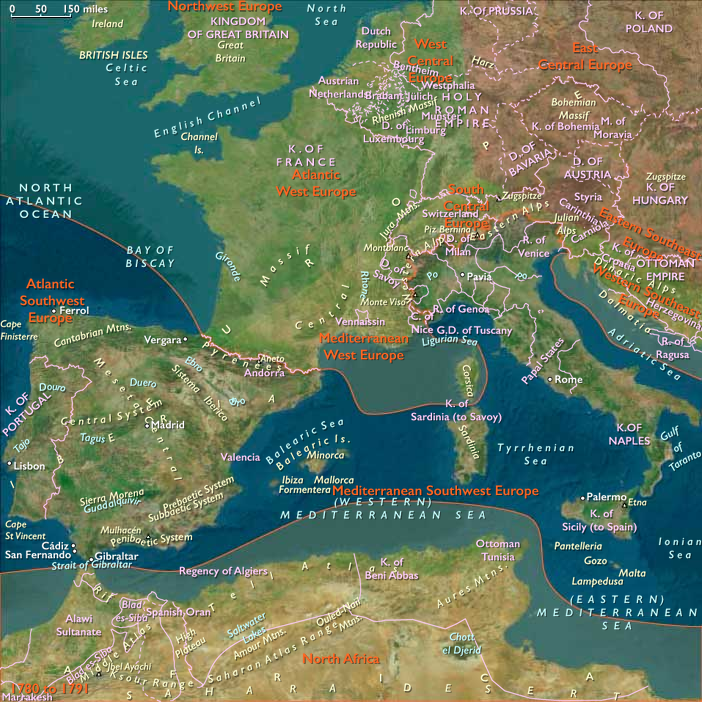
The era 1780–1791 CE in Mediterranean Southwest Europe is defined by intensified Enlightenment influences, notable administrative reforms, significant social tensions, and artistic developments amid the broader context of European upheaval leading towards revolutionary change.
Enlightenment and Administrative Reforms
In Spain, King Charles III (r. 1759–1788) continues his reform agenda, seeking modernization through centralized governance, rationalized taxation, and efforts to curb ecclesiastical power. Under his successor, Charles IV (r. 1788–1808), these reforms face mounting resistance and stagnation due to political conservatism and economic difficulties exacerbated by poor harvests and rising prices. Despite setbacks, administrative improvements begun under Charles III leave lasting impacts on Spanish governance.
Social Tensions and Economic Struggles
The later years of this period witness growing social and economic pressures throughout the region. In Spain, rising bread prices and rural impoverishment heighten social unrest. Attempts at agrarian reform and infrastructure investment provide limited relief, with substantial disparities remaining entrenched due to traditional aristocratic privileges and regional inequalities. In regions such as Andalusia and Catalonia, socio-economic discontent occasionally erupts into local disturbances.
Cultural and Artistic Developments
Artistic expression continues to evolve under the impact of Neoclassicism and early Romantic sentiments. In Italy, the enduring influence of Jacques-Louis David inspires a new generation of artists who blend classical discipline with emerging Romantic ideals. Artists explore historical and mythological themes with heightened emotional expression and innovative techniques.
In Naples, continued archaeological excavations at Pompeii and Herculaneum drive widespread fascination with classical antiquity, profoundly influencing decorative arts, architecture, and intellectual discourse throughout Europe.
Political Dynamics in Malta
Malta, under Grandmaster Emmanuel de Rohan-Polduc (1775–1797), experiences significant infrastructural and administrative improvements. De Rohan enhances the island's defensive capabilities and urban planning, notably commissioning the creation of new towns and fortifications. Malta maintains its strategic importance in Mediterranean politics, acting as a crucial nexus of cultural exchange and maritime commerce.
Conclusion: Transition and Anticipation
The era 1780–1791 CE sees Mediterranean Southwest Europe grappling with the complexities of Enlightenment reform and entrenched social divisions. The region is marked by administrative ambition tempered by resistance, economic vulnerability, and evolving artistic expression, setting the stage for more dramatic transformations soon to unfold across Europe.
People
Groups
- Papal States (Republic of St. Peter)
- Malta
- Christians, Roman Catholic
- Austria, Archduchy of
- Knights of Malta, Sovereign and Military Order of the
- Jesuits, or Order of the Society of Jesus
- Habsburg Monarchy, or Empire
- Spain, Bourbon Kingdom of
- Naples and Sicily, Bourbon Kingdom of
Topics
Subjects
Regions
Subregions

Years: 1780 - 1791
People
Groups
- Papal States (Republic of St. Peter)
- Malta
- Christians, Roman Catholic
- Austria, Archduchy of
- Knights of Malta, Sovereign and Military Order of the
- Jesuits, or Order of the Society of Jesus
- Habsburg Monarchy, or Empire
- Spain, Bourbon Kingdom of
- Naples and Sicily, Bourbon Kingdom of
Topics
Subjects
Regions
Subregions