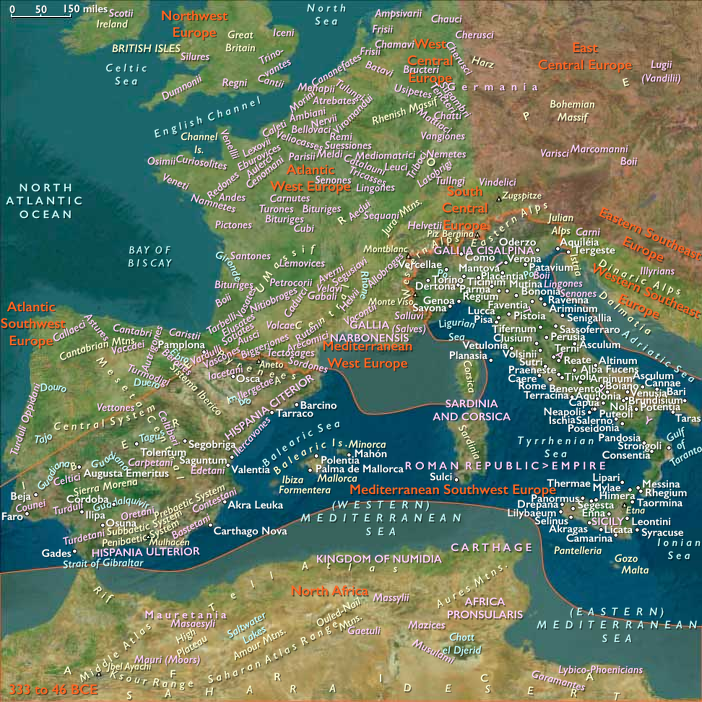
Mediterranean Southwest Europe (225–214 BCE): The Second…
225 BCE to 214 BCE
Mediterranean Southwest Europe (225–214 BCE): The Second Punic War and Hannibal's Campaign
The era 225–214 BCE marks a critical and transformative period defined by the onset and early stages of the Second Punic War, characterized by Hannibal’s legendary overland campaign against Rome and the shifting alliances across Mediterranean Southwest Europe.
Outbreak of the Second Punic War
The Second Punic War, also known as the Hannibalic War, erupts in 218 BCE, pitting Carthage against the expanding Roman Republic. Triggered by longstanding tensions and competing interests in the western Mediterranean, the conflict rapidly escalates into one of the largest and most influential wars of antiquity. Notably, Carthage secures alliances with various Numidian-Berber tribes, whose cavalry proves pivotal in subsequent battles.
Hannibal's Alpine Crossing and Initial Victories
Hannibal Barca, son of the renowned general Hamilcar Barca, leads a daring and unprecedented invasion of Italy. Departing from his newly established base in southern Iberia, Hannibal crosses the treacherous Alps in late 218 BCE, an extraordinary feat that surprises and unsettles the Romans. Despite severe losses during the passage, Hannibal successfully enters northern Italy, bolstering his depleted forces with Gallic allies eager to oppose Roman dominance.
In swift succession, Hannibal achieves decisive victories at the battles of the Trebia (218 BCE) and Lake Trasimene (217 BCE), showcasing his strategic ingenuity and devastating the Roman legions. These battles result in catastrophic losses for Rome and severely damage its prestige and military standing in Italy.
Cannae and the Crisis of Roman Power
In 216 BCE, Hannibal attains his most significant triumph at the Battle of Cannae in southern Italy. Employing brilliant tactics, Hannibal encircles and annihilates a larger Roman force, inflicting losses on a scale previously unimaginable to Rome. This crushing defeat prompts numerous Roman allies and client states across southern Italy to defect to Carthage, further exacerbating Rome's strategic crisis.
Roman Resilience and Adaptation
Despite these setbacks, Rome demonstrates extraordinary resilience and adaptability. Refusing to negotiate with Hannibal, Roman authorities implement stringent defensive measures, reorganize their military forces, and launch a gradual counteroffensive designed to isolate Hannibal strategically and politically.
Carthage and Iberia: Continued Expansion
Concurrent with Hannibal's Italian campaign, Carthage under the Barcid leadership continues its consolidation and expansion in the Iberian Peninsula. The city of Gades (modern Cádiz) and other settlements prosper as vital logistical hubs supporting Hannibal’s prolonged Italian campaign. This Iberian base provides crucial resources, reinforcements, and economic support vital to sustaining Carthage's ambitious war efforts.
Legacy of the Era
The period 225–214 BCE profoundly shapes Mediterranean geopolitics. Hannibal's extraordinary victories alter regional power dynamics, deeply affecting the stability and confidence of the Roman Republic. Yet Rome’s steadfastness, resilience, and strategic patience lay the groundwork for future recovery and ultimate triumph. The Second Punic War, far from decided, remains poised to influence the destinies of Carthage, Rome, and the broader Mediterranean world.
Groups
Topics
Regions
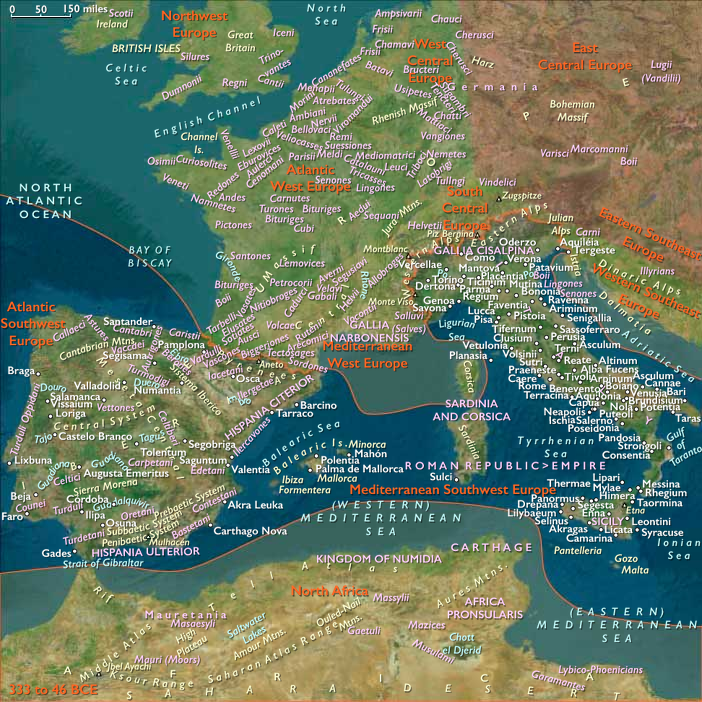
Southwest Europe
View →Subregions