
Mediterranean Southwest Europe (292–303 CE): Consolidation of …
Years: 292 - 303
Mediterranean Southwest Europe (292–303 CE): Consolidation of Diocletian’s Reforms and Increased Stability
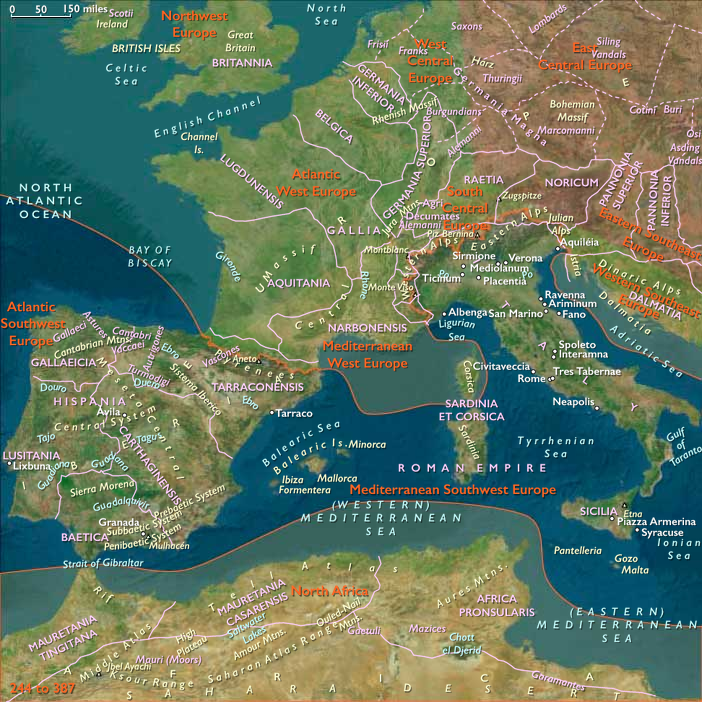
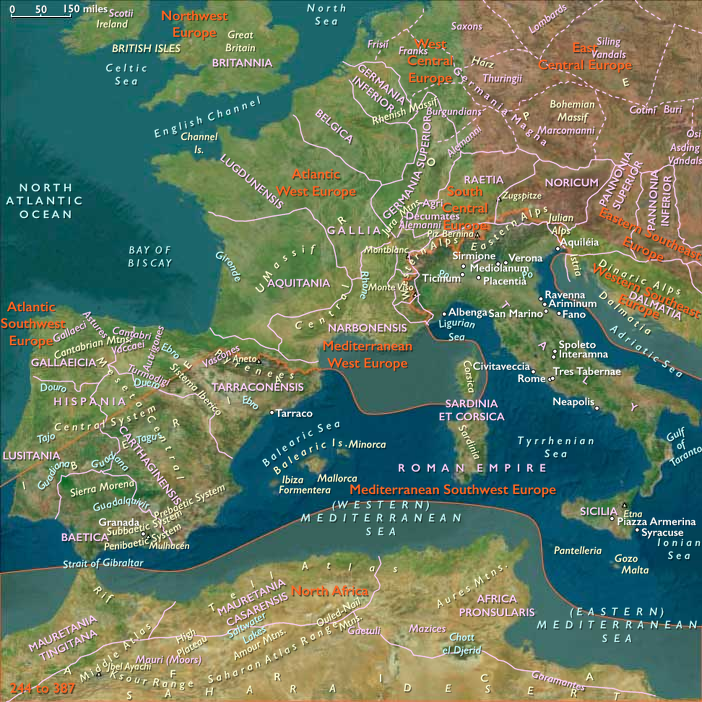
The era 292–303 CE in Mediterranean Southwest Europe sees the maturation and consolidation of Diocletian’s wide-ranging reforms. This period is marked by increased stability and centralized governance through the Tetrarchy, significant economic interventions, reinforced military defenses, and complex religious developments.
Strengthening of the Tetrarchy
Diocletian’s system of governance by four emperors—the Tetrarchy— becomes fully established, significantly enhancing imperial stability. The clear division of administrative responsibilities among two senior emperors (Augusti) and two junior emperors (Caesars) ensures more efficient management of provincial affairs, military campaigns, and administrative oversight.
Administrative Efficiency and Provincial Control
Diocletian’s restructuring of provincial administration proves effective during this era, improving governance through clearer bureaucratic hierarchies and more localized oversight. Smaller provincial units facilitate efficient tax collection, reduce corruption, and enhance regional stability and prosperity, reinforcing imperial authority and administrative cohesion.
Robust Military Defenses and Frontier Stability
Continuing Diocletian’s military policies, Rome’s frontier defenses become notably stronger and more sophisticated. Strategic fortifications, improved troop training, and systematic frontier surveillance reduce external threats significantly, ensuring sustained regional security and stability.
Economic Stability and Diocletian's Edict on Prices
In 301 CE, Diocletian issues his famous Edict on Maximum Prices, attempting to combat rampant inflation and stabilize the economy by setting price ceilings on goods and services. Though its success is limited, the Edict underscores Diocletian’s determined effort to address economic instability, contributing to temporary improvements in market conditions and economic predictability.
Heightened Christian Persecution
Diocletian intensifies religious persecution beginning around 303 CE, initiating the Great Persecution—the most severe crackdown on Christianity yet seen in the Roman Empire. Christian communities face widespread arrests, confiscations, and executions. Despite severe adversity, Christianity continues to grow and strengthen, demonstrating remarkable resilience and laying the groundwork for future transformation within the empire.
Cultural Resilience and Intellectual Vigor
Despite political and religious turbulence, cultural and intellectual activities flourish. Roman art, literature, and philosophical discourse continue robustly, reflecting a society adept at adapting to changing circumstances. Intellectual and cultural resilience highlights the ongoing vitality and complexity of Roman civilization in Mediterranean Southwest Europe.
Legacy of the Era
The era 292–303 CE consolidates the profound impacts of Diocletian’s reforms, significantly stabilizing and reorganizing the Roman Empire after decades of crisis. Diocletian’s rigorous administrative, military, and economic measures, coupled with the era’s complex religious dynamics, substantially shape Roman imperial structures, influencing developments that extend well beyond his reign.
People
Groups
Topics
Subjects
Regions
Subregions
Related Events
Showing 10 events out of 60112 total
Years: 292 - 303
People
Groups
Topics
Subjects
Regions
Subregions