
Mediterranean Southwest Europe (369–358 BCE): Syracuse’s Stalemate, …
Years: 369BCE - 358BCE
Mediterranean Southwest Europe (369–358 BCE): Syracuse’s Stalemate, Roman Political Reforms, and Renewed Etruscan Conflict
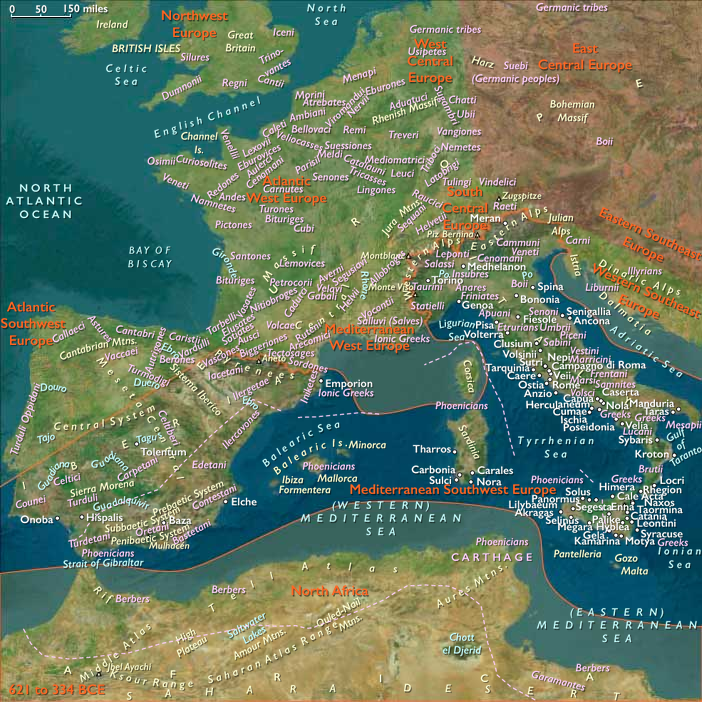
The era 369–358 BCE witnesses a critical transition in Mediterranean Southwest Europe, marked by the waning efforts of Dionysius I of Syracuse against Carthage, transformative political reforms within the Roman Republic, and renewed conflict involving Rome and the Etruscan city of Tarquinia.
Dionysius I and Carthage: A Stalemate in Sicily
Throughout his lengthy reign, Dionysius I of Syracuse has conducted persistent but inconclusive military campaigns against Carthage, aiming to fully expel Carthaginian power from Sicily. Despite intermittent successes, Dionysius' strategic goal ultimately remains unattained. At the time of his death in 367 BCE, Carthaginian dominance persists robustly over approximately one-third of the island, underscoring a stalemate that confirms Carthage as an enduring power in the region.
Dionysius' failure to decisively remove Carthaginian presence from Sicily leaves Syracuse powerful yet restrained, reflecting the entrenched geopolitical balance in the Western Mediterranean.
Roman Republic: The Plebeians Gain Political Influence
In central Italy, significant political reforms dramatically alter Rome’s internal structure. By 367 BCE, Rome’s plebeian class achieves a major milestone: after years of agitation, plebeians secure the right to hold the highest political office, the consulship. The landmark change requires that one of the two annually elected consuls now be chosen from among the plebeians, significantly reducing the political exclusivity historically held by Rome’s patrician elite.
This pivotal reform enables plebeians to enter the previously patrician-dominated Senate, profoundly altering the composition of Roman political institutions. This newfound representation gradually transforms Rome into a more inclusive republic, setting crucial precedents for future political developments.
Renewed Conflict: Tarquinia and Rome
Amidst internal political adjustments, Rome confronts external conflict. The prominent Etruscan city-state of Tarquinia, perceiving Roman expansion as a direct threat, initiates a defensive war against Rome in 358 BCE. This conflict underscores the fragility of regional alliances and highlights the broader tensions among Etruscans, Romans, and other Italian peoples. Tarquinia’s decision to wage defensive warfare symbolizes a broader resistance to Rome’s expansionist ambitions and sets the stage for subsequent hostilities between the two states.
Legacy of the Era
The era 369–358 BCE critically reshapes Mediterranean Southwest Europe through Syracuse’s stalemated rivalry with Carthage, Rome’s internal transformation driven by plebeian political empowerment, and the resurgence of Etruscan resistance symbolized by Tarquinia. These intertwined developments significantly influence the region’s subsequent history, establishing the foundation for future political and military shifts in Italy and Sicily.
People
Groups
- Sicily, classical
- Italy, classical
- Carthage, Kingdom of
- Syracuse, Corinthian city-state of
- Etruria
- Roman Republic
Topics
- Iron Age Europe
- Roman-Etruscan Wars, Early
- Sicilian Wars, or Carthaginian-Syracusan Wars
- Sicilian War, Second, or Second Carthaginian-Syracusan War
Subjects
Regions

Subregions
Years: 369BCE - 358BCE
People
Groups
- Sicily, classical
- Italy, classical
- Carthage, Kingdom of
- Syracuse, Corinthian city-state of
- Etruria
- Roman Republic
Topics
- Iron Age Europe
- Roman-Etruscan Wars, Early
- Sicilian Wars, or Carthaginian-Syracusan Wars
- Sicilian War, Second, or Second Carthaginian-Syracusan War
Subjects
Regions
Subregions