
Mediterranean Southwest Europe (508–519 CE): Ostrogothic Consolidation…
508 CE to 519 CE
Mediterranean Southwest Europe (508–519 CE): Ostrogothic Consolidation and Visigothic Reorganization
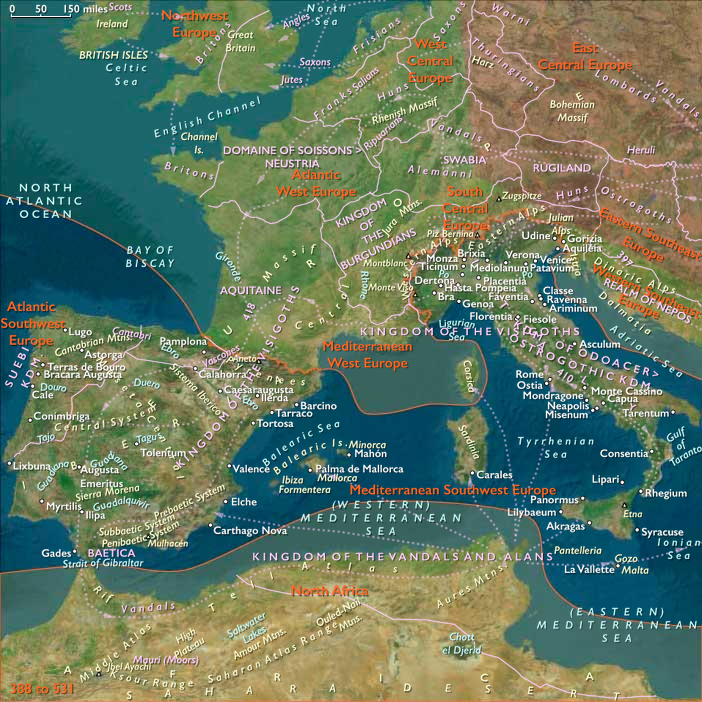
The era 508–519 CE in Mediterranean Southwest Europe features further consolidation of Ostrogothic rule under Theodoric the Great in Italy, Visigothic reorganization and stability under King Theodoric the Great’s grandson, Amalaric, in Iberia, and ongoing cultural and economic adaptation to new political realities.
Ostrogothic Italy under Theodoric the Great
During this period, Theodoric the Great (r. 493–526 CE) solidifies his authority over Italy, skillfully blending Roman administrative traditions with Gothic leadership. Under his rule, Italy enjoys a period of relative stability, economic recovery, and cultural revival. Ravenna emerges as a flourishing capital, known for its artistic achievements, particularly remarkable mosaics.
Visigothic Reorganization and Amalaric's Rule in Iberia
Following the Visigothic defeat at the Battle of Vouillé (507 CE) and the death of Alaric II, Visigothic authority retreats primarily into Iberia. Leadership transitions to Alaric II’s son, Amalaric, who comes to power under Theodoric the Great’s protective regency. Amalaric's reign focuses on reestablishing stability, consolidating control, and reorganizing the kingdom administratively to maintain political cohesion and territorial integrity.
Economic Stability and Localized Governance
Despite the fragmentation of central imperial power, local economies continue adapting successfully to regional autonomy. Agricultural productivity, local trade networks, and small-scale commerce persist, providing economic continuity and resilience across the region.
Religious Dynamics and Ecclesiastical Authority
Religious dynamics remain complex, with ongoing tensions between Arian Goths and Nicene Catholics. The Church continues to assert considerable social influence, with ecclesiastical leaders often acting as intermediaries between the Gothic rulers and the Roman populace. This interplay shapes regional governance, cultural practices, and religious tolerance.
Cultural Flourishing in Ravenna and Beyond
Ravenna, under Theodoric’s patronage, continues as a significant cultural and artistic hub. High-quality mosaics, architecture, and literary works emerge, reflecting a sophisticated synthesis of Gothic and Roman traditions. These developments illustrate the adaptability and continuity of Roman culture within the emerging medieval context.
Legacy of the Era
The era 508–519 CE represents a critical phase of political reorganization, cultural synthesis, and economic resilience. Ostrogothic and Visigothic kingdoms solidify their authority, marking definitive shifts from imperial Roman governance toward medieval regional powers, shaping the future historical trajectory of Mediterranean Southwest Europe.
Groups
Subjects
Regions
Southwest Europe
View →Subregions
