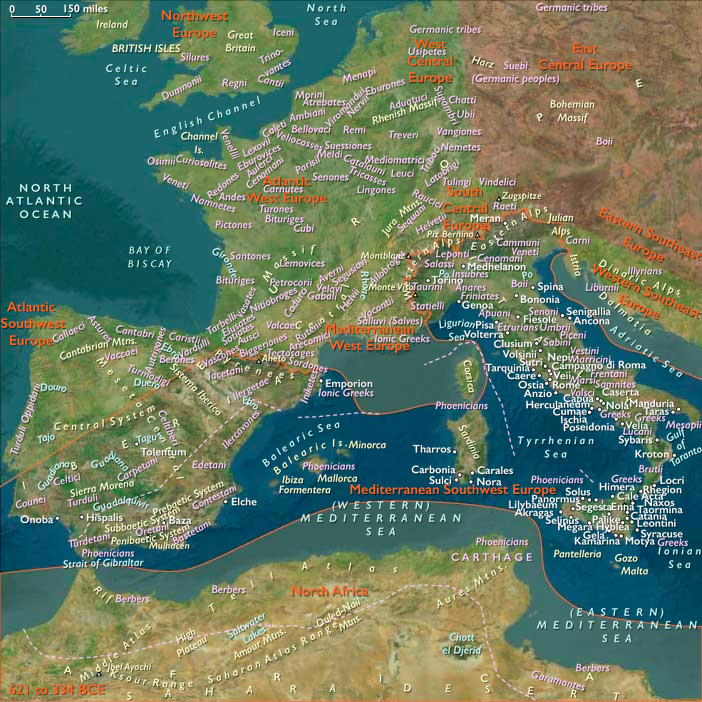
Mediterranean Southwest Europe (501–490 BCE): Consolidation of…
501 BCE to 490 BCE
Mediterranean Southwest Europe (501–490 BCE):
Consolidation of Roman Republic, Carthaginian Expansion, and Cultural Flourishing
The era 501–490 BCE witnesses the strengthening of the Roman Republic, continued Carthaginian territorial ambitions, pivotal political reforms, and significant cultural advancements across Mediterranean Southwest Europe.
Roman Political and Social Reforms
In 494 BCE, Rome introduces the office of Tribunus Plebis (Tribune of the Plebs), providing official representation to the plebeian class. Previously marginalized, the plebeians now have a platform to challenge patrician dominance. Additionally, Rome solidifies its regional security by concluding a mutual defense alliance, the Foedus Cassianum, with the Latin League in 493 BCE, under the influential consulship of Spurius Cassius Vecellinus.
Carthaginian Influence in Sicily and Iberia
By 500 BCE, Carthage expands significantly, solidifying control over strategic cities in western Sicily, notably Motya, Panormus (modern Palermo), and Solus. Carthage also negotiates treaties by 490 BCE with influential Sicilian Greek city-states, including Selinus, Himera, and Zankle, securing its position in the western Mediterranean and countering Greek influence.
Rise of Gelo in Sicily
In Sicily, Gelo, the talented cavalry commander serving under Hippocrates of Gela, assumes power following Hippocrates' death in 491 BCE. Gelo’s ascendancy marks the beginning of a significant political shift, setting the stage for Gela’s prominence in Sicilian politics and its future influence across the island.
Artistic Achievements in Etruria
Etruscan culture continues its artistic flourishing, notably exemplified by the famed Capitoline She-Wolf, created around 500 BCE. Renowned for their bronze craftsmanship, the Etruscans produce sophisticated sculptures, military equipment, household items, and decorative arts, contributing significantly to the artistic heritage of the region.
Legacy of the Era
The period from 501–490 BCE reinforces the Roman Republic’s internal stability and external security, illustrates Carthage’s strategic diplomatic expansions in the western Mediterranean, and underscores the Etruscans' continued cultural vibrancy. Collectively, these developments lay important groundwork for future geopolitical dynamics and cultural exchanges in Mediterranean Southwest Europe.
Groups
Commodities
Regions
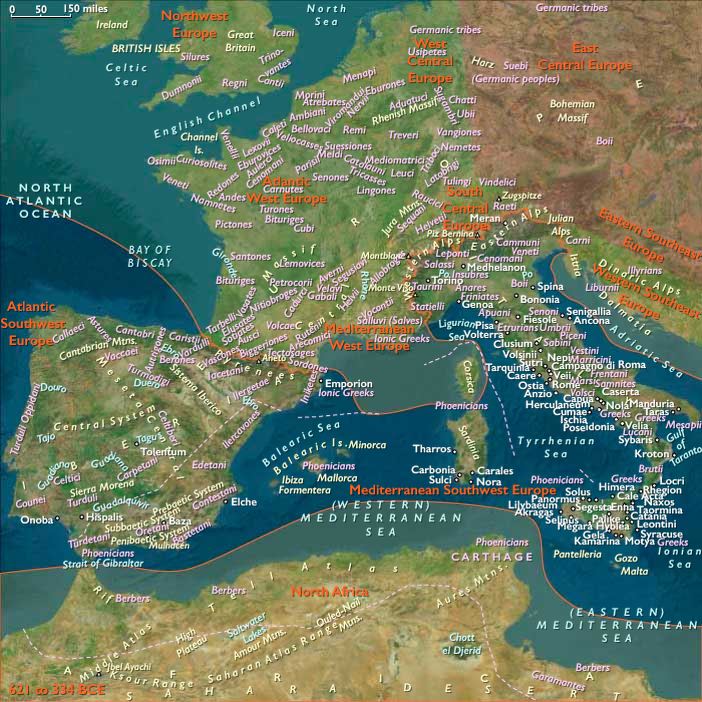
Southwest Europe
View →Subregions