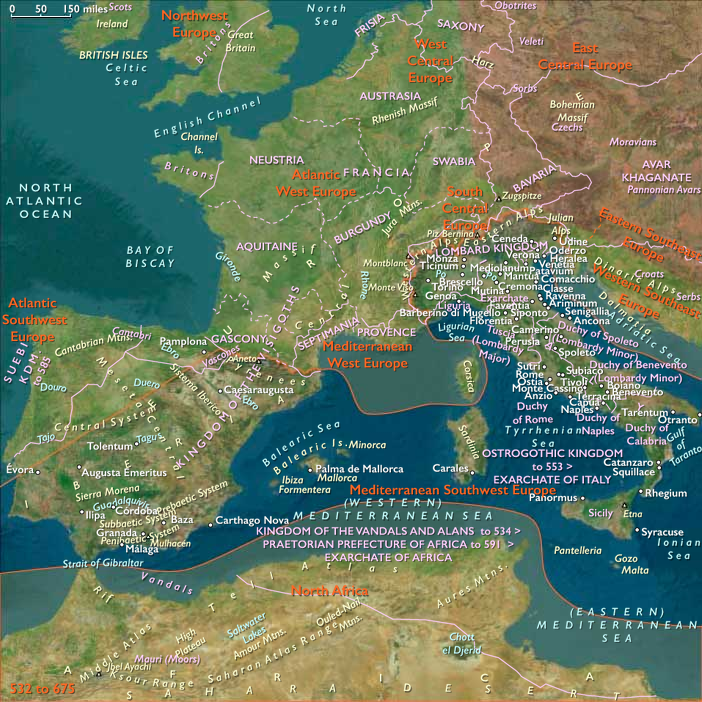
Mediterranean Southwest Europe (532–543 CE): Papal Authority,…
532 CE to 543 CE
Mediterranean Southwest Europe (532–543 CE): Papal Authority, the Gothic War, and Visigothic Consolidation
The era 532–543 CE in Mediterranean Southwest Europe is marked by significant ecclesiastical developments reinforcing papal authority, renewed conflict during the Gothic War, and further Visigothic political consolidation in Iberia.
Papal Affirmation of Orthodoxy
During this period, the Papacy solidifies its role as guardian of theological orthodoxy. Pope Vigilius firmly rejects Monophysitism in communications with Byzantine Emperor Justinian I and the Patriarch of Constantinople, aligning Rome unequivocally with Chalcedonian doctrine. Additionally, the Papacy confirms the decrees from the earlier Council of Carthage, which stipulate that converts from Arianism cannot hold Holy Orders, and those already ordained are restricted to lay communion. These decisive acts underscore Rome’s emerging authority as the primary defender of orthodox Christianity.
Renewed Conflict: The Gothic War
In Italy, the ongoing Gothic War between the Eastern Roman (Byzantine) Empire and the Ostrogothic Kingdom reaches a critical juncture. Initially, the conflict appears resolved with the fall of Ravenna and the Empire's apparent reconquest of Italy. However, toward the end of this era, significant Gothic resistance resurges, signaling that the war is far from concluded and foreshadowing further instability in the region.
Visigothic Political Consolidation in Iberia
The Visigothic Kingdom, continuing its political consolidation, formally establishes Toledo as its capital. By centralizing administration in Toledo, the Visigoths reinforce their governance over the Iberian Peninsula, stabilizing their realm after earlier territorial and military setbacks against Frankish incursions.
Cultural and Ecclesiastical Stability
Despite military conflicts, the region continues experiencing stability and continuity through ecclesiastical leadership and cultural institutions. Christianity, deeply entrenched in societal structures, provides consistent governance and fosters ongoing cultural development and educational continuity.
Legacy of the Era
The era 532–543 CE significantly shapes the future of Mediterranean Southwest Europe, as ecclesiastical authorities assert theological clarity, military conflicts alter political boundaries, and Visigothic governance takes root in Iberia. These developments profoundly influence the medieval political and religious landscape of the region.
Groups
Topics
Regions
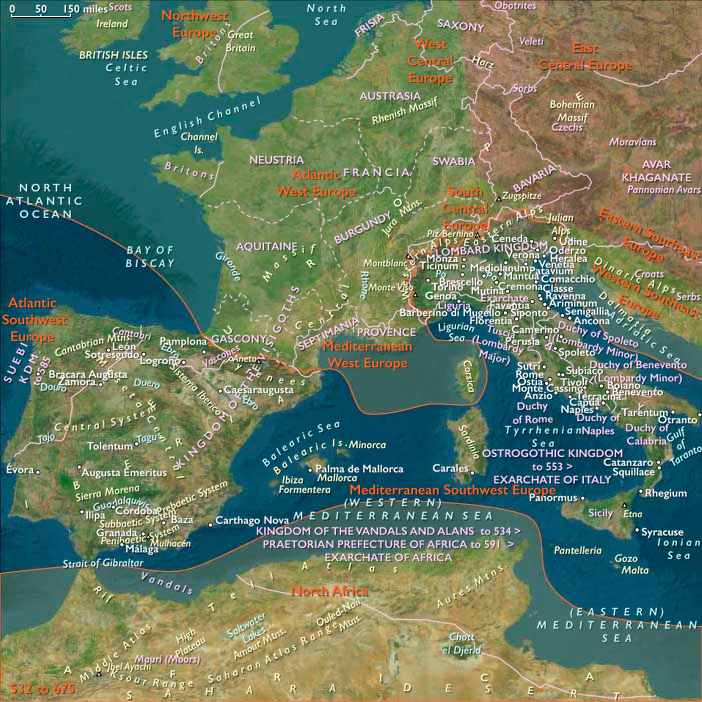
Southwest Europe
View →Subregions