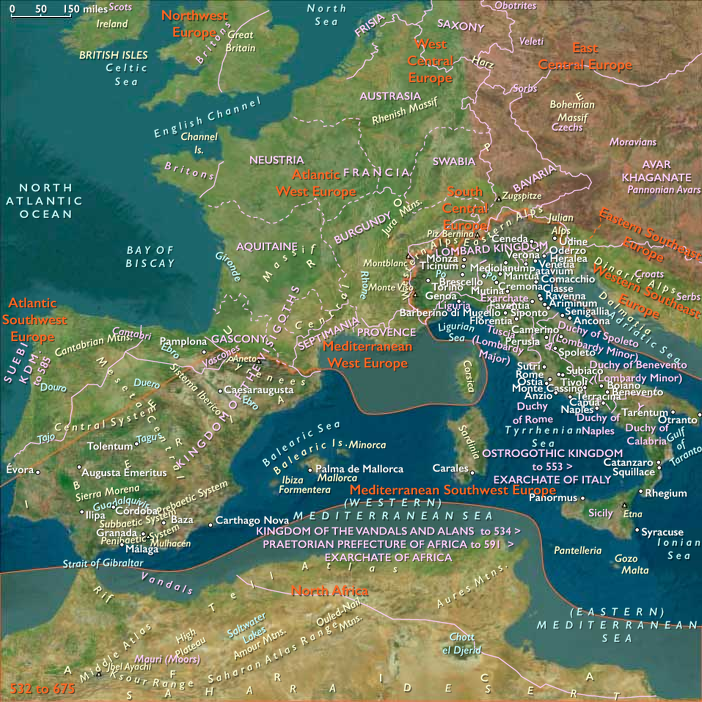
Mediterranean Southwest Europe (532–675 CE): Byzantine Conflicts,…
532 CE to 675 CE
Mediterranean Southwest Europe (532–675 CE): Byzantine Conflicts, Lombard Expansion, and Ecclesiastical Transformation
The age 532–675 CE in Mediterranean Southwest Europe—covering Italy, southern and eastern Iberia, Andorra, and the islands of the Western Mediterranean except Corsica—is characterized by significant Byzantine struggles, Lombard invasions, religious transformations, and the ongoing quest for political stability.
Justinian’s Reconquest and Gothic Decline
After initially reconquering Italy from the Ostrogoths under Byzantine Emperor Justinian I, Byzantine authority begins to weaken amid ongoing struggles against resurgent Gothic resistance. Although the Byzantines ultimately defeat the Ostrogoths, their victory proves fragile, leaving the Italian peninsula vulnerable to further invasions and political fragmentation.
Lombard Invasions and Italian Fragmentation
Late in the sixth century, the Lombards, another Germanic tribe, invade Italy, significantly diminishing Byzantine power and territorial control. By the late sixth century, the Lombards confine Byzantine authority to the reduced and strategically vulnerable Exarchate of Ravenna. This marks the onset of a prolonged period of political disunity in Italy, lasting more than thirteen centuries.
Visigothic Ambitions and Internal Conflict
In Iberia, the Visigoths strive to consolidate power from their capital at Toledo, adopting ceremonial practices from Byzantine Constantinople to underscore their imperial aspirations. Despite efforts at centralization, the Visigothic kingdom remains beset by frequent internal conflicts, royal assassinations, and factional struggles. A lack of clear hereditary succession further exacerbates instability, drawing external interference from Greeks, Franks, and later Muslims.
Clerical Leadership and Cultural Continuity
Under Visigothic rule, the cultural achievements of Roman Hispania decline, with educational and administrative responsibilities shifting decisively to the Hispano-Roman clergy. The Church emerges as society’s most stable and cohesive institution, safeguarding cultural and administrative continuity amid persistent political instability.
Religious Tensions and Visigothic Conversion
The religious divide between the Arian Visigothic rulers and their Catholic Hispano-Roman subjects remains a constant source of friction, occasionally leading to open rebellions. In 589, King Recared renounces Arianism at the Council of Bishops in Toledo, formally adopting Catholicism to foster political unity and secure an alliance with the Hispano-Roman population. This religious unification becomes a recurring historical strategy in Spanish political life.
Papal Authority and Ecclesiastical Transformation
Throughout this age, the papacy asserts considerable influence, navigating complex relationships with Byzantine rulers, Lombard kings, and emerging geopolitical pressures such as early Islamic expansion. Papal authority provides critical doctrinal leadership, promotes missionary efforts, and reinforces cultural continuity in the face of ongoing regional fragmentation.
Legacy of the Age
The period from 532–675 CE decisively shapes Mediterranean Southwest Europe’s transition from late antiquity into the medieval era. Byzantine and Lombard conflicts permanently fragment Italy, while Visigothic Iberia struggles with internal discord and relies increasingly on clerical leadership. Despite political turbulence, ecclesiastical institutions ensure continuity, profoundly influencing the region’s historical development.
Groups
Topics
Regions
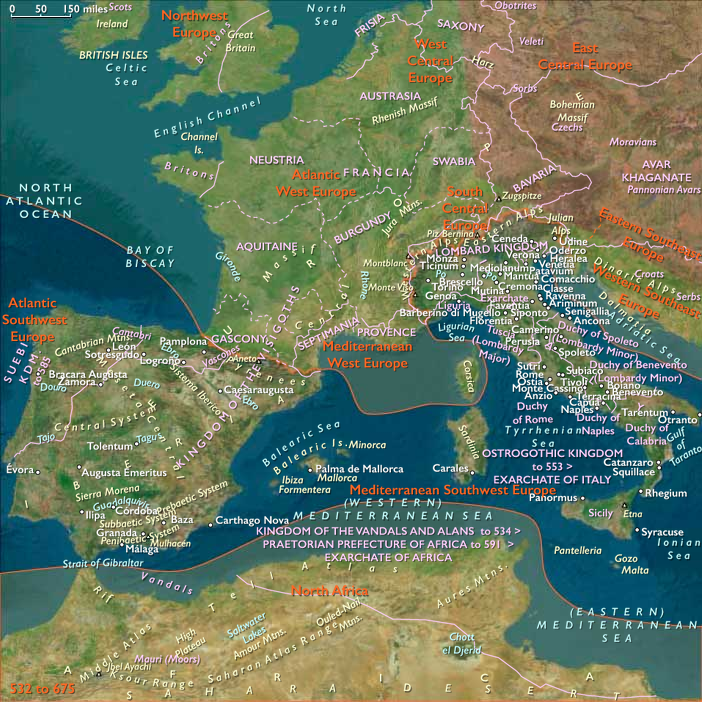
Southwest Europe
View →Subregions