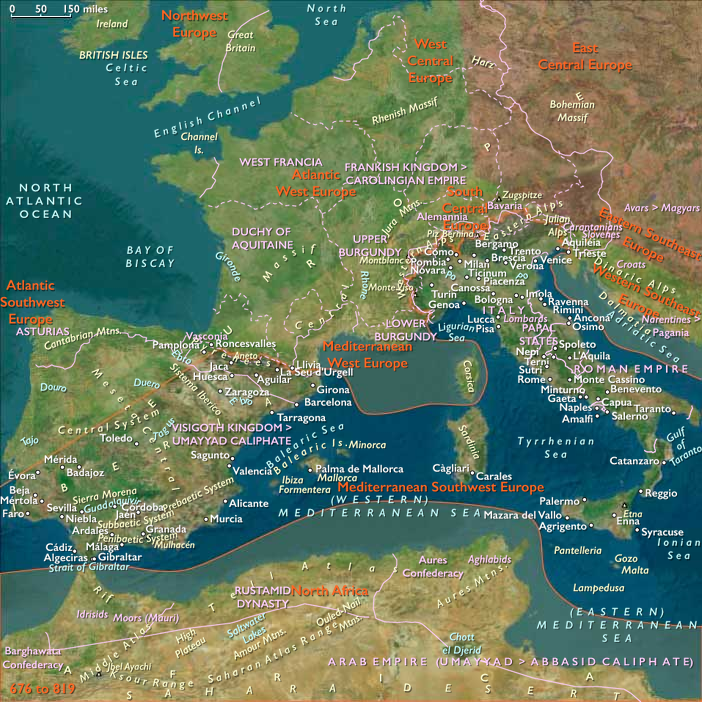
Mediterranean Southwest Europe (700–711 CE): Visigothic Decline,…
700 CE to 711 CE
Mediterranean Southwest Europe (700–711 CE): Visigothic Decline, Lombard Strength, and Prelude to Conquest
The era 700–711 CE in Mediterranean Southwest Europe is marked by intensifying political crises within the Visigothic kingdom, continued strength of Lombard rule in Italy, and significant events foreshadowing the dramatic changes to come in Iberia.
Visigothic Decline and Royal Turmoil
The Visigothic kingdom under King Wittiza (r. 700–710 CE) faces mounting instability, with internal rivalries, noble opposition, and political fragmentation accelerating its decline. Wittiza’s attempts at reform, including measures to reduce aristocratic power, meet significant resistance, leading to increased tensions and weakening central authority. His death in 710 precipitates a succession crisis that plunges the kingdom into further disorder.
Lombard Consolidation under Aripert II
In Italy, Lombard King Aripert II (r. 701–712 CE) maintains relative political stability and territorial strength, effectively consolidating the kingdom from its capital at Pavia. Aripert’s reign is marked by robust internal governance and strengthened regional influence, enabling the Lombards to solidify control over northern and central Italy and resist ongoing Byzantine attempts to reclaim lost territory.
Byzantine Challenges and Continued Fragmentation
The Byzantine Exarchate of Ravenna endures continued pressure from Lombard advances, struggling to defend its limited coastal and urban enclaves. The Byzantines manage to retain strategic territories, but their weakened position leaves the region increasingly vulnerable to external threats, including maritime raids and the impending expansion of Islamic power into the western Mediterranean.
Ecclesiastical Influence and Papal Diplomacy
The papacy continues to assert significant authority and cultural influence across the region, playing a pivotal diplomatic role amid political uncertainty. Papal leaders seek to mediate disputes, maintain doctrinal orthodoxy, and provide cultural and social continuity, even as secular governance remains fragmented and unstable.
Prelude to Iberian Transformation
The internal instability and succession crisis following Wittiza’s death set the stage for dramatic changes in Iberia. Factional disputes encourage rival Visigothic claimants to seek foreign intervention, inadvertently preparing the way for the imminent Islamic conquest beginning in 711 CE.
Legacy of the Era
The era 700–711 CE represents a critical turning point in Mediterranean Southwest Europe's historical trajectory, marking the Visigothic kingdom’s irreversible decline, Lombard Italy’s continued consolidation, and the Byzantine Exarchate’s persistent but fragile survival. These developments collectively foreshadow transformative geopolitical shifts, profoundly shaping the region's medieval future.
People
Groups
Regions
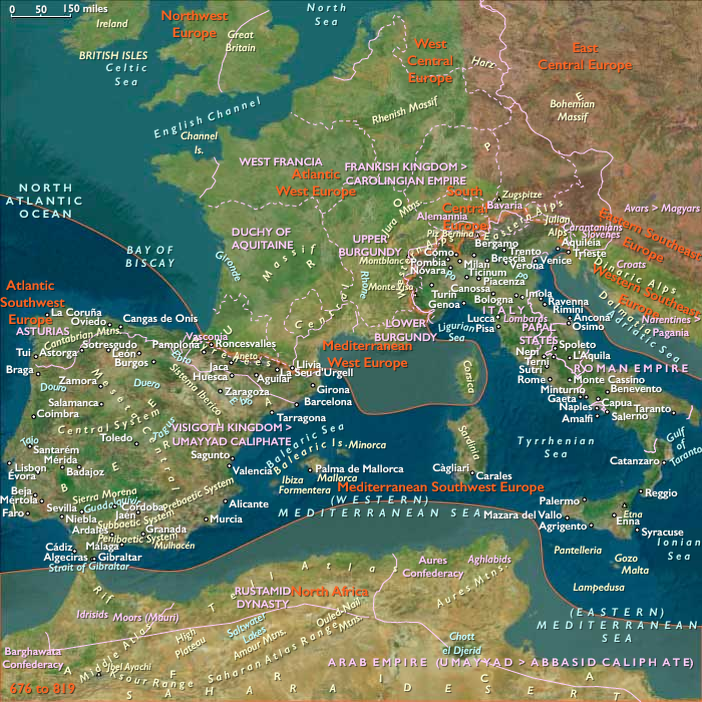
Southwest Europe
View →Subregions