
Mediterranean Southwest Europe (717–706 BCE): Greek …
Years: 717BCE - 706BCE
Mediterranean Southwest Europe (717–706 BCE):
Greek Expansion, Roman Political Transition, and Founding of New Colonies
Between 717 and 706 BCE, Mediterranean Southwest Europe experiences notable Greek colonial expansion in southern Italy, alongside significant political and cultural transitions in early Rome. These developments establish key foundations for the region’s future historical trajectory.
Foundation of Croton (ca. 710 BCE)
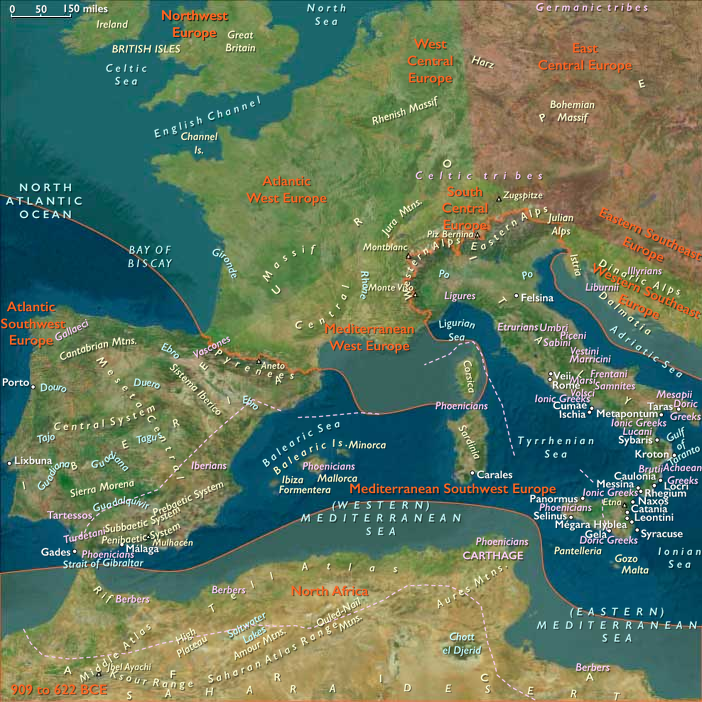
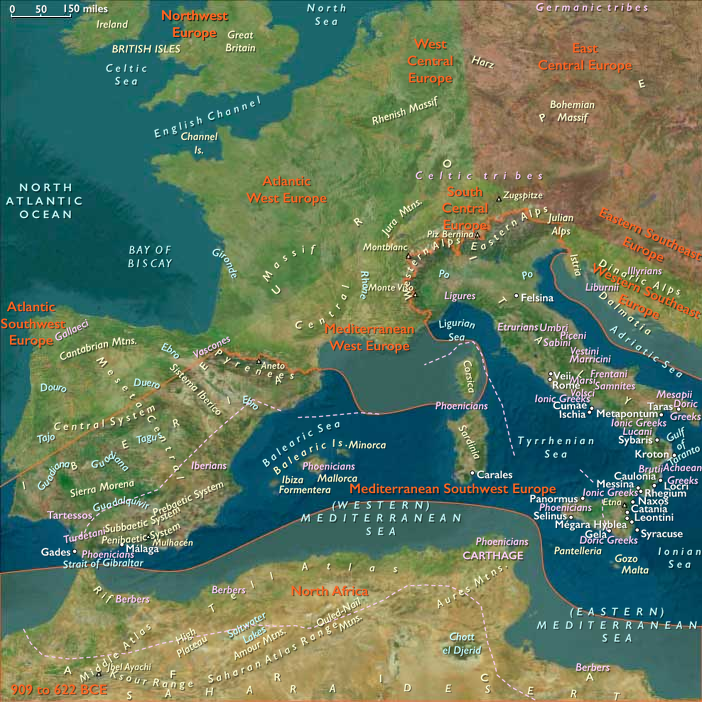
Around 710 BCE, Achaean Greeks, led by Myscellus from Rhypes in Achaea (northern Peloponnese), establish the colony of Croton (modern Crotone) in southern Italy. Croton rapidly becomes an important Greek cultural and economic hub, strengthening Greek presence in Magna Graecia and promoting trade, agriculture, and intellectual pursuits in the region.
Establishment of Taras by Spartans (706 BCE)
Greek colonists originating from Sparta and Laconia conquer the Messapian village of Taras (modern Taranto), located on a peninsula between the Mare Piccolo and the Mare Grande in Apulia, southeastern Italy. Traditionally dated to 706 BCE, this colonization reportedly arises from Spartan efforts to relocate and remove an unwanted social group. The strategic and fertile location of Taras quickly fosters its growth into one of Magna Graecia’s most influential city-states.
Political Transition in Early Rome: End of Romulus's Rule (717 BCE)
According to Roman legend, 717 BCE marks the end of Romulus’s reign, initiating a one-year interregnum during which power rotates among Roman senators. This period of political uncertainty reflects underlying tensions between the original Latin (Romulus-founded) and Sabine factions within Rome.
In 715 BCE, after considerable political negotiation, the Senate elects the Sabine Numa Pompilius as Rome's second king. His election symbolizes reconciliation between the two major factions. Numa promptly disbands Romulus’s personal guard, the "Celeres," signaling a departure from militaristic rule towards peaceful governance, religious innovation, and institutional reform.
Religious and Calendar Reforms under Numa Pompilius (713–712 BCE)
King Numa introduces crucial reforms aimed at stabilizing and culturally enriching early Roman society. In 713 BCE, he reforms the Roman calendar, aligning it more closely with agricultural cycles and religious observances. Subsequently, in 712 BCE, Numa establishes the influential position of Pontifex Maximus, the high priest heading the College of Pontiffs (Collegium Pontificum), setting a lasting framework for Rome’s religious hierarchy.
Legacy of the Era
The era 717–706 BCE witnesses the continued Greek colonization and consolidation in southern Italy, fostering cultural exchange and economic growth. Simultaneously, significant political transformations in Rome under Numa Pompilius lay foundational civic and religious structures, critically shaping the city-state’s emerging identity and governance model. These events collectively enhance the region’s development, paving the way for its vibrant classical future.
People
Groups
- Latins (Italic tribe)
- Messapii (Iapygian tribe)
- Sicily, classical
- Italy, classical
- Sparta, Kingdom of
- Sabines
- Greeks, Classical
- Roman Kingdom
- Magna Graecia
Topics
Commodoties
Subjects
Regions
Subregions
Years: 717BCE - 706BCE
People
Groups
- Latins (Italic tribe)
- Messapii (Iapygian tribe)
- Sicily, classical
- Italy, classical
- Sparta, Kingdom of
- Sabines
- Greeks, Classical
- Roman Kingdom
- Magna Graecia
Topics
Commodoties
Subjects
Regions
Subregions