
Mediterranean Southwest Europe (976–987 CE): Medical Innovation, …
Years: 976 - 987
Mediterranean Southwest Europe (976–987 CE): Medical Innovation, Intellectual Flourishing, and Continued Caliphal Stability
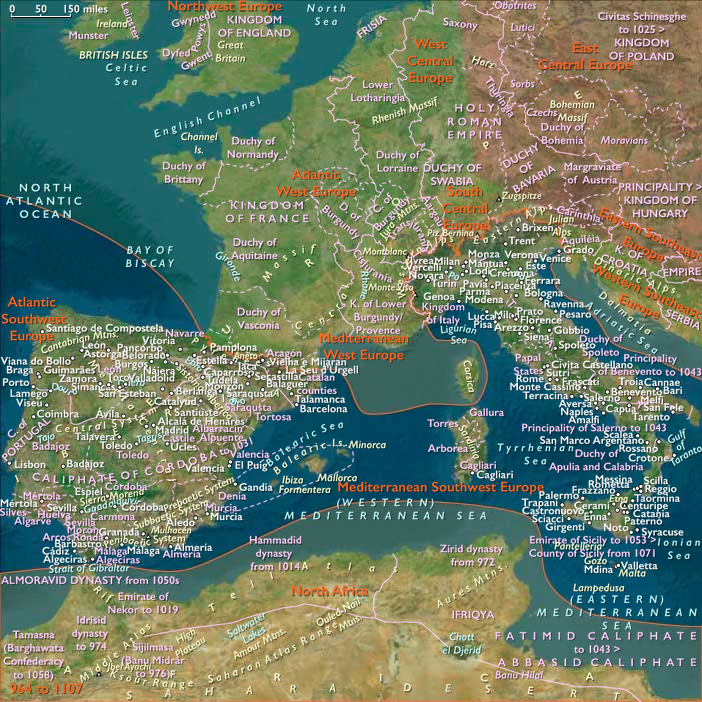
The era 976–987 CE in Mediterranean Southwest Europe is marked by significant advancements in medical knowledge under the Caliphate of Córdoba, continued cultural and intellectual prosperity, and persistent political stability and influence within Al-Andalus.
Abu al-Qasim al-Zahrawi and Medical Advancements
During this period, the renowned surgeon Abu al-Qasim al-Zahrawi, also known in Europe as Albucasis, emerges as a leading figure in medicine. Al-Zahrawi, notable for his expertise in ophthalmologic surgery, employs innovative techniques such as using opium and mandrake as anesthetics, significantly advancing surgical practices. His monumental medical treatise, al-Tasrif, completed around this time, profoundly influences medical thought and practice well into the sixteenth century, serving as a cornerstone for medieval medical scholarship.
Continued Intellectual and Cultural Flourishing
Under the successors of Al-Hakam II, Córdoba remains a vibrant intellectual and cultural hub, attracting scholars, artists, and scientists from throughout the Islamic and European worlds. The caliphate continues fostering an atmosphere of learning and creativity, sustaining the scholarly traditions established under previous rulers.
Mozarab and Jewish Scholarly Traditions
Mozarab communities remain essential cultural intermediaries, preserving Latin-Christian intellectual traditions within Islamic Iberia. Jewish scholarly activity, particularly in intellectual centers such as Lucena, continues to thrive, further enriching Andalusian cultural and intellectual life. These communities significantly contribute to the region’s enduring cultural dynamism.
Political Stability in Al-Andalus
Despite minor internal tensions, political stability generally continues under caliphal rule in Al-Andalus, supported by effective governance and administration. This stability allows for sustained economic prosperity and continued urban development throughout the region.
Economic Resilience and Technological Continuity
The use of advanced technological methods, notably the Catalan forge, supports ongoing economic vitality. Enhanced iron production continues to bolster agricultural productivity, urban growth, and military capabilities, underpinning the region’s stable economic environment.
Legacy of the Era
The era 976–987 CE highlights significant medical innovations by al-Zahrawi, continued cultural and intellectual prosperity, and enduring political stability within the Caliphate of Córdoba. These developments significantly influence the historical trajectory of Mediterranean Southwest Europe, reinforcing its position as a leading center of medieval knowledge and cultural exchange.
People
Groups
- Berber people (also called Amazigh people or Imazighen, "free men", singular Amazigh)
- Jews
- Moors
- Christianity, Chalcedonian
- Islam
- Al-Garb Al-Andalus
- al-Andalus (Andalusia), Muslim-ruled
- Mozarabs
- Papal States (Republic of St. Peter)
- Muladi
- Francia Occidentalis (West Francia, or France), Kingdom of
- Abbasid Caliphate (Baghdad)
- Córdoba, (Umayyad) Caliphate of
- Holy Roman Empire
Commodoties
Subjects
- Painting and Drawing
- Decorative arts
- Mayhem
- Faith
- Government
- Custom and Law
- Technology
- Metallurgy
- Medicine
Regions
Subregions

Years: 976 - 987
People
Groups
- Berber people (also called Amazigh people or Imazighen, "free men", singular Amazigh)
- Jews
- Moors
- Christianity, Chalcedonian
- Islam
- Al-Garb Al-Andalus
- al-Andalus (Andalusia), Muslim-ruled
- Mozarabs
- Papal States (Republic of St. Peter)
- Muladi
- Francia Occidentalis (West Francia, or France), Kingdom of
- Abbasid Caliphate (Baghdad)
- Córdoba, (Umayyad) Caliphate of
- Holy Roman Empire
Commodoties
Subjects
- Painting and Drawing
- Decorative arts
- Mayhem
- Faith
- Government
- Custom and Law
- Technology
- Metallurgy
- Medicine
Regions
Subregions