
Mediterranean West Europe (1396–1539 CE): Dynastic Struggles, …
Years: 1396 - 1539
Mediterranean West Europe (1396–1539 CE): Dynastic Struggles, Maritime Republics, and Reformation Currents
Geographic & Environmental Context
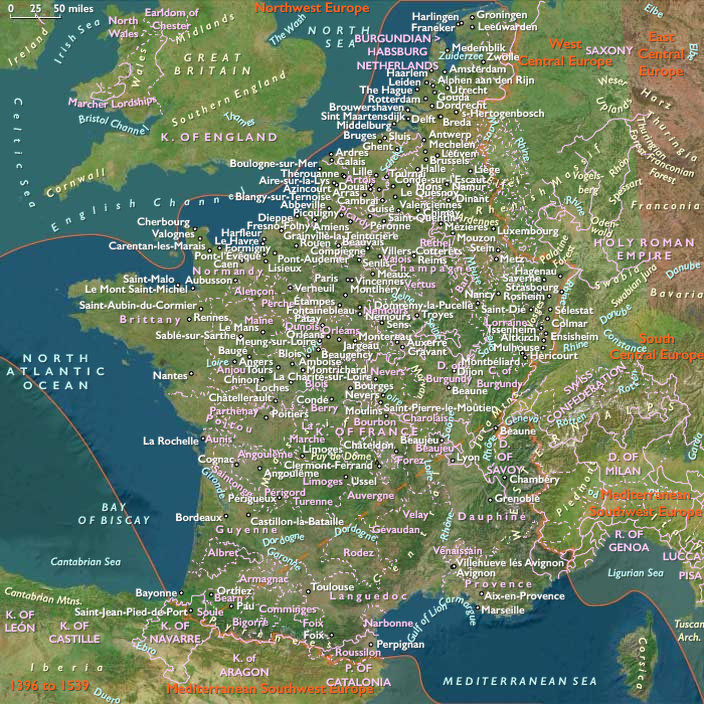
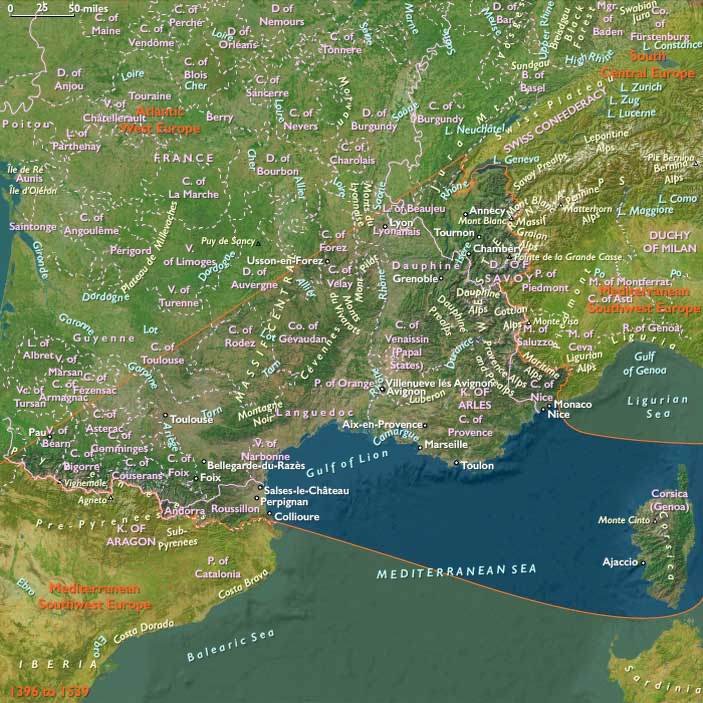
The subregion of Mediterranean West Europe includes southern France (Languedoc, Provence, the Rhône valley, the French Pyrenees), Monaco, and Corsica. Anchors comprised the Provençal coast (Marseille, Nice, Monaco), the Rhône valley with Avignon, Arles, and Lyon’s southern approaches, the Pyrenean uplands of Roussillon, and Corsica’s mountainous heartland and coastal citadels. These were frontier lands bridging France, Italy, and Iberia, tied to both Mediterranean seafaring and continental politics.
Climate & Environmental Shifts
The Little Ice Age brought cooler winters and occasional crop failures:
-
Languedoc & Provence: Vineyards and olive groves endured frost damage in hard winters.
-
Rhône valley: Floods and droughts alternated, reshaping grain yields.
-
Corsica & Pyrenees: Heavy snows delayed planting; pastoralists shifted grazing between valleys and uplands.
-
Mediterranean coasts: Storms battered ports; fisheries remained abundant but vulnerable to seasonal variability.
Subsistence & Settlement
-
Agriculture: Mixed farming of wheat, barley, rye, and legumes in valleys; vineyards and olives on coastal terraces; chestnuts in Corsican uplands.
-
Pastoralism: Sheep and goats grazed Pyrenean and Corsican highlands; wool and cheese fed urban markets.
-
Towns: Marseille, Avignon, Montpellier, Nice, and Ajaccio thrived as mercantile and cultural centers; fortified citadels dominated Corsican coasts.
-
Trade staples: Salt from Aigues-Mortes, wine and grain from Languedoc, olive oil from Provence, and Corsican timber and cheese.
Technology & Material Culture
-
Agricultural tools: Wooden plows, iron sickles, and watermills; terracing in Corsica and Provence.
-
Maritime craft: Galleys, cogs, and early caravels linked coasts to Italy and Iberia.
-
Architecture: Flamboyant Gothic cathedrals in Narbonne and Montpellier; papal palaces at Avignon; Corsican Genoese towers along coasts.
-
Print & learning: Lyon became a printing hub in the late 15th century; Avignon and Montpellier hosted universities and humanist circles.
Movement & Interaction Corridors
-
Mediterranean sealanes: Marseille and Monaco tied France to Genoa, Naples, and Barcelona. Corsica lay on routes between Italy, Iberia, and the Maghreb.
-
Rhône corridor: Moved wine, grain, and salt north to Lyon and the rest of France.
-
Pilgrimage routes: Linked Roussillon and Provence into Santiago de Compostela and Rome networks.
-
Military frontiers: Provence and Roussillon sat at the hinge of French, Aragonese, and later Habsburg ambitions.
Cultural & Symbolic Expressions
-
Catholic orthodoxy: Monastic houses and churches structured devotion; papal influence at Avignon lingered.
-
Humanism: Lyon and Avignon hosted scholars and presses; Montpellier’s medical school became renowned.
-
Art: Frescoes, sculpture, and illuminated manuscripts in Provence; troubadour legacies continued in lyric poetry.
-
Corsican identity: Clan-based traditions blended with Genoese and Pisan legacies.
Environmental Adaptation & Resilience
-
Farmers: Diversified crops to hedge against frost and drought; stored grain in communal barns.
-
Pastoralists: Practiced transhumance, moving flocks from coast to uplands.
-
Villages: Built terraces and dikes to manage fragile soils and flood risks.
-
Urban resilience: Imported grain during shortages; salt trade stabilized food supply.
Technology & Power Shifts (Conflict Dynamics)
-
Hundred Years’ War (to 1453): Though largely fought north of this subregion, it disrupted Languedoc and Provence, causing raids and instability.
-
Aragonese vs. French rivalry: Roussillon shifted between French and Aragonese control, contested in repeated campaigns.
-
Italian Wars (1494–1559): Drew Provence and Corsica into major clashes between Valois France and Habsburg Spain, allied with Genoa.
-
Battle of Fornovo (1495) and later campaigns in Naples echoed into Provençal ports.
-
1524–1525: Francis I’s campaign in Italy ended in disaster at the Battle of Pavia, weakening French claims and exposing Provence to Habsburg pressure.
-
Corsica: Fought over by Genoa and Aragon; Genoa reasserted control by early 16th century, fortifying coasts against Barbary corsairs.
-
Naval warfare: Mediterranean galley clashes involved French, Genoese, and Ottoman squadrons; Marseille’s shipyards expanded.
Transition
By 1539 CE, Mediterranean West Europe was a frontier of empires. France under Francis I had suffered setbacks in Italy but consolidated Provence and Roussillon. Genoa controlled Corsica, bracing against French and Ottoman threats. Marseille and Monaco thrived as mercantile and naval hubs, yet faced corsair raids. Alpine valleys and Rhône grain routes sustained populations despite climate stress. Humanism flourished in Lyon and Avignon, even as confessional tensions loomed. The stage was set for deeper entanglement in Habsburg–Valois wars and the Reformation’s southward sweep.
People
Groups
- Corsica, Medieval
- Islam
- Toulouse, County of
- Barcelona, County of
- Aquitaine, (Angevin) Duchy of
- Pisa, (first) Republic of
- Genoa, (Most Serene) Republic of
- Christians, Roman Catholic
- Provence, County of
- Aragon, Crown of
- Monaco, Principality of
Topics
Commodoties
Subjects
Regions
Subregions
Years: 1396 - 1539
People
Groups
- Corsica, Medieval
- Islam
- Toulouse, County of
- Barcelona, County of
- Aquitaine, (Angevin) Duchy of
- Pisa, (first) Republic of
- Genoa, (Most Serene) Republic of
- Christians, Roman Catholic
- Provence, County of
- Aragon, Crown of
- Monaco, Principality of
Topics
Commodoties
Subjects
Regions
Subregions