
Mediterranean West Europe (2205–2062 BCE): Emergence of…
2205 BCE to 2062 BCE
Mediterranean West Europe (2205–2062 BCE): Emergence of Early Bronze Age Societies and Cultural Realignments
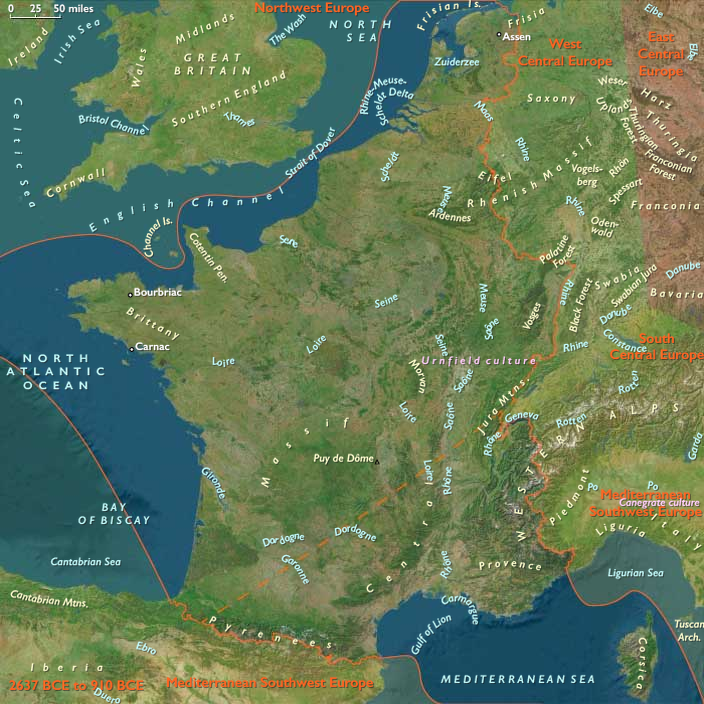
Between 2205 and 2062 BCE, Mediterranean West Europe—encompassing southern France, Corsica, and Monaco—undergoes profound cultural transformations as the region emerges from the upheaval marking the end of the Neolithic. The period is characterized by significant shifts in burial practices, settlement patterns, and social organization, heralding the Early Bronze Age.
Transformation of Burial Practices
A notable cultural shift during this era is the gradual abandonment of collective burial traditions, dominant throughout the Neolithic period, in favor of individual interments. This significant change in mortuary customs is especially pronounced in southern France, reflecting broader social changes and increased emphasis on individual identity and status within communities.
New Settlement Patterns in Southern France
Settlement patterns across southern France also experience considerable evolution. While some fortified sites from earlier periods continue to be occupied or are reestablished due to their defensible positions, there is a notable rise in smaller farmsteads and hamlets. This decentralized habitation pattern suggests a more dispersed population structure and a shift towards a predominantly agricultural economy based on family or kin-based units.
In southeastern France, the formative stages of the Rhône culture (c. 2300–1600 BCE) take shape during this time. Concurrently, in the west, Brittany witnesses the rise of the Armorican Tumulus culture (c. 2200–1400 BCE), highlighting distinct regional developments yet interconnected through broader cultural and trade networks.
Corsican Reorganization and Early Torrean Developments
Following the decline of the Terrina culture, Corsica undergoes a transitional phase marked initially by reduced human activity and ecological recovery, including notable woodland regeneration. Despite this period of diminished settlement density, significant developments soon emerge, foreshadowing the rise of more complex social structures.
Archaeological excavations near Sartène reveal the establishment of sophisticated fortified villages around 2000 BCE. These settlements feature multiple rows of wooden palisades and defensive constructions, laying the foundations for the later Torrean civilization, which will come to characterize Corsican Bronze Age societies prominently.
Technological and Economic Advances
This era also sees increasing metallurgical proficiency, with copper becoming more prevalent in toolmaking and personal adornment, signaling enhanced regional and Mediterranean-wide trade interactions. Communities in Mediterranean West Europe engage in exchange networks that facilitate the spread of technological innovations and cultural ideas, further integrating the region into broader Bronze Age dynamics.
Foundations for Future Cultural Complexity
By the end of this era, the cultural and social foundations laid during the transition from the Late Neolithic collapse to the Early Bronze Age firmly position Mediterranean West Europe for future advancements. The establishment of new social frameworks, settlement organization, and economic practices during this formative period significantly shapes subsequent regional developments and interactions within the broader Mediterranean sphere.
Groups
Topics
Regions
West Europe
View →Subregions
