
Mediterranean West Europe (1108 – 1251 CE): …
Years: 1108 - 1251
Mediterranean West Europe (1108 – 1251 CE): Albigensian Wars, Papal Provence, and Maritime Commerce
Geographic and Environmental Context
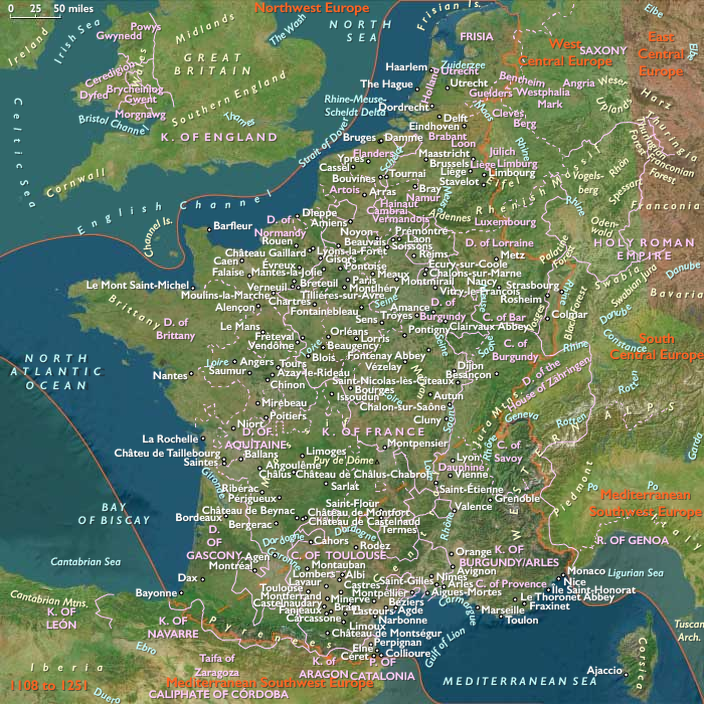
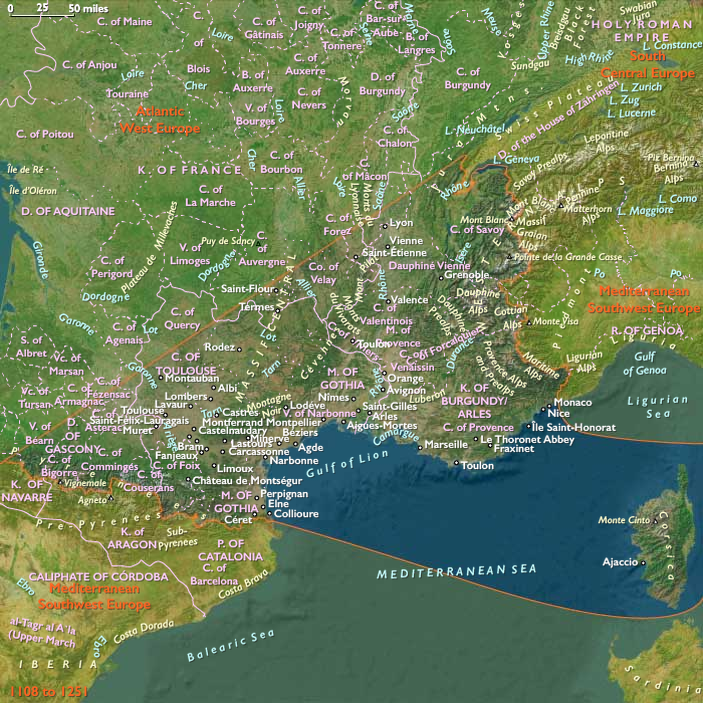
Mediterranean West Europe includes southern France (from the Rhône valley to the Pyrenees, plus Languedoc, Provence, and Roussillon), Monaco, and the island of Corsica.
-
Anchors: the Rhône Valley (Avignon, Arles, Lyon, Beaucaire fairs), the southern Jura routes into Switzerland, the Provençal littoral (Marseille, Toulon, Nice, Monaco), the Languedoc plain (Carcassonne, Béziers, Toulouse’s southern hinterland, Montpellier), the Roussillon marches (Perpignan, Pyrenean passes), and Corsica under Genoese sway.
Climate and Environmental Shifts
-
Still favorable overall, with first hints of variability in 13th c. viticulture.
-
Rhône and Jura valleys remained fertile and well-populated.
Societies and Political Developments
-
Counts of Toulouse reached their height; Trencavel viscounts held Carcassonne, Béziers, Albi.
-
Cathar heresy (Albigensian movement) flourished in Languedoc towns.
-
Albigensian Crusade (1209–1229): led by northern French barons and Papacy; devastated Languedoc, led to French royal absorption.
-
Treaty of Paris (1229): annexed Toulouse lands to Capetian France.
-
Provence: passed to Angevin dynasty in 1240s.
-
Lyon grew as a mercantile–ecclesiastical city, hosting church councils.
-
Corsica: Genoese dominance strengthened.
-
Monaco and Nice fell increasingly into Genoese/Provençal rivalry.
Economy and Trade
-
Ports (Marseille, Montpellier, Narbonne): exchanged wine, oil, wool for Italian silks, Levantine spices.
-
Rhône traffic: Lyon’s fairs expanded; Jura passes carried salt, cloth, and cheese.
-
Agriculture: vineyards and olives in Provence/Languedoc; sheep in Jura and Pyrenees.
Belief and Symbolism
-
Cathar dualism challenged Catholic dominance.
-
Inquisition launched after 1229.
-
Monastic orders (Dominicans, Cistercians) expanded influence.
Long-Term Significance
By 1251, Languedoc was absorbed into Capetian France, Provence under Angevin Naples, Lyon a papal and mercantile hub, and Corsica under Genoese sway.

Mediterranean West Europe (with civilization) ©2024-25 Electric Prism, Inc. All rights reserved.
Groups
- Corsica, Medieval
- Septimania
- Islam
- Naples, Duchy of
- Papal States (Republic of St. Peter)
- Toulouse, County of
- Aquitaine, (Angevin) Duchy of
- France, (Capetian) Kingdom of
- Savoy, County of
- Genoa, (Most Serene) Republic of
- Arles, Kingdom of
- Christians, Roman Catholic
- Trencavel
- Roman Empire, Eastern: Komnenos dynasty, restored
- Provence, County of
- Cistercians, Order of the (White Friars)
- Catharism (Albigenses)
- Roman Empire, Eastern: Angelid dynasty
- Dominicans, or Order of St. Dominic
- Ifriqiya, Hafsid (Banu Hafs) (first) Caliphate of
- Inquisition, papal
Topics
Commodoties
Subjects
Regions
Subregions
Years: 1108 - 1251
Mediterranean West Europe (with civilization) ©2024-25 Electric Prism, Inc. All rights reserved.
Groups
- Corsica, Medieval
- Septimania
- Islam
- Naples, Duchy of
- Papal States (Republic of St. Peter)
- Toulouse, County of
- Aquitaine, (Angevin) Duchy of
- France, (Capetian) Kingdom of
- Savoy, County of
- Genoa, (Most Serene) Republic of
- Arles, Kingdom of
- Christians, Roman Catholic
- Trencavel
- Roman Empire, Eastern: Komnenos dynasty, restored
- Provence, County of
- Cistercians, Order of the (White Friars)
- Catharism (Albigenses)
- Roman Empire, Eastern: Angelid dynasty
- Dominicans, or Order of St. Dominic
- Ifriqiya, Hafsid (Banu Hafs) (first) Caliphate of
- Inquisition, papal
Topics
Commodoties
Subjects
Regions
Subregions