
Middle East (1108 – 1251 CE): Ayyubid …
Years: 1108 - 1251
Middle East (1108 – 1251 CE): Ayyubid Syria, Jalayirid Precursors, and Island Hormuz
Geographic and Environmental Context
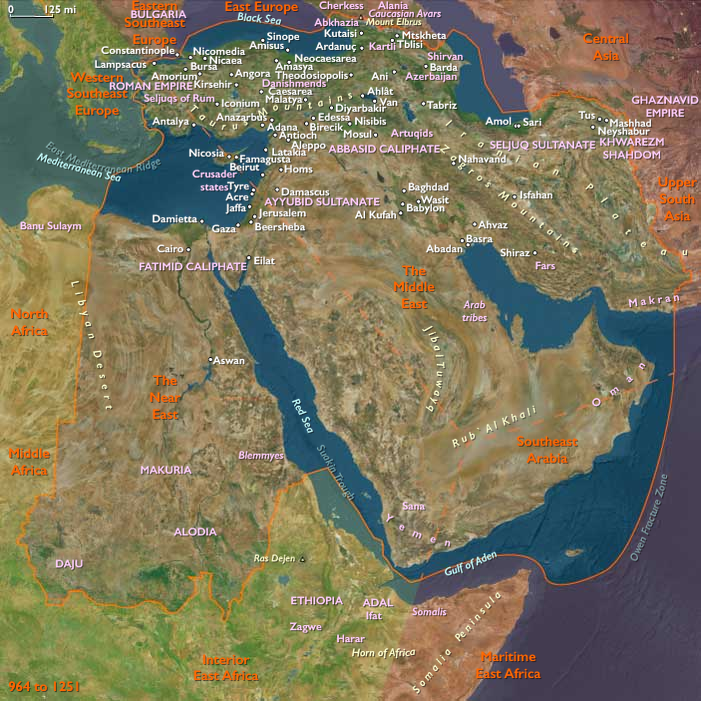
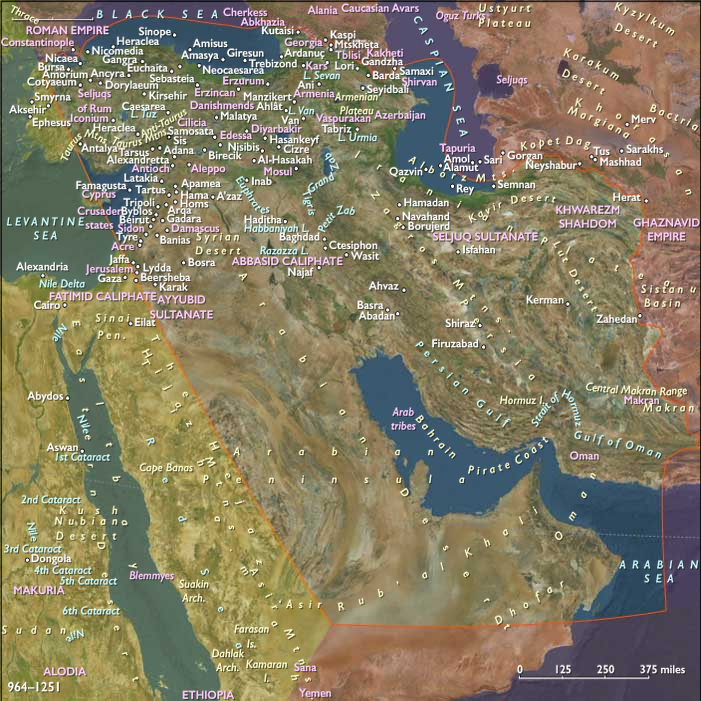
The Middle East includes Iraq, Iran, Syria, Armenia, Georgia, Azerbaijan, eastern Jordan, most of Turkey’s central and eastern uplands (including Cilicia), eastern Saudi Arabia, northern Oman, Qatar, Bahrain, the UAE, northeastern Cyprus, and all but southernmost Lebanon.
-
Anchors: the Tigris–Euphrates basin, the Iranian plateau with Azerbaijan–Tabriz, the Caucasus (Armenia–Georgia–Azerbaijan), the Cilician uplands and Syrian plains, the Persian Gulf rim (Hormuz, al-Ahsa, Bahrain, Oman), and northeastern Cyprus as a crusader–Mamluk frontier node.
Climate and Environmental Shifts
-
Stable monsoons sustained Gulf–Indian trade; Nile variability affects the Near East, not this region; steppe droughts shook Anatolian–Caucasian margins.
Societies and Political Developments
-
Ilkhanate precursors: late Seljuk fragmentation in Iran paved the way for Mongol entry (1220s–30s).
-
Ayyubids controlled Syria (and Egypt—outside our region) from 1171 onward, with Damascus/Aleppo as provincial capitals.
-
Caucasus: Armenia and Georgia oscillated between independence and Mongol pressure; Georgia’s strength peaked under Queen Tamar (r. 1184–1213) (Caucasus is in this region).
-
Eastern Anatolia/Cilicia: Cilician Armenia flourished as a crusader ally; Turkmen emirates multiplied in the uplands.
-
Eastern Arabia–Gulf & Oman: Hormuz migrated to its island base (c. 1301) later, but in this age it was already consolidating; Nabhani Oman and Uyunids in al-Ahsa controlled pearls and ports.
-
Northeastern Cyprus (Lusignans from 1192) developed as a crusader logistics and trade node.
-
Lebanon (north/coastal)—Tripoli and Beirut engaged in crusader–Ayyubid–merchant circuits (southernmost strip excluded).
Economy and Trade
-
Caravan cities: Tabriz–Rayy–Hamadan–Baghdad; Aleppo/Damascus as Syrian hinges.
-
Gulf traffic: horses, pearls, dates; Indian pepper and textiles via Hormuz/Qalhat/Suḥar up to Basra and overland to Syria/Iran.
-
Agrarian cores: Tigris–Euphrates cereals/dates; Iranian cotton, silk, sugar; Syrian grain/fruit.
Subsistence and Technology
-
Hydraulics: canals and qanāt systems; Ayyubid citadels and madrasas; Persianate crafts and book arts.
Movement Corridors
-
Tabriz–Baghdad–Syria; Caucasus passes; Cilicia–Aleppo; Gulf monsoon lanes Oman–Hormuz–Basra.
Belief and Symbolism
-
Sunni Ayyubid legitimacy in Syria; Christian Armenia–Georgia cultural zeniths; Sufi networks expanding; Ibāḍī Oman and Shi‘i pockets in the Gulf.
Long-Term Significance
By 1251, pre-Ilkhanid Iran–Iraq and Ayyubid Syria formed a contested but connected corridor; Cilician Armenia and northeastern Cyprus anchored crusader frontiers; Hormuz and Omani ports organized Gulf commerce—structures the Mongol conquests would soon reorder.

Middle East (with civilization) ©2024-25 Electric Prism, Inc. All rights reserved.
People
Groups
- Iranian peoples
- Arab people
- Persian people
- Armenian people
- Khwarezm
- Islam
- Muslims, Sunni
- Muslims, Kharijite
- Muslims, Shi'a
- Sufism
- Muslims, Ibadi
- Abbasid Caliphate (Baghdad)
- Bahrain, 'Abbasid
- Georgia, (Bagratid) Kingdom of
- Seljuq Empire (Isfahan)
- Christians, Eastern Orthodox
- Christians, Roman Catholic
- Danishmends
- Melitene, Danishmendid Emirate of
- Uyunid dynasty
- Khwarezm dynasty
- Rum, Sultanate of
- Armenia, Baronry of Little, or Lesser
- Roman Empire, Eastern: Komnenos dynasty, restored
- Artuquids
- Edessa, County of
- Antioch, Principality of
- Jerusalem, Latin Kingdom of
- Artuqid dynasty of Hasankeyf
- Artuqid dynasty of Mardin
- Seljuq Empire, Western capital
- Seljuq Empire, Eastern capital
- Georgia, (Bagratid) Kingdom of
- Mongols
- Zengid dynasty
- Zengid dynasty of al-Jazirah
- Zengid dynasty of Syria
- Zengid dynasty of Sinjar
- Egypt, Ayyubid Sultanate of
- Roman Empire, Eastern: Angelid dynasty
- Armenia, Baronry of Little, or Lesser
- Armenian Kingdom of Cilicia, or Little Armenia
- Mongol Empire
- Khwarezm dynasty
- Khwarezm dynasty
- Khwarezmians
- Khwarezm dynasty
Topics
- Medieval Warm Period (MWP) or Medieval Climate Optimum
- Georgian Golden Age
- Crusades, The
- Crusade, Second
- Myriokephalon, Battle of
- Crusade, Third
- Genghis Khan, Conquests of
- Mongol invasion of Khwarezmia and Eastern Iran
- Mongol Invasions of Georgia and Armenia
Commodoties
- Gem materials
- Domestic animals
- Grains and produce
- Fibers
- Textiles
- Ceramics
- Strategic metals
- Manufactured goods
Subjects
Regions
Subregions
Years: 1108 - 1251
Middle East (with civilization) ©2024-25 Electric Prism, Inc. All rights reserved.
People
Groups
- Iranian peoples
- Arab people
- Persian people
- Armenian people
- Khwarezm
- Islam
- Muslims, Sunni
- Muslims, Kharijite
- Muslims, Shi'a
- Sufism
- Muslims, Ibadi
- Abbasid Caliphate (Baghdad)
- Bahrain, 'Abbasid
- Georgia, (Bagratid) Kingdom of
- Seljuq Empire (Isfahan)
- Christians, Eastern Orthodox
- Christians, Roman Catholic
- Danishmends
- Melitene, Danishmendid Emirate of
- Uyunid dynasty
- Khwarezm dynasty
- Rum, Sultanate of
- Armenia, Baronry of Little, or Lesser
- Roman Empire, Eastern: Komnenos dynasty, restored
- Artuquids
- Edessa, County of
- Antioch, Principality of
- Jerusalem, Latin Kingdom of
- Artuqid dynasty of Hasankeyf
- Artuqid dynasty of Mardin
- Seljuq Empire, Western capital
- Seljuq Empire, Eastern capital
- Georgia, (Bagratid) Kingdom of
- Mongols
- Zengid dynasty
- Zengid dynasty of al-Jazirah
- Zengid dynasty of Syria
- Zengid dynasty of Sinjar
- Egypt, Ayyubid Sultanate of
- Roman Empire, Eastern: Angelid dynasty
- Armenia, Baronry of Little, or Lesser
- Armenian Kingdom of Cilicia, or Little Armenia
- Mongol Empire
- Khwarezm dynasty
- Khwarezm dynasty
- Khwarezmians
- Khwarezm dynasty
Topics
- Medieval Warm Period (MWP) or Medieval Climate Optimum
- Georgian Golden Age
- Crusades, The
- Crusade, Second
- Myriokephalon, Battle of
- Crusade, Third
- Genghis Khan, Conquests of
- Mongol invasion of Khwarezmia and Eastern Iran
- Mongol Invasions of Georgia and Armenia
Commodoties
- Gem materials
- Domestic animals
- Grains and produce
- Fibers
- Textiles
- Ceramics
- Strategic metals
- Manufactured goods
Subjects
Regions
Subregions