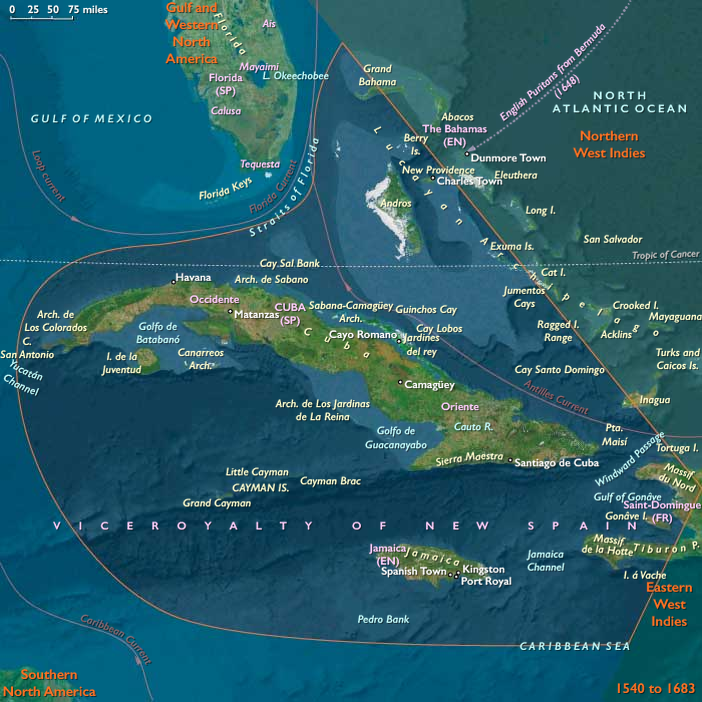
Spanish law, the Roman Catholic religion, the…
1540 CE to 1683 CE
While the black population in the British sugar-producing colonies in the Caribbean lives under the tight political control of a small, exploiting minority of overseers and government officials, blacks in Cuba coexist with the rest of the population and live mainly by farming and cattle grazing.
Prior to the eighteenth century, the island avoids the plantation system with its concomitant large-scale capital investment, latifundios (large estates), and docile enslaved black labor force.
Instead, society develops with little outside interference.
Cuba thus begins to find its own identity in a society that combines racial balance, small-scale agriculture, and folk-Catholicism within a Spanish framework.
Groups
Commodities
Regions
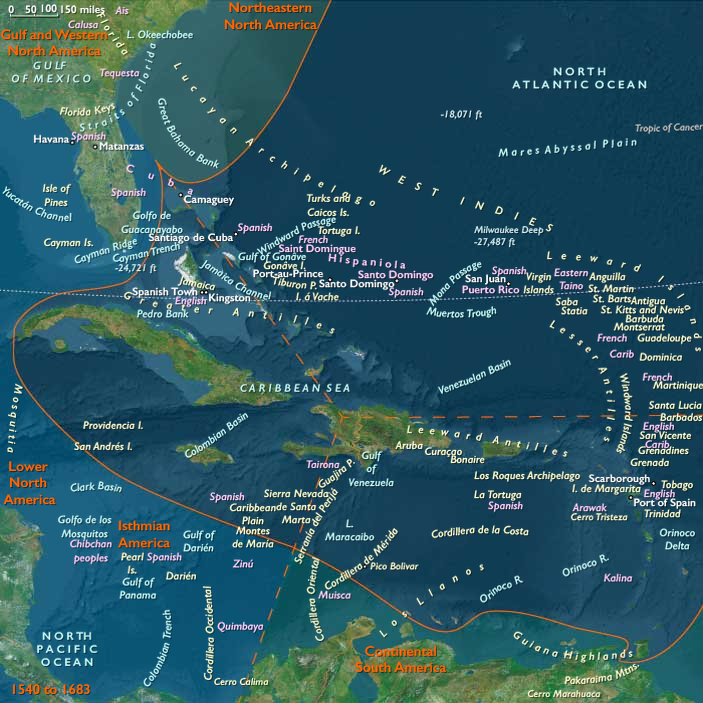
West Indies
View →Subregions