
Most of the Basilica of St. Sernin…
1120 CE
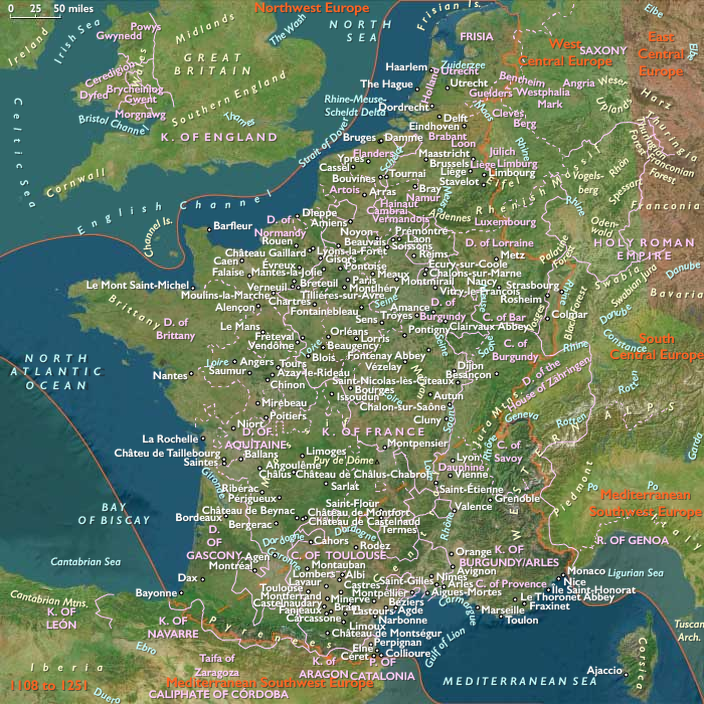
Most of the Basilica of St. Sernin in Toulouse is completed in the Romanesque style between about 1080 and 1120, with construction continuing thereafter.
Forming a large Latin cross, the church’s four side aisles and extended nave are intended to accommodate multitudes of pilgrims.
The extension of the side aisles around the apse to form an ambulatory facilitates circulation through the church.
Small radial chapels opening off the ambulatory and transept arms furnish a setting for the subsidiary altars needed to serve the hordes of worshipers.
Saint-Sernin is particularly noted for the quality and quantity of its Romanesque sculpture.
Despite being called a basilica, St. Sernin's deviates from the basilica plan of early Christian architecture in a few ways.
It is much larger compared to earlier churches.
It is also constructed mostly of brick.
The building is in the form of a crucifix.
The ceilings are vaulted, unlike many of the earlier churches.
St. Sernin's contains radiating chapels which were used to display important relics.
Another deviation from the earlier Christian churches is the addition of an ambulatory, a walkway that goes around the nave and side aisles to allow for viewing of the radiating chapels (which could be done while mass was being held without interrupting the ceremony).
For these and other reasons, St. Sernin's is often said to follow the "pilgrimage plan" instead of the traditional basilica plan.
Locations
Regions
West Europe
View →Subregions
