
The French have remained at the site…
August 1757 CE
Montcalm decides, for unknown reasons, not to follow up his victory with an attack on Fort Edward.
Many reasons have been proposed justifying his decision, including the departure of many (but not all) of the natives, a shortage of provisions, the lack of draft animals to assist in the portage to the Hudson, and the need for the Canadian militia to return home in time to participate in the harvest.
The British (and later Americans) will never rebuild anything on the site of Fort William Henry, which will lie in ruins for about two hundred years.
In the 1950s, excavation at the site will eventually lead to the reconstruction of Fort William Henry as a tourist destination for the town of Lake George.
People
Groups
Algonquin, or Algonkin, people (Amerind tribe)
View →
Iroquois (Haudenosaunee, also known as the League of Peace and Power, Five Nations, or Six Nations)
View →
Abenaki people (Amerind tribe)
View →
Ho-Chunk (Amerind tribe)
View →
Mi'kmaq people (Amerind tribe)
View →
Wyandot, or Wendat, or Huron people (Amerind tribe)
View →
Atikamekw
View →
Miami (Amerind tribe)
View →
Ojibwa, or Ojibwe, aka or Chippewa (Amerind tribe)
View →
Odawa, or Ottawa, people (Amerind tribe)
View →
Onondaga people (Amerind tribe)
View →
Menominee (Amerind tribe)
View →
Iowa (Amerind tribe)
View →
Nipissing people (Amerind tribe)
View →
Mississaugas (Amerind tribe)
View →
Sauk, or Sac, people (Amerind tribe)
View →
Meskwaki, or Fox tribe (Amerind tribe)
View →
New France (French Colony)
View →
France, (Bourbon) Kingdom of
View →
Ohio Country
View →
New York, Province of (English Colony)
View →
New Hampshire, English royal Province of
View →
Massachusetts, Province of (English Crown Colony)
View →
New Jersey (English Colony)
View →
Britain, Kingdom of Great
View →
Topics
Subjects
Regions
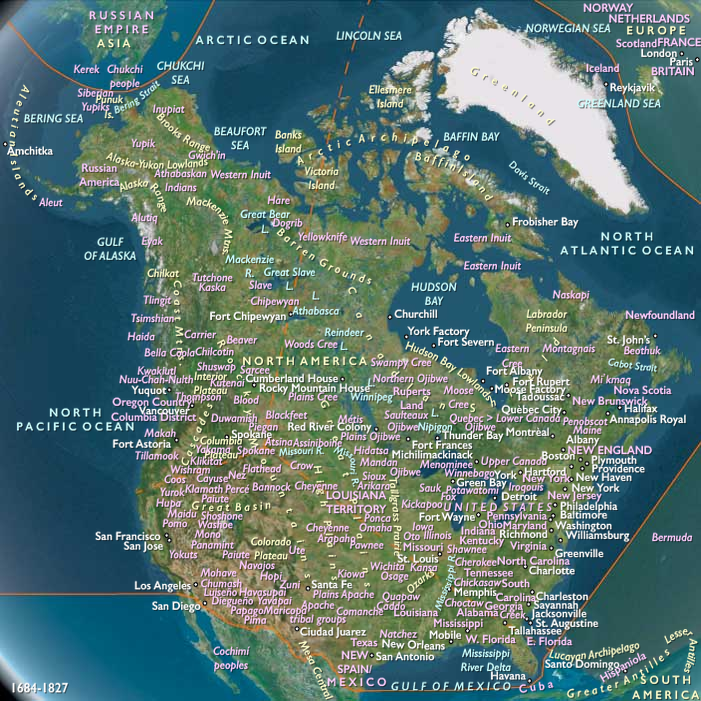
Northern North America
View →Subregions
