Most of the southern Plains tribes have…
1768 CE to 1779 CE
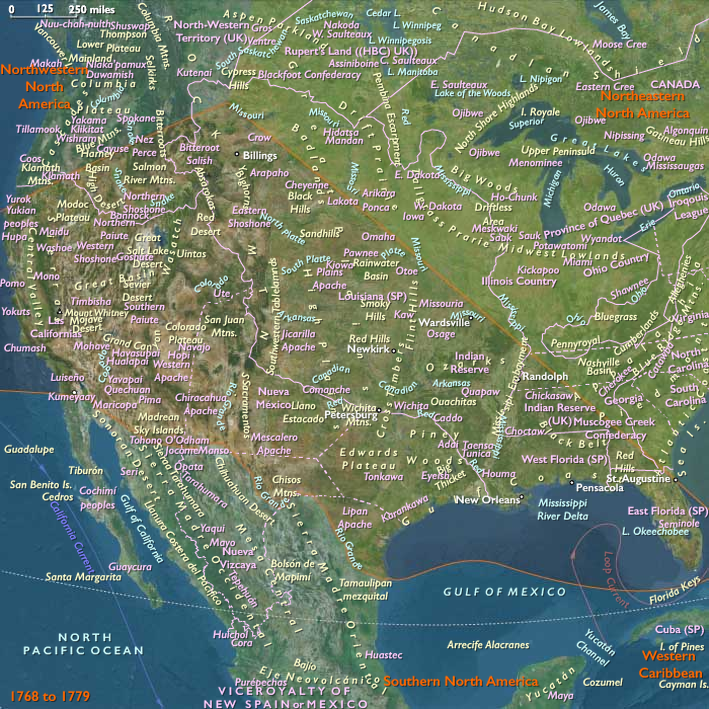
Most of the southern Plains tribes have incorporated the horse into their culture by the 1770s, as have the Blackfeet, Gros Ventre, Plains Ojibway and Plains Cree to the north.
The horse represents the Good Life, with the buffalo as its economic base, and a score of Amerind nations move to the Plains to enjoy it.
If the horse culture encourages intertribal raiding, it also encourages intertribal communication and forges the Composite Nation of the Great Plains.
Groups
Lipan Apache people (Amerind tribe)
View →
Ojibwa, or Ojibwe, aka or Chippewa (Amerind tribe)
View →
Lakota, aka Teton Sioux (Amerind tribe)
View →
Plains Apache, or Kiowa Apache; also Kiowa-Apache, Naʼisha, Naisha (Amerind tribe)
View →
Blackfoot Confederacy
View →
Crow people, aka Absaroka or Apsáalooke (Amerind tribe)
View →
Cheyenne people (Amerind tribe)
View →
Arapaho people (Amerind tribe)
View →
Gros Ventre or “Atsina” people (Amerind tribe)
View →
Assiniboine people (Amerind tribe)
View →
Cree (Amerind tribe)
View →
Kiowa people (Amerind tribe)
View →
Tonkawa (Amerind tribe)
View →
Tsuu T'ina; also Sarcee, Sarsi, Tsu T'ina, Tsuut'ina (Amerind tribe)
View →
Plains Indian culture
View →
Comanche (Amerind tribe)
View →
Siak, Sultanate of
View →
Commodities
Subjects
Regions

Northern North America
View →Subregions