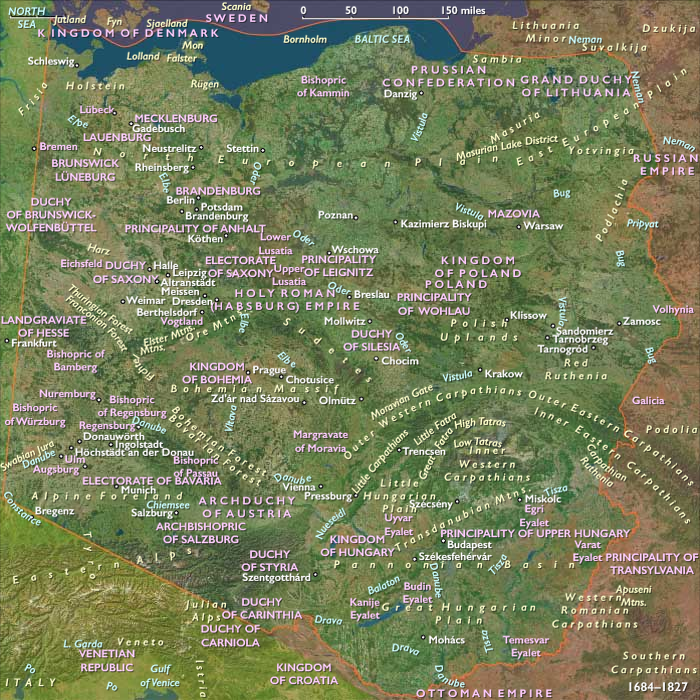
Mozart had fallen ill while in Prague…
December 1791 CE
He had continued his professional functions for some time and conducted the premiere of The Magic Flute on September 30.
His health had deteriorated on November 20, at which point he became bedridden, suffering from swelling, pain, and vomiting.
Mozart is nursed in his final illness by his wife and her youngest sister, and is attended by the family doctor, Thomas Franz Closset.
He is mentally occupied with the task of finishing his Requiem, but the evidence that he actually dictated passages to his student Franz Xaver Süssmayr is minimal.
Mozart dies in his home on December 5, 1791 (aged 35) at 1:00 am.
The cause of Mozart's death cannot be known with certainty.
The official record has it as hitziges Frieselfieber ("severe miliary fever", referring to a rash that looks like millet seeds), more a description of the symptoms than a diagnosis.
Researchers have posited at least one hundred and eighteen causes of death, including acute rheumatic fever, streptococcal infection, trichinosis, influenza, mercury poisoning, and a rare kidney ailment.
Mozart's modest funeral does not reflect his standing with the public as a composer; memorial services and concerts in Vienna and Prague are well-attended.
Indeed, in the period immediately after his death, his reputation will rise substantially.
Locations
Groups
Subjects
Regions
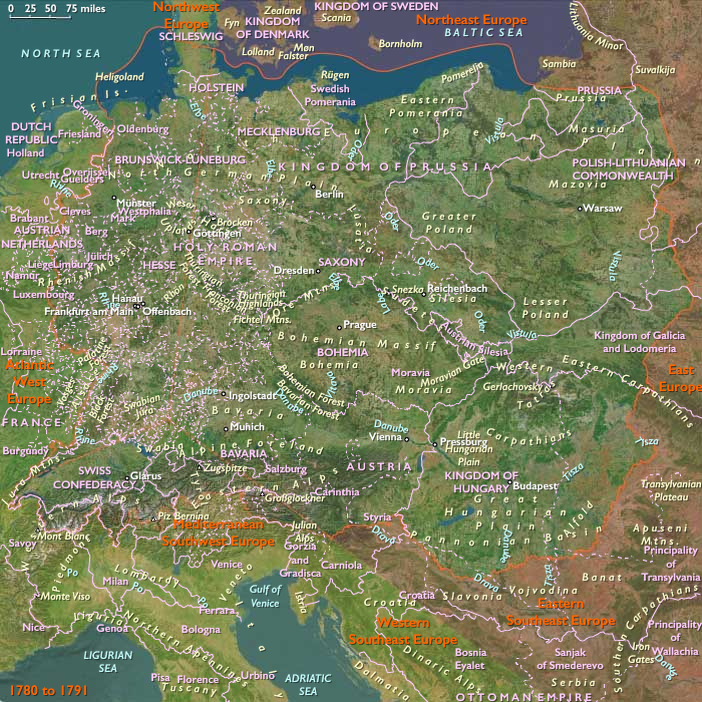
Central Europe
View →Subregions