
The Duchess of Richmond's ball is held…
March 1815 CE
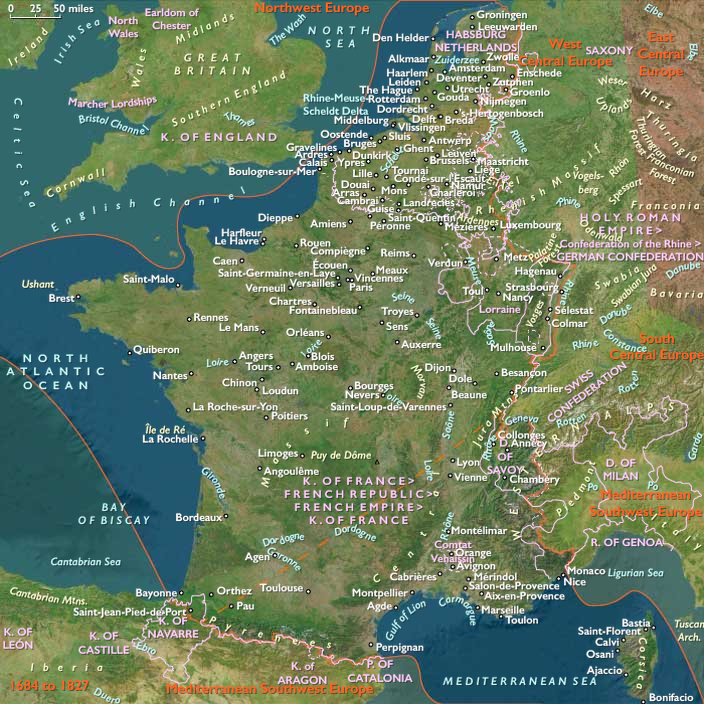
Her husband, Charles Lennox, 4th Duke of Richmond, is in command of a reserve force in Brussels, which is protecting the city in case Napoleon Bonaparte invades.
The ball will inspire a number of writers and artists in the nineteenth century.
Sir Walter Scott will mention it in passing in Paul's Letters to his Kinsfolk.
It will be described by William Makepeace Thackeray in Vanity Fair and by Lord Byron in Childe Harold's Pilgrimage.
Byron emphasizes the contrast between the glamour of the ball and the horror of battle, concentrating on the emotional partings.
The ball will also inspired artists, including John Everett Millais, who will paint The Black Brunswicker in 1860, Henry Nelson O'Neil who will paint Before Waterloo in 1868 and Robert Hillingford who will paint The Duchess of Richmond's Ball.
Thackeray's dramatic use of the ball in Vanity Fair will inspire, in turn, a number of screen depictions.
People
Groups
Regions
West Europe
View →Subregions
