Event
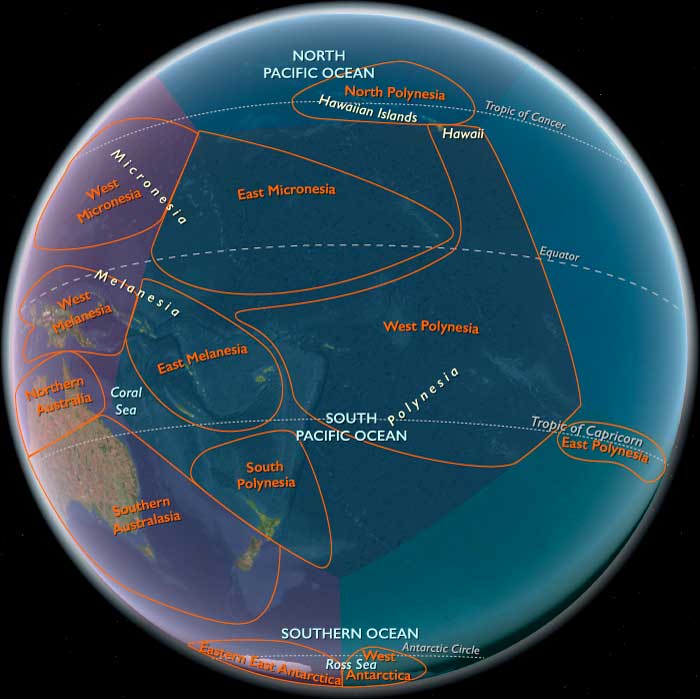
Pohnpei's earliest settlers were probably Lapita culture…
Pohnpei's earliest settlers were probably Lapita culture people from the Southeast Solomon Islands or the Vanuatu archipelago.
Pre-colonial history is divided into three eras: Mwehin Kawa or Mwehin Aramas (Period of Building, or Period of Peopling, before c. 1100); Mwehin Sau Deleur (Period of the Lord of Deleur, c. 1100 to c. 1628); and Mwehin Nahnmwarki (Period of the Nahnmwarki, c. 1628 to c. 1885).
Pohnpeian legend recounts that the Saudeleur rulers, the first to bring government to Pohnpei, were of foreign origin.
The Saudeleur centralized form of absolute rule is characterized in Pohnpeian legend as becoming increasingly oppressive over several generations.
Arbitrary and onerous demands, as well as a reputation for offending Pohnpeian deities, sowed resentment among Pohnpeians.
The Saudeleur Dynasty ended with the invasion of Isokelekel, another semi-mythical foreigner, who replaced the Saudeleur rule with the more decentralized nahnmwarki system in existence today.
Pohnpeian historic society was highly structured into five tribes, various clans and sub-clans; each tribe headed by two principal chiefs
The tribes were organized on a feudal basis. In theory, "all land belonged to the chiefs, who received regular tribute and whose rule was absolute."
Punishments administered by chiefs included death and banishment.
Tribal wars included looting, destruction of houses and canoes and killing of prisoners.
Pre-Spanish population estimates are deemed unreliable.
-
{# Image navigates to the detail page; the magnifying-glass chip is the only Fancybox lightbox trigger (kept a separate sibling — anchors can't nest). #}
 Central Oceania
World
-
{# Image navigates to the detail page; the magnifying-glass chip is the only Fancybox lightbox trigger (kept a separate sibling — anchors can't nest). #}
 Micronesia
Region
-
{# Image navigates to the detail page; the magnifying-glass chip is the only Fancybox lightbox trigger (kept a separate sibling — anchors can't nest). #}
 West Micronesia
Subregion