
Near East (196–207 CE): Severan Policies, Jewish …
Years: 196 - 207
Near East (196–207 CE): Severan Policies, Jewish Scholarship, and Mystical Thought
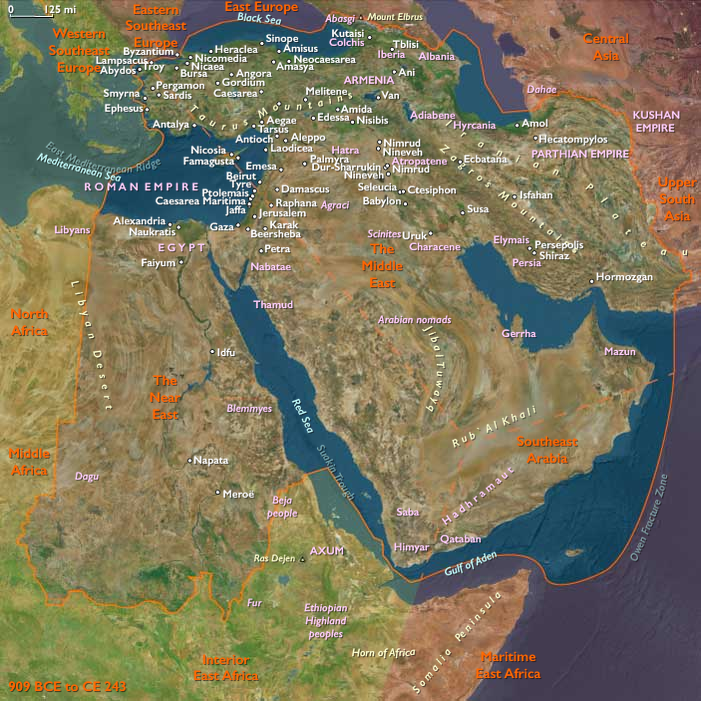
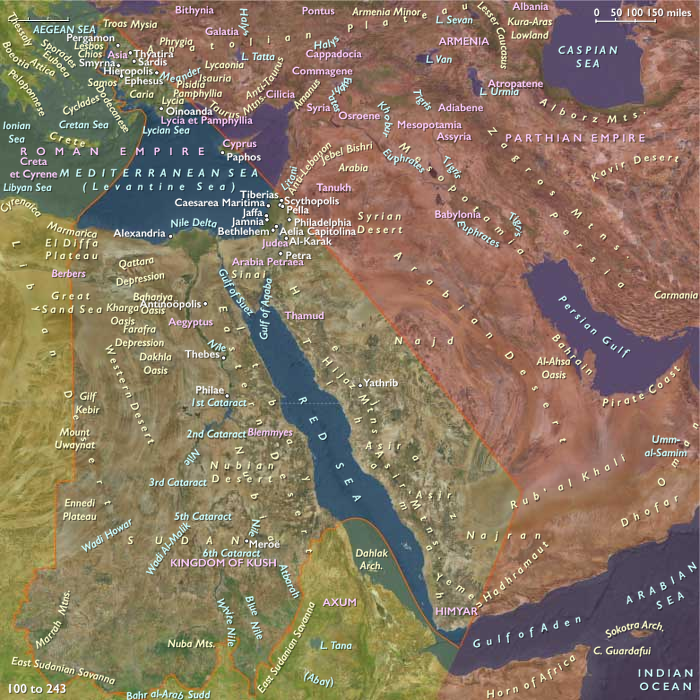
Under Emperor Septimius Severus (193–211 CE), Roman rule in the Near East continues to support urbanization and Hellenization, significantly reshaping the cultural landscape of Palestine. Despite these imperial efforts, the region of Galilee remains a robust center of Jewish presence, culture, and scholarship, resisting widespread Hellenistic assimilation.
Although Severus adopts generally tolerant policies toward Jews, allowing their participation in public office and respecting certain religious exemptions, he notably issues a ban against Jewish proselytism, attempting to curtail the spread of Judaism among non-Jewish populations.
Amidst these developments, Jewish intellectual and mystical traditions flourish. The Sefer Yetzirah ("Book of Formation"), a seminal text on Jewish esoteric philosophy and mysticism, likely reaches a critical stage of compilation or circulation in this period. Traditionally ascribed to the patriarch Abraham, this enigmatic work engages deeply with linguistic and metaphysical theories concerning God’s creation of the universe.
The dating and origins of the Sefer Yetzirah remain controversial. Scholars such as Richard August Reitzenstein place its origins as far back as the second century BCE, while linguistic analyses, including those by Christopher P. Benton, argue persuasively for a composition during the period of the Mishnah, around the second century CE. This text's complexity and obscure style generate significant scholarly debate, yet it gains lasting prominence in Jewish thought, influencing later mystical traditions and Kabbalistic teachings.
Legacy of the Era
Between 196 and 207 CE, imperial efforts to integrate Palestine into the Hellenized Roman world encounter persistent Jewish cultural resilience, particularly in Galilee. The emergence or further development of mystical and intellectual works, notably the Sefer Yetzirah, marks this era as a significant point in the historical evolution of Jewish esoteric thought, bridging ancient traditions with later medieval mystical philosophy.
People
Groups
- Jews
- Roman Empire (Rome): Flavian dynasty
- Syria Palæstina, Roman province of (Judea, Samaria, and Idumea)
Topics
Subjects
Regions
Subregions
Years: 196 - 207
People
Groups
- Jews
- Roman Empire (Rome): Flavian dynasty
- Syria Palæstina, Roman province of (Judea, Samaria, and Idumea)
Topics
Subjects
Regions
Subregions