Event
Near East (477 BCE–243 CE) Classical Antiquity…
Near East (477 BCE–243 CE)
Classical Antiquity — Hellenistic Kingdoms, Roman Provinces, and Mediterranean Integration
Environmental Setting
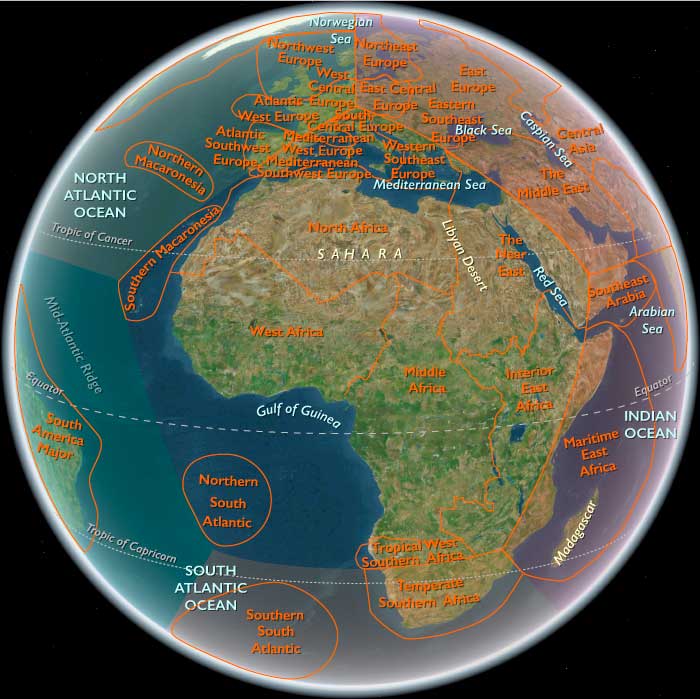
The environmental framework remained stable as political authority shifted from Persia to the Hellenistic kingdoms and ultimately Rome. River valleys, Mediterranean coastlines, mountain terraces, caravan routes, and oasis networks continued to determine settlement and economic organization.
Human Adaptation
Agriculture became increasingly commercialized. Egyptian grain production expanded to supply Mediterranean cities, olive oil and wine dominated western Anatolia, Nabataean hydraulic engineering transformed desert agriculture around Petra, while western Yemen maintained productive terraced landscapes. Urban growth intensified without fundamentally altering ecological relationships.
Exchange Networks
Mediterranean maritime commerce reached unprecedented levels. Alexandria, Tyre, Ephesus, Miletus, Cyprus, and the Nabataean caravan cities became integrated within a vast Roman trading system extending from the Atlantic to India. Red Sea navigation expanded dramatically, connecting Egyptian ports with Arabia, East Africa, and the Indian Ocean.
Institutional Development
Greek civic institutions spread widely under the Hellenistic monarchies before being incorporated into Roman provincial administration. Alexandria emerged as one of the ancient world's greatest scholarly centers. Jewish religious institutions evolved through the Second Temple, the Hasmonean kingdom, and eventually rabbinic scholarship, while early Christianity appeared within the Roman Near East during the first century.
Political Transformation
Alexander's conquest ended Persian rule and initiated Hellenistic monarchies dominated by the Ptolemies and Seleucids. Roman expansion progressively absorbed western Anatolia, Egypt, Nabataea, and Judea into a unified imperial system. Jewish revolts culminated in the destruction of the Second Temple, profoundly reshaping Jewish religious life while Christianity spread throughout the eastern Mediterranean.
Legacy of the Age
By 243 CE the Near East had become one of Rome's most prosperous and interconnected regions, where Hellenistic culture, Roman administration, Jewish scholarship, and emerging Christianity coexisted within a highly integrated Mediterranean economy.
-
{# Image navigates to the detail page; the magnifying-glass chip is the only Fancybox lightbox trigger (kept a separate sibling — anchors can't nest). #}
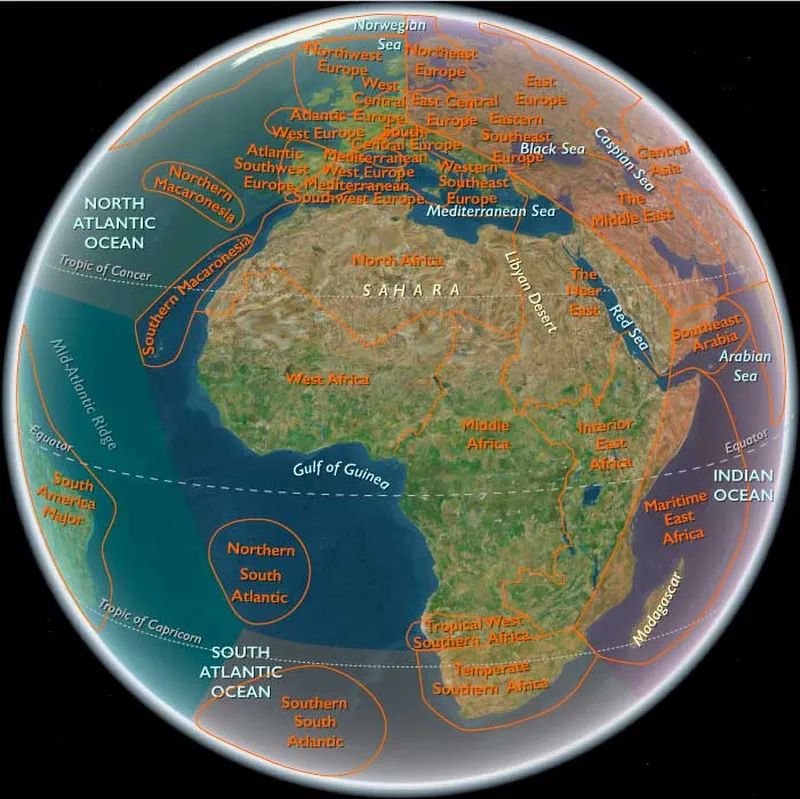 The Middle of The Earth
World
-
{# Image navigates to the detail page; the magnifying-glass chip is the only Fancybox lightbox trigger (kept a separate sibling — anchors can't nest). #}
 The Near and Middle East
Region
-
{# Image navigates to the detail page; the magnifying-glass chip is the only Fancybox lightbox trigger (kept a separate sibling — anchors can't nest). #}
 Near East
Subregion