
Event
...Louisbourg. The British see the Acadians' allegiance…
...Louisbourg.
The British see the Acadians' allegiance to the French and the Wabanaki Confederacy as a military threat.
Father Le Loutre's War has created the conditions for total war; British civilians have not been spared and, as Governor Charles Lawrence and the Nova Scotia Council see it, Acadian civilians have provided intelligence, sanctuary, and logistical support while others have fought against the British.
As a result of the military buildup at Chignecto, as part of the larger coordinated effort of the French and Indian War, the Governor of Massachusetts, William Shirley, plans to take Fort Beausejour.
Shirley's intelligence ferments the idea that the only way of saving Massachusetts is to attack Beauséjour.
The Governor of New France in 1750, Jacques-Pierre de la Jonquière, had heard that the English were building a fort in the region of Acadia.
This fort later became Fort Lawrence.
In response, the French had decided to build Fort Beauséjour.
The building of the fort had begun in 1751 and the plans created by a military engineer named Jacau de Fiedmont, who became a lieutenant in 1752.
Fiedmont was responsible for the construction of the fort as well as for the plans of its defense.
The fort was supposed to be strong enough to withhold bombardment, but Fort Beauséjour is not completely finished in 1755, for multiple reasons.
To begin with, the fort's priest Abbé Le Loutre had decided to reallocate manpower to an irrigation project.
Also, Louis du Chambon de Vergor, the military commander at Fort Beauséjour in 1754, had been more concerned with keeping the money for himself and had therefore not put the resources to use strengthening the defenses of Fort Beauséjour.
-
{# Image navigates to the detail page; the magnifying-glass chip is the only Fancybox lightbox trigger (kept a separate sibling — anchors can't nest). #}
 The North Atlantic Lands
World
-
{# Image navigates to the detail page; the magnifying-glass chip is the only Fancybox lightbox trigger (kept a separate sibling — anchors can't nest). #}
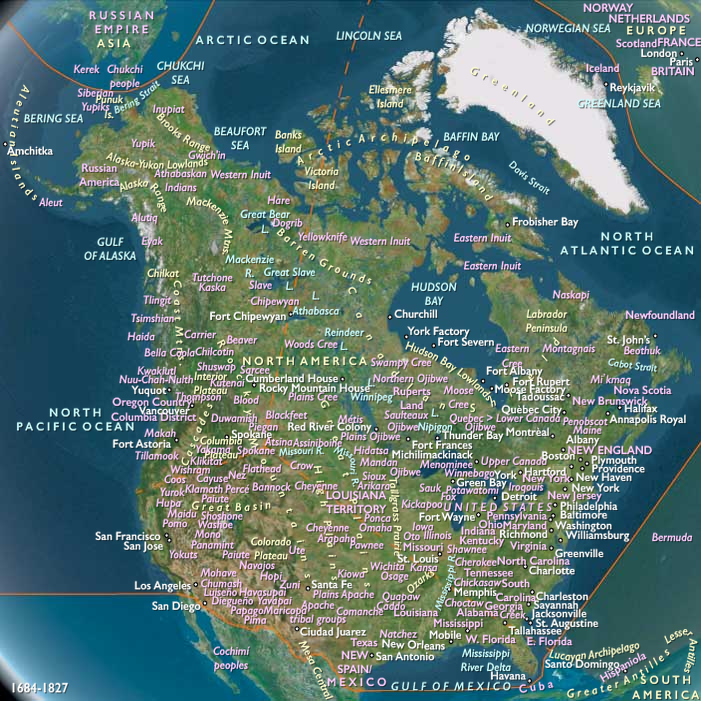 Northern North America
Region
-
{# Image navigates to the detail page; the magnifying-glass chip is the only Fancybox lightbox trigger (kept a separate sibling — anchors can't nest). #}
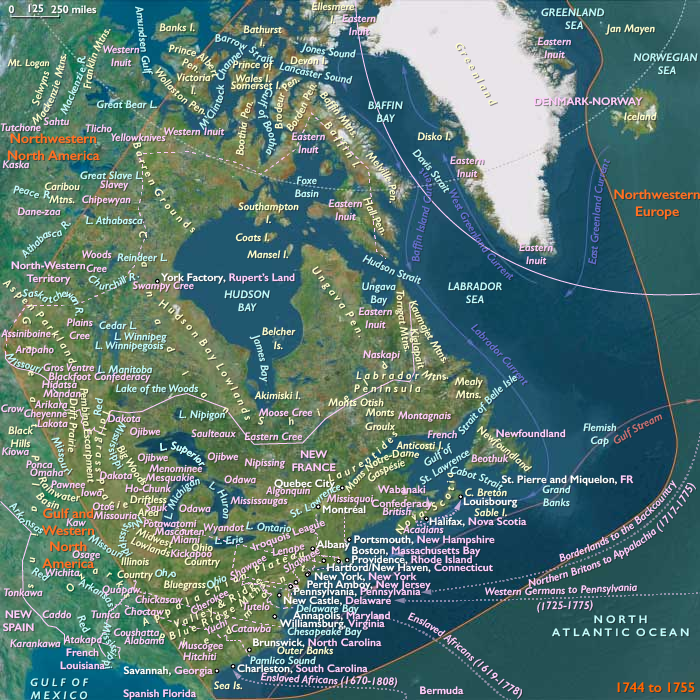 Northeastern North America
Subregion
