
The highest officials in Spanish America are …
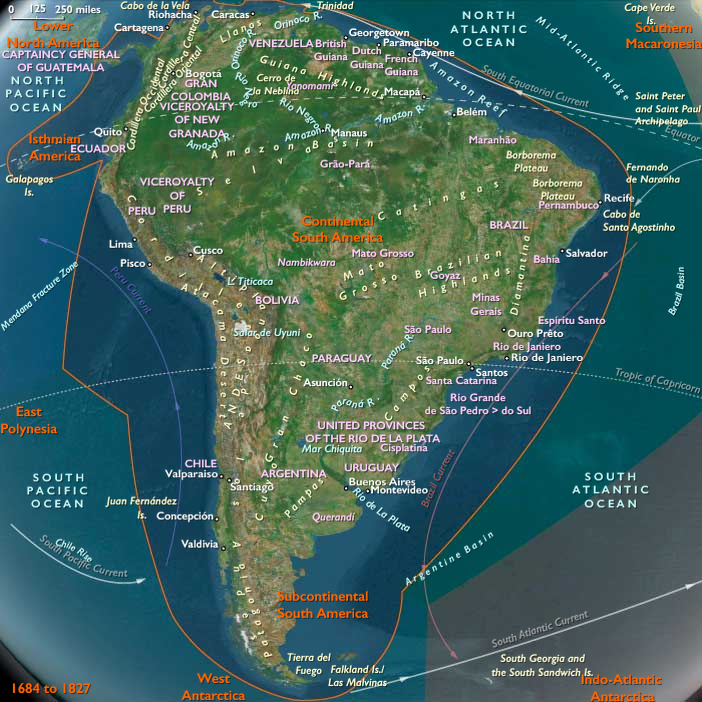
Years: 1684 - 1827
The highest officials in Spanish America are known as peninsulares because they mostly come from the Iberian Peninsula.
Spaniards also play a major role in commerce, especially at the wholesale level and in trade with Spain itself, whose government seeks to keep all overseas trade a Spanish monopoly, but after one or two generations of European settlement, the principal owners of the means of production—landed estates, or haciendas, and mining concessions—are mostly criollos (Creoles), that is, persons of Spanish descent born in the New World.
Even while recognizing the right of the natives to keep land of their own, the Spanish monarchy claims ultimate control over property in the conquered territory, and it rewards many of the original conquerors with lavish land grants, which eventually pass to their children.
In other cases, the early settlers and their descendants had been allowed to buy land on favorable terms or simply help themselves to what they had found, assuming that through payment of the necessary fees they could later regularize their title.
Land in itself is of little use without people to work it, but there are a number of ways to obtain the needed labor.
As in the other colonies, one device is the institution of the encomienda, whereby a specific group of natives is "entrusted" to a Spanish colonist to protect them and convert them to Christianity in return for payment of tribute.
This tribute often is paid in the form of labor, although that practice is generally against Spanish policy.
Even when the natives pay their tribute in money, the result is much the same, as they need to work for the newcomers to obtain it.
Although the encomienda never legally entails a grant of land, in practice the Spanish encomendero might well find a way to usurp the property of natives entrusted to him.
Spanish authorities gradually phase out the encomienda system, but natives now pay tribute directly to the state, and they still have to work to earn the money.
Other systems of quasi-voluntary labor develop, too, while in early years some natives had been subjected to outright enslavement.
Enslavement of natives is exceptional in New Granada and never takes root here, but enslaved Africans had soon been introduced, and, although never as important to the overall economy as in Brazil or the West Indies, they have become an appreciable part of the labor force in at least some parts of the colony.
Spaniards also play a major role in commerce, especially at the wholesale level and in trade with Spain itself, whose government seeks to keep all overseas trade a Spanish monopoly, but after one or two generations of European settlement, the principal owners of the means of production—landed estates, or haciendas, and mining concessions—are mostly criollos (Creoles), that is, persons of Spanish descent born in the New World.
Even while recognizing the right of the natives to keep land of their own, the Spanish monarchy claims ultimate control over property in the conquered territory, and it rewards many of the original conquerors with lavish land grants, which eventually pass to their children.
In other cases, the early settlers and their descendants had been allowed to buy land on favorable terms or simply help themselves to what they had found, assuming that through payment of the necessary fees they could later regularize their title.
Land in itself is of little use without people to work it, but there are a number of ways to obtain the needed labor.
As in the other colonies, one device is the institution of the encomienda, whereby a specific group of natives is "entrusted" to a Spanish colonist to protect them and convert them to Christianity in return for payment of tribute.
This tribute often is paid in the form of labor, although that practice is generally against Spanish policy.
Even when the natives pay their tribute in money, the result is much the same, as they need to work for the newcomers to obtain it.
Although the encomienda never legally entails a grant of land, in practice the Spanish encomendero might well find a way to usurp the property of natives entrusted to him.
Spanish authorities gradually phase out the encomienda system, but natives now pay tribute directly to the state, and they still have to work to earn the money.
Other systems of quasi-voluntary labor develop, too, while in early years some natives had been subjected to outright enslavement.
Enslavement of natives is exceptional in New Granada and never takes root here, but enslaved Africans had soon been introduced, and, although never as important to the overall economy as in Brazil or the West Indies, they have become an appreciable part of the labor force in at least some parts of the colony.
Locations
Groups
- Tairona
- Arawak peoples (Amerind tribe)
- Kalinago (Amerind tribe)
- Muisca (Amerind tribe)
- Spaniards (Latins)
- Spain, Habsburg Kingdom of
- Granada, New Kingdom of (Spanish colony)
- Peru, Viceroyalty of
- Spain, Habsburg Kingdom of
- Quito, Real Audiencia of
- Bogotá, Audiencia de Santa Fe de (Captaincy General of New Granada)
- Venezuela Province
- New Granada, Viceroyalty of
- New Granada, Viceroyalty of
- Venezuela, Captaincy General of
Topics
Commodoties
Subjects
Regions
Subregions
Related Events
Showing 10 events out of 30218 total
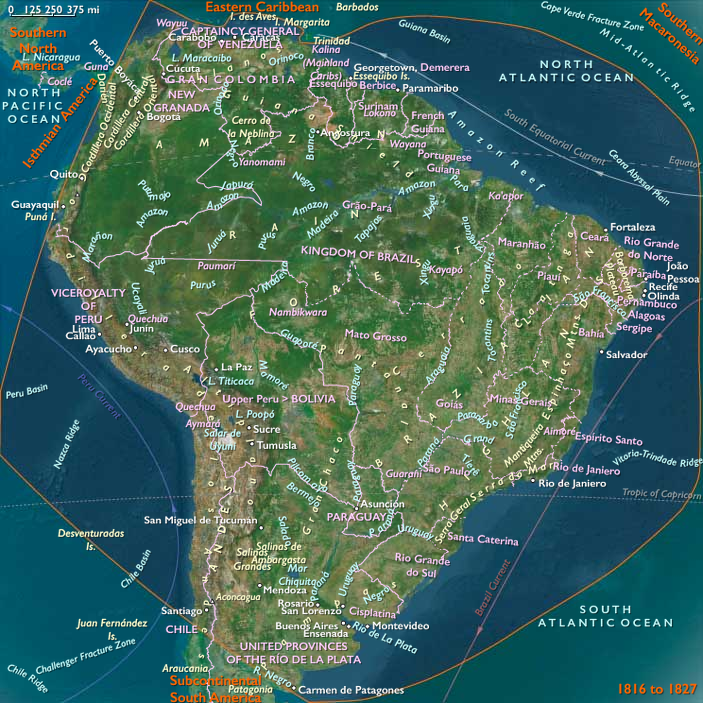
Years: 1684 - 1827
Locations
Groups
- Tairona
- Arawak peoples (Amerind tribe)
- Kalinago (Amerind tribe)
- Muisca (Amerind tribe)
- Spaniards (Latins)
- Spain, Habsburg Kingdom of
- Granada, New Kingdom of (Spanish colony)
- Peru, Viceroyalty of
- Spain, Habsburg Kingdom of
- Quito, Real Audiencia of
- Bogotá, Audiencia de Santa Fe de (Captaincy General of New Granada)
- Venezuela Province
- New Granada, Viceroyalty of
- New Granada, Viceroyalty of
- Venezuela, Captaincy General of
Topics
Commodoties
Subjects
Regions
Subregions