
John Henry Newman’s influence in Oxford reaches…
1839 CE
John Henry Newman’s influence in Oxford reaches its zenith in about the year 1839, when, however, his study of the monophysite heresy first raises in his mind a doubt as to whether the Anglican position is tenable on those principles of ecclesiastical authority that he had accepted.
Newman had joined the effort to reform the Anglican Church upon hearing Keble’s sermon.
His September publication of three Tracts for the Times had ignited the Oxford Movement to recall the English to true churchmanship, to a view of the church as an organic, independent body, not a tool of the state, and to a sacramental ministry and life.
Centered at Oxford, the movement had sought at first to respond to government efforts to appropriate church funds and property but has gradually expanded its activities to a more general theological and pastoral agenda.
The well-regarded Pusey, eager to aid in the defense of the Church of England against ongoing attacks by liberals in theology and government, had contributed essays on baptism, fasting and the Eucharist.
Keble has written nine of the Oxford Movement’s 90 Tracts for the Times, which had been intended to rouse the Anglican clergy against the theory of a state-controlled church and which has caused the movement’s advocates to be known as Tractarians.
The Tractarians encourage study of the early Church Fathers, edit their works, and arrange for their translation.
The Movement's leaders attacks liberalism in theology, and more positively take an interest in Christian origins, which has led them to reconsider the relationship of the Church of England with the Roman Catholic Church.
The Movement postulates the Branch Theory, which states that Anglicanism along with Orthodoxy and Roman Catholicism form three "branches" of the one "Catholic Church."
Locations
People
Groups
Subjects
Regions
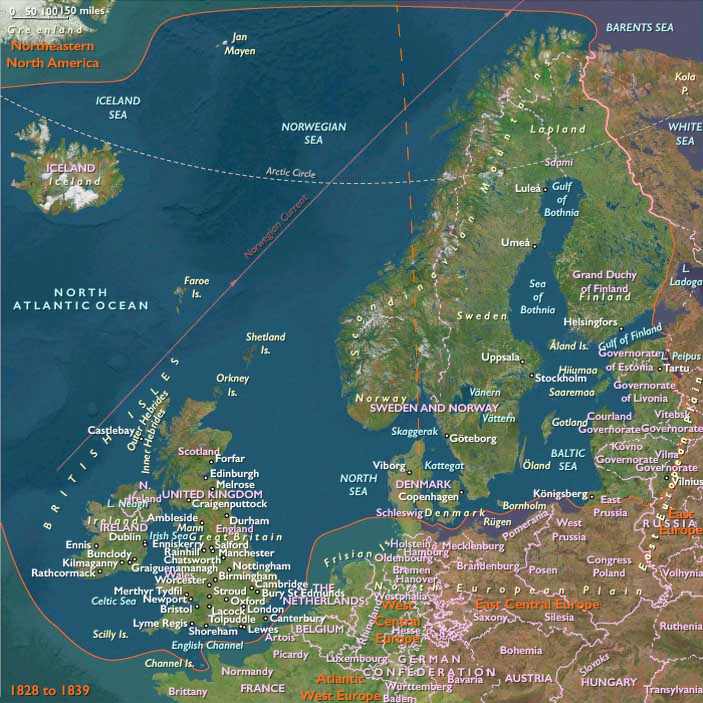
North Europe
View →Subregions
