
North Africa (93–82 BCE) Roman Consolidation, …
Years: 93BCE - 82BCE
North Africa (93–82 BCE)
Roman Consolidation, Numidian Stability, Mauretanian Integration, Cyrenaic Prosperity, and Berber Continuity
Roman Provincial Administration and Stability
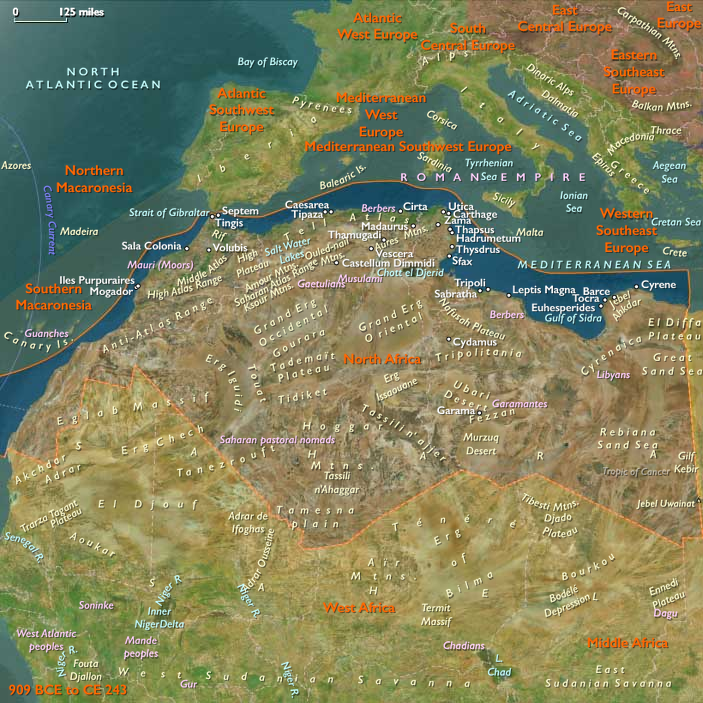
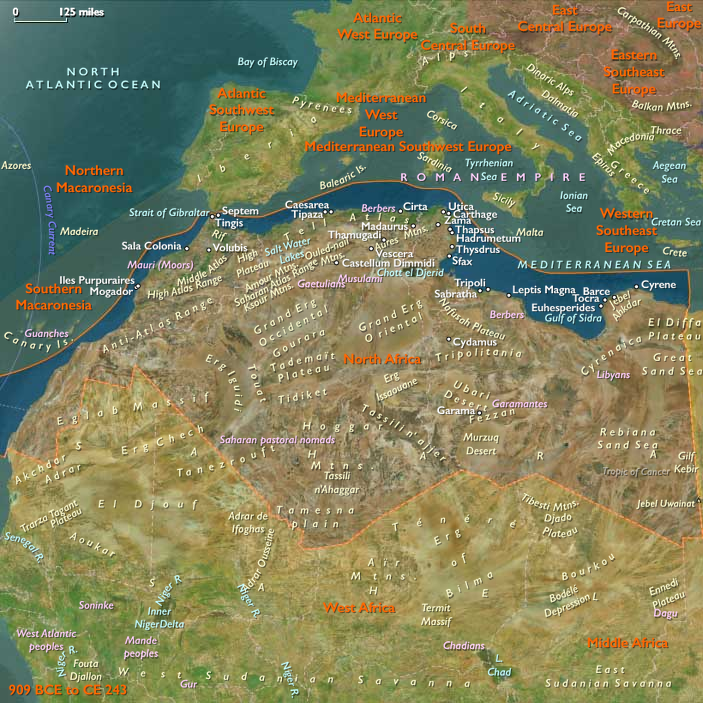
Between 93 and 82 BCE, Roman governance in the province of Africa Proconsularis is strengthened significantly. Key urban centers, notably Utica, continue to prosper through extensive Roman investments in infrastructure, road expansions, agricultural productivity, and urban planning. Efficient provincial administration further integrates the region economically and politically within the Roman Republic, enhancing stability and facilitating broader Mediterranean trade.
Numidia: Stability Under Roman Influence
During this era, Numidia maintains relative stability under increased Roman influence. Following earlier internal succession conflicts, the kingdom adapts to a closer administrative relationship with Rome, balancing autonomy with compliance to Roman oversight. Numidia continues to contribute economically through agriculture and trade, benefiting from the stability provided by Rome’s regional dominance.
Mauretania: Integration and Cooperation
Mauretania, under King Bocchus I, continues to strengthen diplomatic and economic ties with Rome, reflecting earlier cooperation during the Jugurthine War. Bocchus I’s prudent diplomacy secures favorable relations, enhancing Mauretanian economic prosperity and integrating the kingdom more closely into Mediterranean commercial networks.
Cyrenaica: Ongoing Economic Strength and Cultural Prominence
Cyrenaica remains economically robust and culturally prominent under continued Ptolemaic oversight. The Greek Pentapolis—Cyrene, Barce (Al Marj), Euhesperides (Benghazi), Teuchira (Tukrah), and Apollonia (Susah)—continues to flourish through sustained exports of grain, wine, wool, livestock, and particularly the valuable medicinal plant Silphium.
Cyrene maintains its distinguished intellectual and cultural reputation, continuing to attract scholars, philosophers, and medical practitioners from across the Hellenistic world. The city’s educational institutions, medical schools, and architectural landmarks further reinforce its central role in regional cultural and scholarly traditions.
Berber Communities: Economic Adaptation and Cultural Resilience
Berber populations actively participate in the region’s expanding economic networks, integrating successfully with Roman and Mediterranean trade. Coastal economic hubs, particularly Oea (Tripoli), thrive through sustained commercial activities, indirectly supporting inland Berber tribes.
Inland Berber communities continue to maintain their traditional governance systems and cultural practices, benefiting from ongoing economic interactions with coastal centers. This sustained interdependence strengthens the economic stability and cultural resilience of Berber populations across North Africa.
Cultural Syncretism and Continued Integration
Cultural exchanges among Berber, Roman, and Greek populations remain dynamic, enriching local artistic and artisanal traditions in pottery, textiles, and metalwork. Religious syncretism continues to flourish, harmoniously blending indigenous Berber beliefs with Roman, Greek, and Phoenician practices, contributing significantly to the region’s diverse cultural landscape.
Stable Foundations for Continued Prosperity
By 82 BCE, North Africa demonstrates strengthened regional stability and prosperity through effective Roman provincial administration, Numidian adaptation to Roman oversight, Mauretanian diplomatic integration, enduring Cyrenaic prosperity, and sustained Berber cultural and economic resilience. These elements collectively affirm North Africa’s continuing prominence within the broader Mediterranean geopolitical framework.
People
Groups
- Berber people (also called Amazigh people or Imazighen, "free men", singular Amazigh)
- Roman Republic
- Numidia, Kingdom of
- Cyrenaica, (Ptolemaic) Kingdom of
- Tripolitania (Roman province)
- Africa (Roman Province)
- Africa proconsularis (Roman province)
- Mauretania, Kingdom of
Commodoties
Subjects
- Commerce
- Architecture
- Conflict
- Mayhem
- Faith
- Government
- Scholarship
- Metallurgy
- Medicine
- Philosophy and logic
Regions
Subregions
Related Events
Showing 10 events out of 62854 total
Years: 93BCE - 82BCE
People
Groups
- Berber people (also called Amazigh people or Imazighen, "free men", singular Amazigh)
- Roman Republic
- Numidia, Kingdom of
- Cyrenaica, (Ptolemaic) Kingdom of
- Tripolitania (Roman province)
- Africa (Roman Province)
- Africa proconsularis (Roman province)
- Mauretania, Kingdom of
Commodoties
Subjects
- Commerce
- Architecture
- Conflict
- Mayhem
- Faith
- Government
- Scholarship
- Metallurgy
- Medicine
- Philosophy and logic
Regions
Subregions