
North Africa (105–94 BCE) Roman Provincial …
Years: 105BCE - 94BCE
North Africa (105–94 BCE)
Roman Provincial Growth, Cyrenaic Stability, and Berber Continuity
Roman Provincial Expansion and Administration
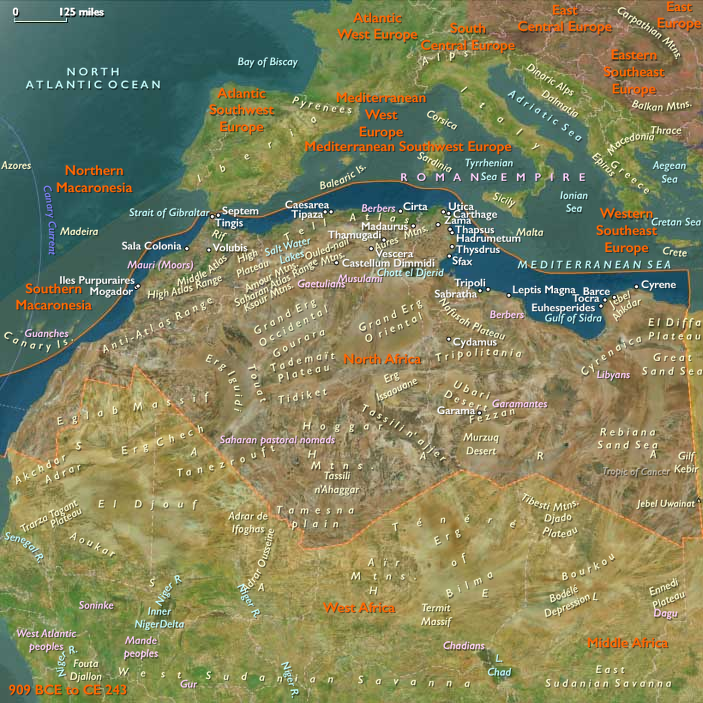
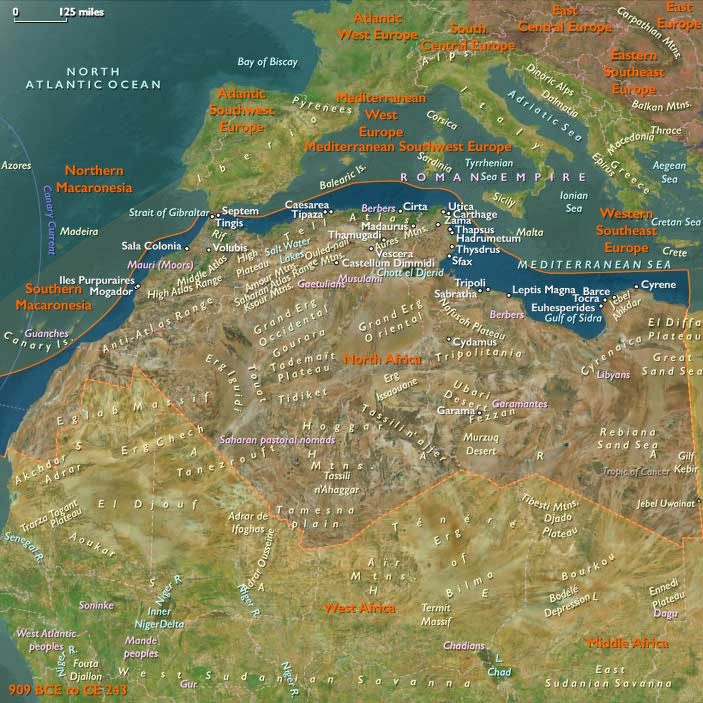
From 105 to 94 BCE, Rome consolidates its administrative and economic infrastructure within the province of Africa Proconsularis. Major urban centers, including Utica, continue to prosper through sustained investments in urban development, road networks, agriculture, and irrigation systems, bolstering regional trade and economic integration into the Roman Empire.
The stable governance and strategic economic policies during this period enhance local productivity, ensuring ongoing prosperity and securing the region’s position within the broader Roman economy.
Cyrenaica’s Persistent Economic and Cultural Vitality
Cyrenaica remains economically prosperous and culturally vibrant under consistent Ptolemaic governance. The Greek Pentapolis—Cyrene, Barce (Al Marj), Euhesperides (Benghazi), Teuchira (Tukrah), and Apollonia (Susah)—continues its robust trade activities, with exports such as grain, wine, wool, livestock, and the highly valued medicinal plant Silphium underpinning its ongoing wealth.
Cyrene’s prominence as a cultural and intellectual hub persists, attracting scholars and philosophers across the Hellenistic world. Its esteemed educational and medical institutions, coupled with its celebrated artistic and architectural heritage, continue to reinforce Cyrenaica’s distinguished regional status.
Numidia’s Reduced Autonomy
Numidia adapts to its diminished autonomy under closer Roman oversight, maintaining economic activity while aligning more closely with Roman administrative frameworks. Mauretania strengthens diplomatic and economic relationships with Rome, benefiting from its earlier cooperation.
Berber Economic Integration and Cultural Resilience
Berber communities continue their active economic participation, smoothly integrating into the expanding Roman administrative and economic frameworks. Coastal trade centers, notably Oea (Tripoli), maintain their prosperity through dynamic interactions with Roman and broader Mediterranean markets.
Inland Berber tribes maintain their traditional autonomy, benefiting indirectly from coastal economic vitality. This sustained interaction ensures regional stability, reinforcing the cultural resilience and economic continuity of the Berber populations.
Cultural Syncretism and Ongoing Integration
The ongoing interactions between Berber, Roman, and Greek communities further enrich North African artistic and artisanal traditions in pottery, textiles, and metalwork. Religious syncretism continues evolving, harmoniously merging indigenous Berber beliefs with Roman, Greek, and residual Phoenician practices, adding significant complexity and diversity to the region’s cultural landscape.
Stable Foundations for Future Growth
By 94 BCE, North Africa demonstrates enhanced regional stability and prosperity due to continuous Roman provincial growth, sustained economic vitality in Cyrenaica, and ongoing Berber economic integration and cultural continuity. These combined factors fortify the region’s enduring prominence within the Mediterranean geopolitical framework.
Groups
- Berber people (also called Amazigh people or Imazighen, "free men", singular Amazigh)
- Roman Republic
- Numidia, Kingdom of
- Cyrenaica, (Ptolemaic) Kingdom of
- Tripolitania (Roman province)
- Africa (Roman Province)
- Africa proconsularis (Roman province)
- Mauretania, Kingdom of
Commodoties
Subjects
- Commerce
- Architecture
- Conflict
- Mayhem
- Faith
- Government
- Scholarship
- Metallurgy
- Medicine
- Philosophy and logic
Regions
Subregions
Related Events
Showing 2 events out of 2 total
Years: 105BCE - 94BCE
Groups
- Berber people (also called Amazigh people or Imazighen, "free men", singular Amazigh)
- Roman Republic
- Numidia, Kingdom of
- Cyrenaica, (Ptolemaic) Kingdom of
- Tripolitania (Roman province)
- Africa (Roman Province)
- Africa proconsularis (Roman province)
- Mauretania, Kingdom of
Commodoties
Subjects
- Commerce
- Architecture
- Conflict
- Mayhem
- Faith
- Government
- Scholarship
- Metallurgy
- Medicine
- Philosophy and logic
Regions
Subregions