
North Africa (117–106 BCE) Roman Stabilization, …
Years: 117BCE - 106BCE
North Africa (117–106 BCE)
Roman Stabilization, Jugurthine Conflict, Cyrenaic Continuity, and Berber Integration
Consolidation of Roman Provincial Structures
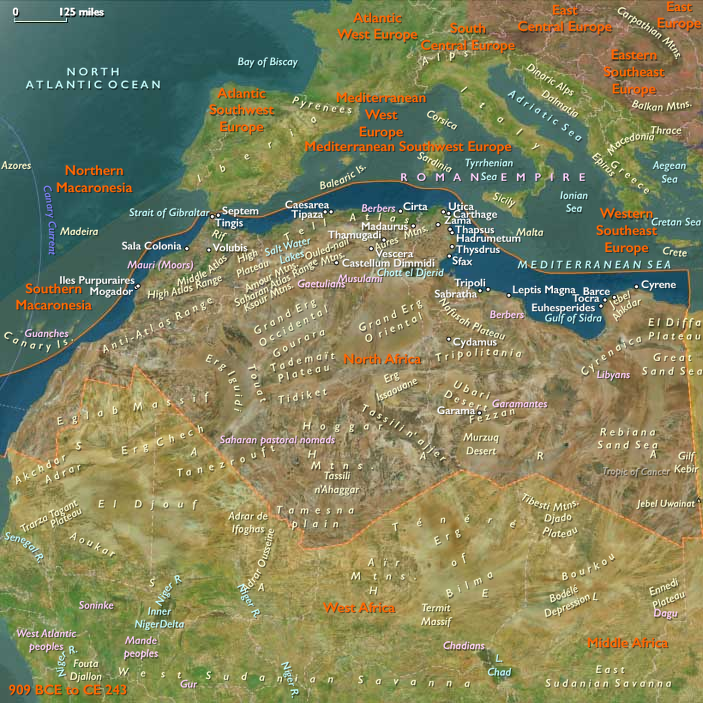
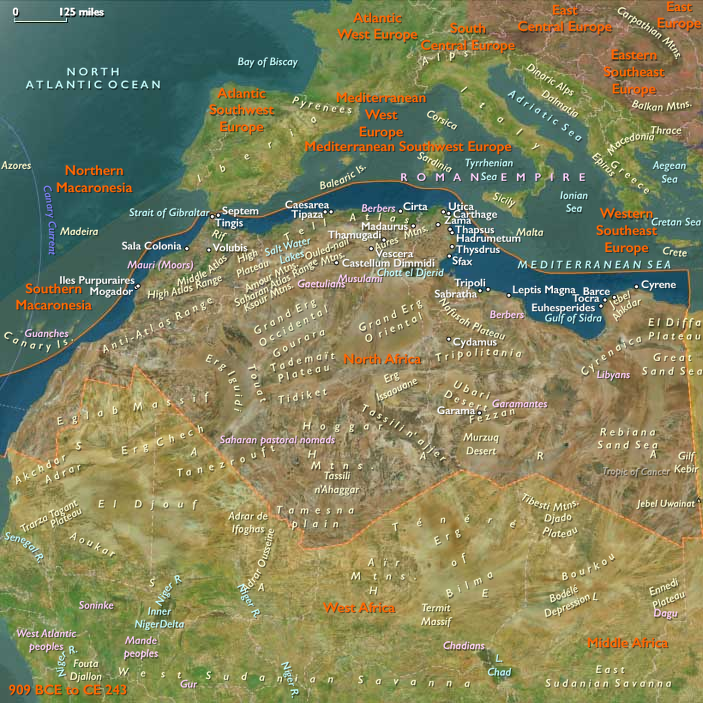
Between 117 and 106 BCE, Rome continues to solidify its governance of the province of Africa Proconsularis, implementing further administrative reforms and infrastructure improvements. Cities such as Utica flourish under Roman management, with enhanced urban planning, road networks, irrigation projects, and agricultural advancements significantly boosting regional productivity and trade connectivity.
The Jugurthine War (112–106 BCE)
This era is marked significantly by the Jugurthine War, fought from 112 to 106 BCE between Rome and the North African kingdom of Numidia, located roughly in modern-day Algeria. The conflict erupts following Jugurtha's usurpation of the Numidian throne from his uncle and adoptive father Micipsa, a longstanding Roman ally since the Punic Wars. Rome, compelled to intervene, eventually defeats Jugurtha, the Berber king whose resistance significantly influences Roman strategies toward North Africa. Although the war constitutes an important stage in Roman dominance in the region, Numidia itself does not become a formal Roman province until 46 BCE.
Cyrenaica’s Sustained Economic and Intellectual Vitality
Under continued Ptolemaic authority, Cyrenaica maintains its stable political environment and robust economic growth. The Greek Pentapolis—Cyrene, Barce (Al Marj), Euhesperides (Benghazi), Teuchira (Tukrah), and Apollonia (Susah)—continues prospering, driven by trade in grain, wine, wool, livestock, and the valuable medicinal plant Silphium.
Cyrene remains an influential cultural and intellectual center, attracting renowned scholars, philosophers, and medical practitioners. Its schools and academies maintain their prominent status, while local artistic and architectural traditions continue enriching the region’s vibrant cultural landscape.
Jugurthine War and Mauretanian Involvement
Numidia is embroiled in the Jugurthine War (112–106 BCE). King Jugurtha’s challenge to Rome’s authority culminates in his defeat and Numidia’s reduced autonomy. During this conflict, Mauretania under King Bocchus I initially supports Jugurtha but eventually sides with Rome, significantly shifting regional alliances.
Berber Communities: Economic Resilience and Cultural Adaptation
Berber populations remain key participants in regional economies, actively integrating into expanding Roman economic and administrative frameworks. Coastal hubs, particularly Oea (Tripoli), maintain economic prosperity through vibrant trade with Roman and Mediterranean markets.
Inland Berber tribes sustain their autonomy, continuing traditional governance and cultural practices. Indirect economic benefits from coastal prosperity reinforce their resilience and cultural continuity, ensuring ongoing regional stability.
Dynamic Cultural Syncretism
Interactions among Berber, Roman, and Greek communities persistently enrich artistic and artisanal traditions across North Africa, notably in pottery, textiles, and metalwork. Religious syncretism continues evolving, harmoniously integrating indigenous Berber beliefs with Roman, Greek, and residual Phoenician practices, further enhancing the region’s diverse cultural fabric.
Foundations for Enduring Stability
By 106 BCE, North Africa demonstrates substantial stability and prosperity through Roman provincial consolidation, resolution of regional conflicts such as the Jugurthine War, continued economic vitality in Cyrenaica, and the effective cultural and economic adaptation of Berber communities. These elements collectively underpin North Africa’s robust integration within the wider Mediterranean geopolitical context.
People
Groups
- Berber people (also called Amazigh people or Imazighen, "free men", singular Amazigh)
- Roman Republic
- Numidia, Kingdom of
- Cyrenaica, (Ptolemaic) Kingdom of
- Tripolitania (Roman province)
- Africa (Roman Province)
- Africa proconsularis (Roman province)
- Mauretania, Kingdom of
Topics
Commodoties
Subjects
- Commerce
- Architecture
- Conflict
- Mayhem
- Faith
- Government
- Scholarship
- Metallurgy
- Medicine
- Philosophy and logic
Regions
Subregions
Years: 117BCE - 106BCE
People
Groups
- Berber people (also called Amazigh people or Imazighen, "free men", singular Amazigh)
- Roman Republic
- Numidia, Kingdom of
- Cyrenaica, (Ptolemaic) Kingdom of
- Tripolitania (Roman province)
- Africa (Roman Province)
- Africa proconsularis (Roman province)
- Mauretania, Kingdom of
Topics
Commodoties
Subjects
- Commerce
- Architecture
- Conflict
- Mayhem
- Faith
- Government
- Scholarship
- Metallurgy
- Medicine
- Philosophy and logic
Regions
Subregions