
North Africa (141–130 BCE) Post-Carthaginian Transition, …
Years: 141BCE - 130BCE
North Africa (141–130 BCE)
Post-Carthaginian Transition, Cyrenaic Stability, and Berber Adaptation
Roman Consolidation in Former Carthaginian Territories
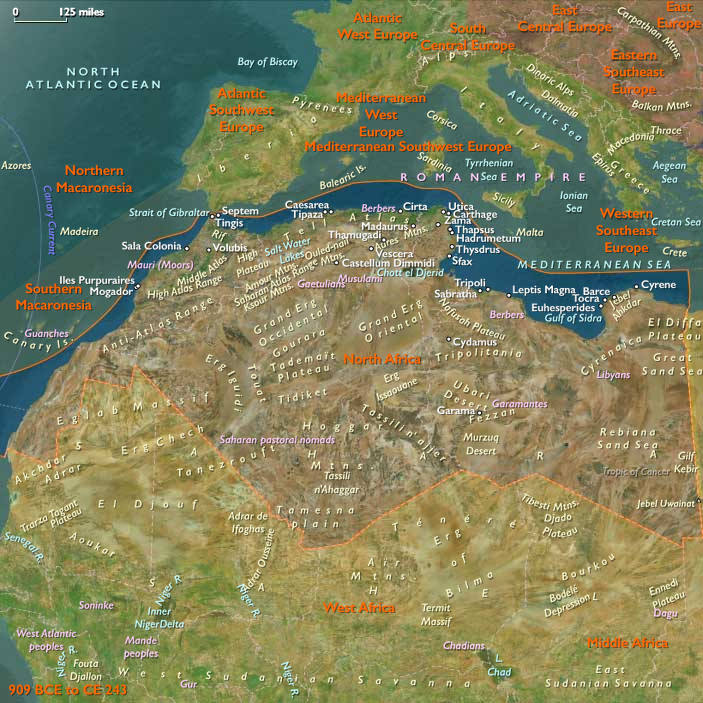
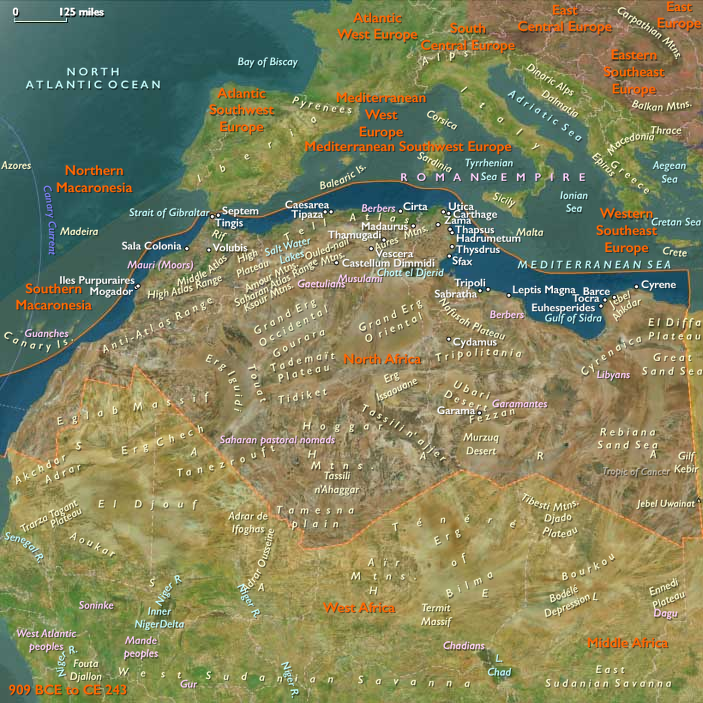
Following the catastrophic destruction of Carthage in 146 BCE, the era from 141 to 130 BCE witnesses the full integration of former Carthaginian territories into Roman administration. Roman rule stabilizes Tunisia and its surrounding regions, reorganizing them as the province of Africa Proconsularis. Roman colonization efforts begin reshaping the urban and rural landscape, introducing new agricultural techniques, economic systems, and urban planning, especially around former Punic cities such as Utica, which assumes significant administrative importance.
Cyrenaica’s Sustained Stability under Ptolemaic Oversight
Cyrenaica remains economically and politically stable during this period under continued Ptolemaic governance. The Greek Pentapolis—Cyrene, Barce (Al Marj), Euhesperides (Benghazi), Teuchira (Tukrah), and Apollonia (Susah)—maintains steady economic growth, driven by consistent trade in grain, wine, wool, livestock, and the highly valued medicinal plant Silphium.
Cyrene retains its intellectual prominence, attracting scholars and philosophers from across the Mediterranean world. The city’s educational institutions, medical schools, and architectural heritage reinforce its distinguished position as a vibrant hub of Hellenistic culture and learning.
Numidia: Continued Stability and Internal Challenges
Micipsa continues to navigate complex internal and external political dynamics, maintaining Numidian stability and prosperity despite emerging succession tensions.
Berber Economic Resilience and Cultural Continuity
Berber communities successfully adapt to the region’s new geopolitical realities, seamlessly integrating into the expanding Roman economic and administrative networks. Coastal trading hubs, notably Oea (Tripoli), remain prosperous, benefiting from increased Roman trade and investments.
Inland Berber tribes continue their economic and cultural autonomy, preserving traditional governance systems and benefiting indirectly from the stability and prosperity established in coastal regions. Their cultural resilience and economic adaptability support broader regional stability.
Continued Cultural Syncretism and Interaction
Cultural interactions among Berber, Roman, and Greek communities thrive, further enriching regional artistic traditions in pottery, textiles, and metallurgy. Religious syncretism continues to evolve, incorporating Roman religious elements alongside indigenous Berber and established Greek and Phoenician practices, creating a rich and diverse cultural tapestry.
Establishing Long-Term Stability under Roman Influence
By 130 BCE, North Africa demonstrates considerable resilience and adaptability in the post-Carthaginian era. The firm establishment of Roman provincial administration, Cyrenaica’s enduring economic prosperity, and the Berbers' successful cultural and economic adaptation collectively reinforce regional stability, ensuring North Africa's enduring prominence within the evolving Mediterranean geopolitical framework.
People
Groups
- Berber people (also called Amazigh people or Imazighen, "free men", singular Amazigh)
- Roman Republic
- Numidia, Kingdom of
- Cyrenaica, (Ptolemaic) Kingdom of
- Africa (Roman Province)
- Africa proconsularis (Roman province)
- Tripolitania (Roman province)
Topics
Commodoties
Subjects
- Commerce
- Architecture
- Conflict
- Mayhem
- Faith
- Government
- Scholarship
- Metallurgy
- Medicine
- Philosophy and logic
Regions
Subregions
Related Events
Showing 10 events out of 63084 total
Years: 141BCE - 130BCE
People
Groups
- Berber people (also called Amazigh people or Imazighen, "free men", singular Amazigh)
- Roman Republic
- Numidia, Kingdom of
- Cyrenaica, (Ptolemaic) Kingdom of
- Africa (Roman Province)
- Africa proconsularis (Roman province)
- Tripolitania (Roman province)
Topics
Commodoties
Subjects
- Commerce
- Architecture
- Conflict
- Mayhem
- Faith
- Government
- Scholarship
- Metallurgy
- Medicine
- Philosophy and logic
Regions
Subregions