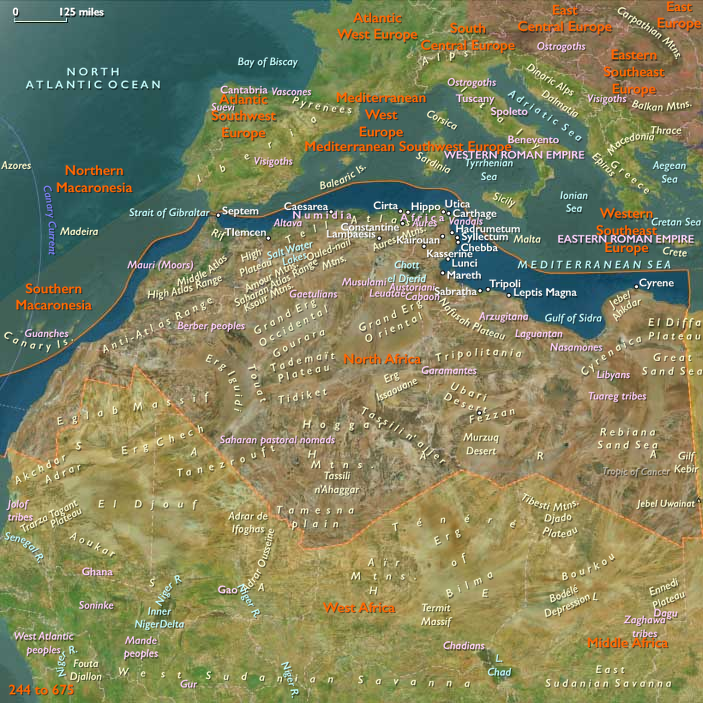
North Africa (592–603 CE) Erosion of Byzantine…
592 CE to 603 CE
North Africa (592–603 CE)
Erosion of Byzantine Authority, Rise of Local Powers, and Enduring Instability
Between 592 and 603 CE, North Africa faces ongoing deterioration of Byzantine control, accelerating fragmentation, and the increasingly assertive autonomy of local Berber tribal powers.
Byzantine administration, hindered by persistent corruption, military weakness, and administrative inefficiency, retains only nominal authority, primarily within heavily fortified coastal cities such as Carthage, Leptis Magna, and Caesarea (Cherchell). These isolated urban enclaves maintain tenuous economic stability through continued Mediterranean trade networks, but are increasingly disconnected from their hinterlands due to deteriorating infrastructure and growing insecurity.
Excessive taxation by imperial administrators further alienates local populations, particularly urban elites and rural communities, exacerbating dissatisfaction and resistance to Byzantine authority. Public works, roads, and agricultural infrastructure continue to degrade, significantly weakening rural economies and deepening local poverty.
Independent Berber tribes strengthen their political and military dominance during this period, decisively expanding their control across vast rural and interior regions. Tribal leaders provide essential governance and security, effectively supplanting Byzantine authority throughout extensive territories. Berber raids and incursions into Byzantine-held lands are increasingly frequent, disrupting trade, agriculture, and urban-rural connectivity.
Culturally and religiously, orthodox Christianity maintains its presence primarily in coastal urban centers, but its broader regional influence diminishes amid ongoing instability and fragmentation. In rural and Berber-controlled territories, traditional tribal practices and localized customs increasingly predominate, marking a departure from imperial cultural and religious norms.
Economically, disparities between urban prosperity and rural impoverishment continue to deepen. Major cities like Carthage sustain commercial activity through Mediterranean maritime connections, while the countryside suffers from neglect, reduced agricultural output, and disruptions due to persistent tribal incursions.
By the close of 603 CE, Byzantine North Africa stands significantly diminished, with imperial control confined to vulnerable coastal strongholds and overshadowed by expanding local Berber authority. The region’s continuing fragmentation, weakened imperial governance, and empowered local tribal entities clearly indicate an era of heightened instability and profound political transition ahead.
Groups
Regions

North Africa
View →Subregions