
North Africa (4,365 – 2,638 BCE) …
Years: 4365BCE - 2638BCE
North Africa (4,365 – 2,638 BCE) Late Neolithic / Chalcolithic — Aridification, Oasis Engineering, and Coastal Exchange
Geographic and Environmental Context
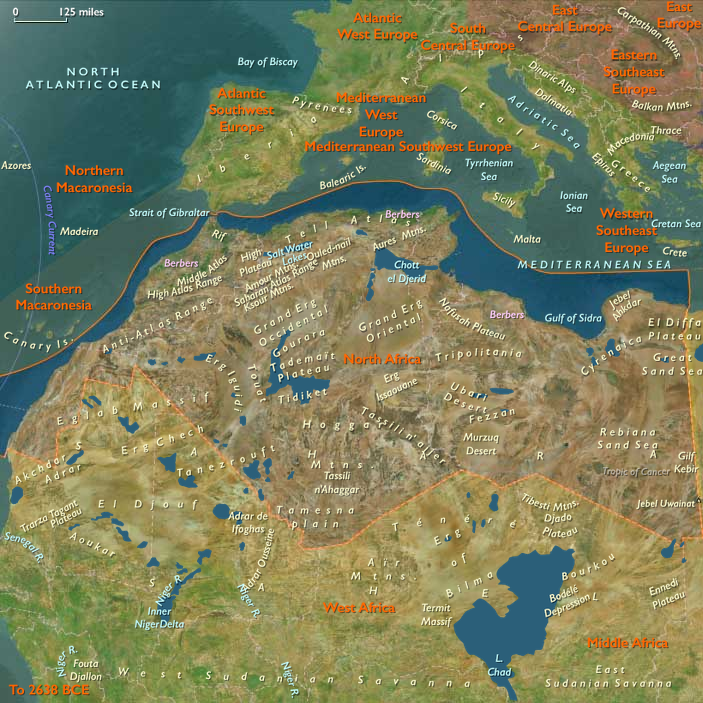
North Africa includes Morocco, Algeria, Tunisia (Ifriqiya), Libya (Tripolitania–Fezzan–Cyrenaica), and Western Sahara.Anchors: the Atlas ranges (High/Middle/Anti-Atlas; Tell Atlas; Aurès), the Tell and Sahel coasts (Atlantic Morocco, Rif/Alboran, Kabylia, Ifriqiya, Syrte/Gulf of Sidra, Cyrenaica), the Saharan platforms and sand seas (Erg Chech, Grand Erg Occidental & Oriental, Tanezrouft), the oases and basins (Tafilalt, Draâ, Touat–Gourara–Tidikelt, M’zab, Wadi Igharghar, Fezzan (Wadi al-Ajyal, Ubari and Murzuq dunes)), and the trans-Saharan corridors toward Lake Chad, Niger Bend, and the Nile.
-
The African Humid Period waned after ~4000 BCE; dunes reactivated; lakes shrank; oasis chains — Fezzan (Wadi al-Ajyal), Touat–Gourara–Tidikelt, M’zab, Tafilalt, Draâ — consolidated.
-
Coastal plains (Ifriqiya, Riffian/Atlantic Morocco) remained productive with rainfall and aquifer flow.
Climate & Environmental Shifts
-
Increasing aridity; episodic pluvial remnant pulses; strong interannual variability inland.
Subsistence & Settlement
-
Oasis horticulture (date palms, pulses, gourds) + herding (camel adoption later, but dromedaries proto-managed late in this window).
-
Coastal Neolithics mixed gardens and fisheries; early salt extraction on lagoon margins.
-
Proto-caravan nodes emerged at Fezzan and western Saharan oases.
Technology & Material Culture
-
Pottery diversified; copper ornaments/tools traded in via Mediterranean and Nile; engineered foggaras/khettaras (proto-qanat) concepts incubated in Saharan oases late.
Movement & Interaction Corridors
-
Oasis stepping-stones across Fezzan–Hoggar–Air; coastal cabotage connected Ifriqiya, Cyrenaica, and Alboran shores; Atlas passes fed exchange between coast and interior.
Cultural & Symbolic Expressions
-
Cairn–tumuli fields; ancestor veneration at desert margins; coastal cult places at springs and capes.
Environmental Adaptation & Resilience
-
Vertical oasis agriculture (date–garden–field) + mobile herds stabilized calories; salt/fish preserved protein.
Transition
By 2,638 BCE, oasis–pastoral systems had replaced Green-Sahara lake economies; coasts brokered exotics and metals.
(4,365 – 2,638 BCE) Late Neolithic / Chalcolithic — Aridification, Oasis Engineering, and Coastal Exchange
Geographic & Environmental Context
-
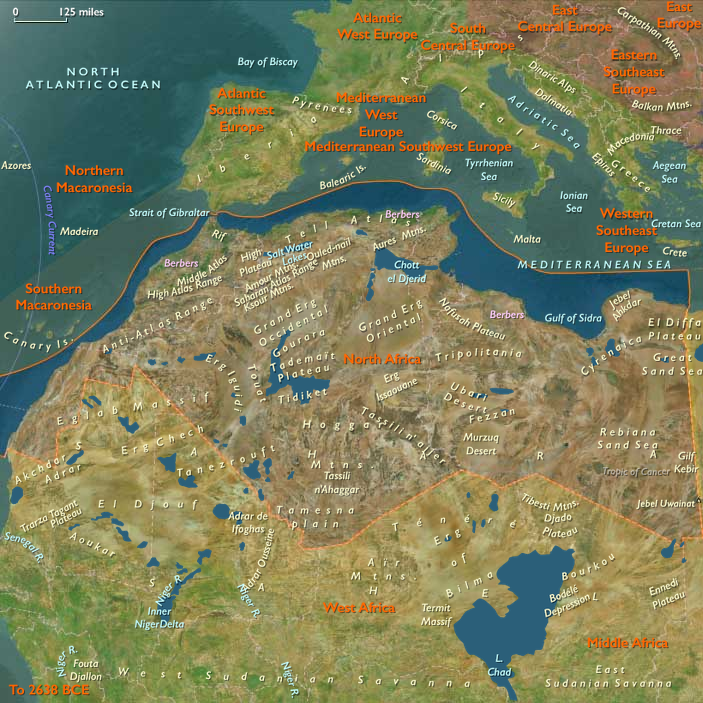
The African Humid Period waned after ~4000 BCE; dunes reactivated; lakes shrank; oasis chains — Fezzan (Wadi al-Ajyal), Touat–Gourara–Tidikelt, M’zab, Tafilalt, Draâ — consolidated.
-
Coastal plains (Ifriqiya, Riffian/Atlantic Morocco) remained productive with rainfall and aquifer flow.
Climate & Environmental Shifts
-
Increasing aridity; episodic pluvial remnant pulses; strong interannual variability inland.
Subsistence & Settlement
-
Oasis horticulture (date palms, pulses, gourds) + herding (camel adoption later, but dromedaries proto-managed late in this window).
-
Coastal Neolithics mixed gardens and fisheries; early salt extraction on lagoon margins.
-
Proto-caravan nodes emerged at Fezzan and western Saharan oases.
Technology & Material Culture
-
Pottery diversified; copper ornaments/tools traded in via Mediterranean and Nile; engineered foggaras/khettaras (proto-qanat) concepts incubated in Saharan oases late.
Movement & Interaction Corridors
-
Oasis stepping-stones across Fezzan–Hoggar–Air; coastal cabotage connected Ifriqiya, Cyrenaica, and Alboran shores; Atlas passes fed exchange between coast and interior.
Cultural & Symbolic Expressions
-
Cairn–tumuli fields; ancestor veneration at desert margins; coastal cult places at springs and capes.
Environmental Adaptation & Resilience
-
Vertical oasis agriculture (date–garden–field) + mobile herds stabilized calories; salt/fish preserved protein.
Transition
By 2,638 BCE, oasis–pastoral systems had replaced Green-Sahara lake economies; coasts brokered exotics and metals.
Topics
Commodoties
Subjects
Regions
Subregions
Related Events
Showing 10 events out of 186 total
Years: 4365BCE - 2638BCE
Topics
Commodoties
Subjects
Regions
Subregions