
Northeast Europe (1516–1527 CE): Union Disintegration, Teutonic …
Years: 1516 - 1527
Northeast Europe (1516–1527 CE): Union Disintegration, Teutonic Secularization, and Regional Transformations
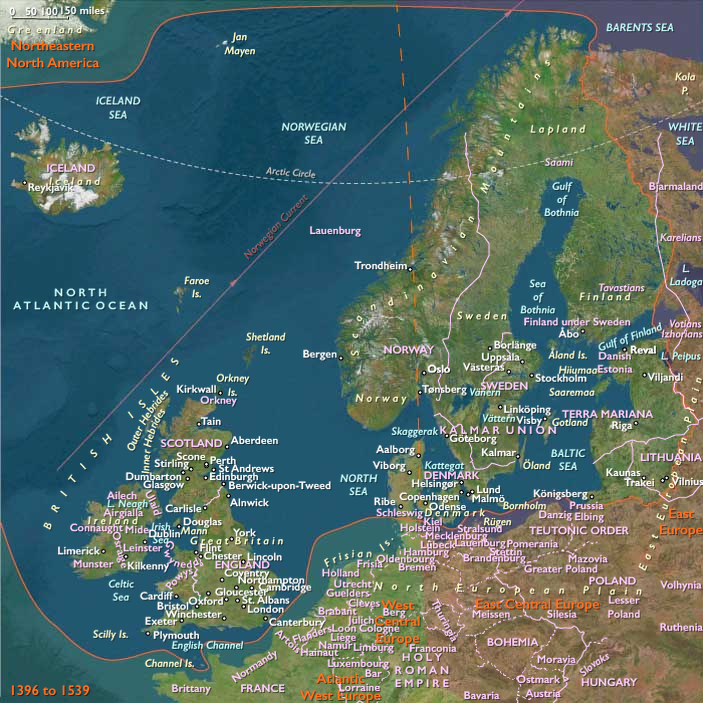
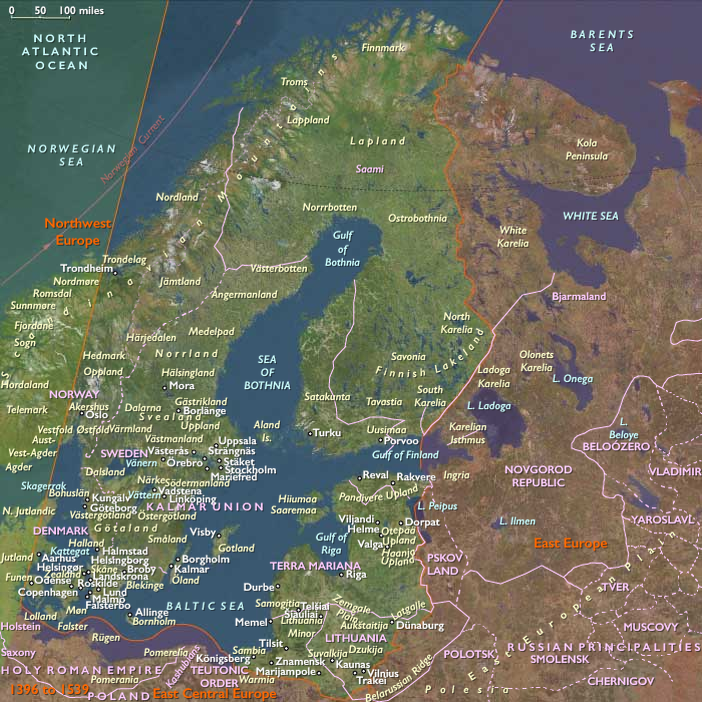
Between 1516 and 1527 CE, Northeast Europe experienced major geopolitical shifts, highlighted by the effective collapse of the Kalmar Union, the secularization of the Teutonic Order, and increasingly assertive diplomatic and territorial ambitions by the Polish–Lithuanian Union. Economic and cultural continuities persisted despite transformative political upheavals.
Fragmentation of the Kalmar Union
Internal conflicts reached a critical point within the Kalmar Union under Christian II, culminating in significant uprisings and ultimately the Union's fragmentation. Christian II's aggressive efforts to consolidate authority led to the infamous Stockholm Bloodbath in 1520, profoundly alienating Swedish nobles. This pivotal event triggered widespread rebellion, notably led by Gustav Vasa, signaling the effective dissolution of union cohesion and the emergence of Sweden as a distinct sovereign state.
Secularization of the Teutonic Order in Prussia
The Teutonic Order, severely weakened by prolonged economic hardships, territorial losses, and internal strife, underwent a profound transformation under Grand Master Albert of Brandenburg-Ansbach. In 1525, Albert converted to Lutheranism, secularized the Order's Prussian territories, and established the Duchy of Prussia as a secular Protestant duchy under Polish overlordship. This marked the definitive end of the Order’s traditional religious and military identity, fundamentally altering Prussia's geopolitical alignment.
Strengthened Influence of the Polish–Lithuanian Union
Under the reign of King Sigismund I the Old, the Polish–Lithuanian Union capitalized on regional power vacuums and continued territorial expansion. Diplomatic initiatives, strategic marriages, and military strength allowed Poland-Lithuania to secure dominance over the secularized Duchy of Prussia, consolidating its influential position within the region and further reshaping geopolitical boundaries.
Stability and Diplomacy in the Livonian Confederation
Amid profound regional upheavals, the Livonian Confederation, governed from the economically strategic city of Riga, sustained its political autonomy and economic vitality. Through skillful diplomatic engagement and strengthened urban defenses, the Confederation maintained regional stability, successfully navigating complex geopolitical changes.
Swedish Consolidation and Independence in Finland
Following the fragmentation of the Kalmar Union, Sweden under Gustav Vasa asserted definitive control and administrative consolidation over southern Finland. Strengthened defenses, efficient governance structures, and expanded ecclesiastical reforms promoted political stability, further solidifying Finland's integral role within Sweden's newly independent geopolitical framework.
Economic Resilience and Urban Prosperity
Key urban centers, notably Reval (Tallinn), Riga, Königsberg, and Visby on Gotland, continued to thrive economically through sustained maritime commerce and strengthened commercial networks. This economic resilience significantly contributed to broader regional stability, helping mitigate the disruptive effects of ongoing political transformations.
Ecclesiastical Reformation and Cultural Shifts
The period saw profound religious and cultural shifts accompanying the early spread of Protestant Reformation ideas, particularly Lutheranism, across Northeast Europe. Ecclesiastical institutions, traditionally pillars of Latin Christian stability, faced growing reformist pressures, significantly altering their roles and influence in society, education, and governance.
Strategic Diplomatic Realignments
Diplomatic activity intensified significantly amid major geopolitical transformations involving the dissolution of the Kalmar Union, secularization of the Teutonic Order, and the rise of independent Sweden. Regional diplomacy emphasized strategic alliances, cautious negotiations, and territorial settlements, reflecting efforts to maintain stability during an era of rapid political and religious change.
Legacy of the Era
The era from 1516 to 1527 CE was transformative, marking critical transitions from medieval political structures toward early modern nation-states, secular governance, and religious reformation. These developments significantly influenced territorial boundaries, regional power dynamics, and cultural identities, profoundly shaping Northeast Europe's historical trajectory in subsequent centuries.
People
Groups
- Polytheism (“paganism”)
- Latvians, or Letts (Eastern Balts)
- Estonians
- Christians, Roman Catholic
- Finland under Swedish rule
- Riga, Bishopric/Archbishopric of
- Terra Mariana (Livonian Confederation)
- Livonian Order
- Teutonic Knights of Prussia, or Monastic state of the Teutonic Knights (House of the Hospitalers of Saint Mary of the Teutons in Jerusalem)
- Hanseatic League
- Poland of the Jagiellonians, Kingdom of
- Crown of the Kingdom of Poland
- Lithuania, Grand Duchy of
- Kalmar Union (of Denmark, Norway and Sweden)
- Sweden, autonomous Kingdom of
- Lutheranism
- Kalmar Union (of Denmark and Norway)
- Sweden, (second) Kingdom of
- Prussia, Duchy of
Topics
Subjects
Regions
Subregions
Related Events
Showing 10 events out of 39076 total
Years: 1516 - 1527
People
Groups
- Polytheism (“paganism”)
- Latvians, or Letts (Eastern Balts)
- Estonians
- Christians, Roman Catholic
- Finland under Swedish rule
- Riga, Bishopric/Archbishopric of
- Terra Mariana (Livonian Confederation)
- Livonian Order
- Teutonic Knights of Prussia, or Monastic state of the Teutonic Knights (House of the Hospitalers of Saint Mary of the Teutons in Jerusalem)
- Hanseatic League
- Poland of the Jagiellonians, Kingdom of
- Crown of the Kingdom of Poland
- Lithuania, Grand Duchy of
- Kalmar Union (of Denmark, Norway and Sweden)
- Sweden, autonomous Kingdom of
- Lutheranism
- Kalmar Union (of Denmark and Norway)
- Sweden, (second) Kingdom of
- Prussia, Duchy of
Topics
Subjects
Regions
Subregions