
Northeast Europe (1732–1743 CE): Renewed Conflict, Territorial …
Years: 1732 - 1743
Northeast Europe (1732–1743 CE): Renewed Conflict, Territorial Shifts, and Cultural Consolidation
Between 1732 and 1743 CE, Northeast Europe entered a period marked by renewed military conflicts, strategic territorial shifts, and sustained cultural and economic consolidation. This era was defined prominently by the outbreak of the War of the Polish Succession, renewed Swedish–Russian tensions culminating in the Russo-Swedish War (1741–1743), ongoing Danish–Norwegian diplomatic prudence, and continued Prussian internal reforms.
War of the Polish Succession and Regional Dynamics
The War of the Polish Succession (1733–1738), triggered by disputes following the death of King Augustus II the Strong, involved key Northeast European powers. Though primarily fought in Central Europe, the conflict significantly impacted regional stability, especially influencing diplomatic alignments among Russia, Prussia, and the weakened Polish–Lithuanian Commonwealth. Russian intervention secured the Polish throne for Augustus III, reaffirming Russian influence over Polish affairs and further diminishing the Commonwealth's autonomy.
Russo–Swedish War and Territorial Losses for Sweden
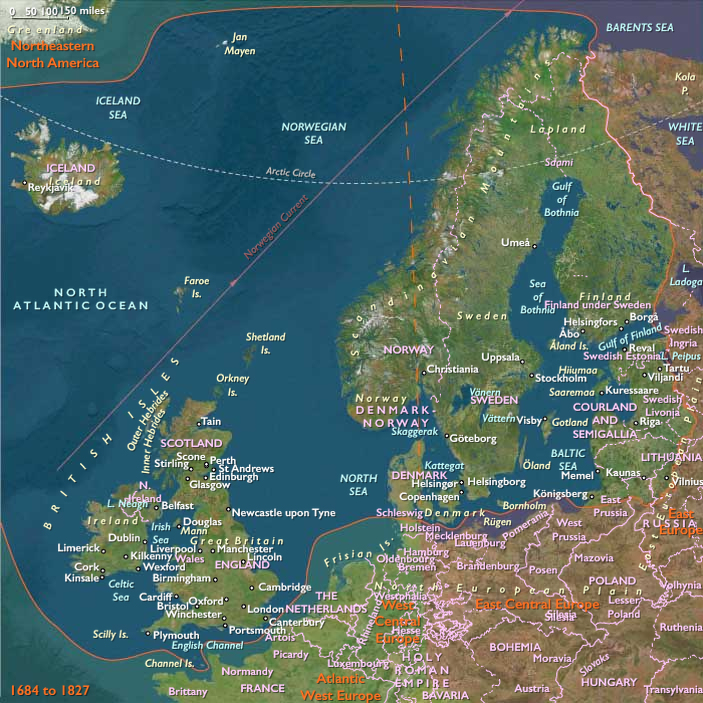
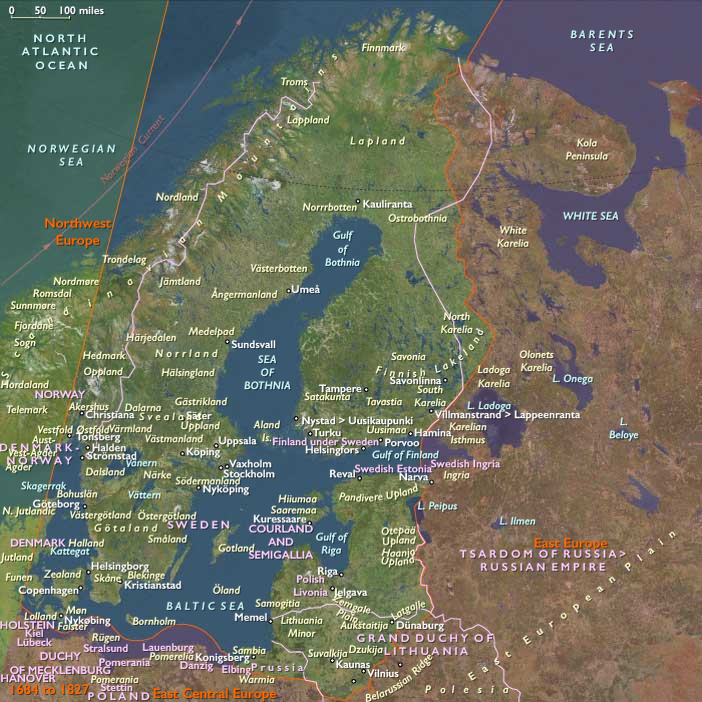
Tensions between Sweden and Russia resurfaced dramatically in the early 1740s. Encouraged by French diplomatic support, Sweden sought to reverse territorial losses suffered during the Great Northern War. The resulting Russo-Swedish War (1741–1743) ended in a clear Russian victory. The subsequent Treaty of Åbo (Turku) in 1743 forced Sweden to cede additional territory in southeastern Finland—including strategically vital fortress towns such as Lappeenranta (Villmanstrand)—to Russia. This territorial adjustment further consolidated Russian Baltic influence and substantially weakened Sweden’s geopolitical position.
Danish–Norwegian Diplomatic Stability and Economic Consolidation
Under Christian VI (r. 1730–1746), Denmark–Norway continued prudent diplomatic neutrality, largely avoiding direct entanglement in regional conflicts. Internal economic and administrative reforms enhanced stability and prosperity, with significant investments in infrastructure, education, and urban development in Copenhagen and other major cities. Danish naval power was carefully maintained, safeguarding strategic maritime trade routes.
Prussian Military and Administrative Strengthening
King Frederick William I of Prussia continued substantial internal military, administrative, and economic reforms until his death in 1740. His successor, Frederick II (Frederick the Great), accelerated these reforms, significantly enhancing Prussia’s military efficiency, centralized governance, and economic development. Under Frederick II, Prussia began asserting itself more prominently in European diplomacy, cautiously navigating regional power shifts and cultivating alliances.
Economic Resilience and Urban Prosperity
Despite regional conflicts, major urban centers—including Stockholm, Copenhagen, Königsberg, and newly flourishing Saint Petersburg—continued experiencing sustained economic resilience. Maritime trade, strengthened merchant networks, and stable urban governance facilitated ongoing regional prosperity, significantly offsetting disruptions caused by intermittent military conflicts.
Finland’s Territorial Realignment and Economic Adjustments
Finland faced significant territorial realignment and disruption resulting from the Russo-Swedish War. The loss of critical southeastern territories to Russia reshaped Finland's geopolitical role within the Swedish kingdom, compelling extensive internal economic and administrative adjustments. Nevertheless, Finland retained internal stability and economic productivity, mitigating broader impacts of territorial losses.
Cultural Flourishing and Educational Expansion
Cultural and intellectual growth continued robustly across Northeast Europe, particularly in Sweden, Denmark, and Prussia. Universities and academies benefited from heightened royal patronage and private investment, significantly advancing scholarly activities in science, literature, and philosophy. These institutions enhanced Northeast Europe's broader intellectual prominence and cultural identity despite regional turbulence.
Complex Diplomatic Realignments
Regional diplomacy during this period grew increasingly intricate. Sweden’s failed attempt to regain territory highlighted the diplomatic strength of Russia and shifted regional balance. Prussia’s emergence under Frederick II, Denmark–Norway’s careful neutrality, and continued Russian assertiveness underscored increasingly sophisticated diplomatic maneuvering aimed at maintaining regional stability and strategic advantage.
Legacy of the Era
The era from 1732 to 1743 CE significantly reshaped Northeast Europe’s geopolitical and cultural landscape through renewed warfare, territorial realignments, and sustained cultural and economic growth. The territorial adjustments stemming from the Russo-Swedish War reinforced Russia’s dominant regional position, accelerated Sweden’s geopolitical decline, solidified Prussia’s internal strength, and preserved Denmark–Norway’s diplomatic stability. These developments critically influenced regional boundaries, diplomatic relations, and cultural trajectories into subsequent decades.
People
- Augustus II the Strong
- Augustus III of Poland
- Charles XII of Sweden
- Christian VI
- Frederick IV of Denmark
- Frederick William I of Prussia
- Peter the Great
Groups
- Polytheism (“paganism”)
- Latvians, or Letts (Eastern Balts)
- Estonians
- Christians, Roman Catholic
- Finland under Swedish rule
- Crown of the Kingdom of Poland
- Lutheranism
- Sweden, (second) Kingdom of
- Denmark-Norway, Kingdom of
- Forest Finns
- Courland and Semigallia, Duchy of
- Polish-Lithuanian Commonwealth (Commonwealth of the Two Nations)
- Finland, (Swedish) Grand Duchy of
- Prussia, Kingdom of
- Baltic governorates
- Livonia, Governorate of
- Estonia, Governorate of
- Russian Empire
Topics
Subjects
Regions
Subregions
Years: 1732 - 1743
People
- Augustus II the Strong
- Augustus III of Poland
- Charles XII of Sweden
- Christian VI
- Frederick IV of Denmark
- Frederick William I of Prussia
- Peter the Great
Groups
- Polytheism (“paganism”)
- Latvians, or Letts (Eastern Balts)
- Estonians
- Christians, Roman Catholic
- Finland under Swedish rule
- Crown of the Kingdom of Poland
- Lutheranism
- Sweden, (second) Kingdom of
- Denmark-Norway, Kingdom of
- Forest Finns
- Courland and Semigallia, Duchy of
- Polish-Lithuanian Commonwealth (Commonwealth of the Two Nations)
- Finland, (Swedish) Grand Duchy of
- Prussia, Kingdom of
- Baltic governorates
- Livonia, Governorate of
- Estonia, Governorate of
- Russian Empire
Topics
Subjects
Regions
Subregions