Event
Northeast Europe (820–1971 CE): Baltic Corridors, Forest…
Northeast Europe (820–1971 CE): Baltic Corridors, Forest Societies, and Layered Sovereignties
Geographic Parameters
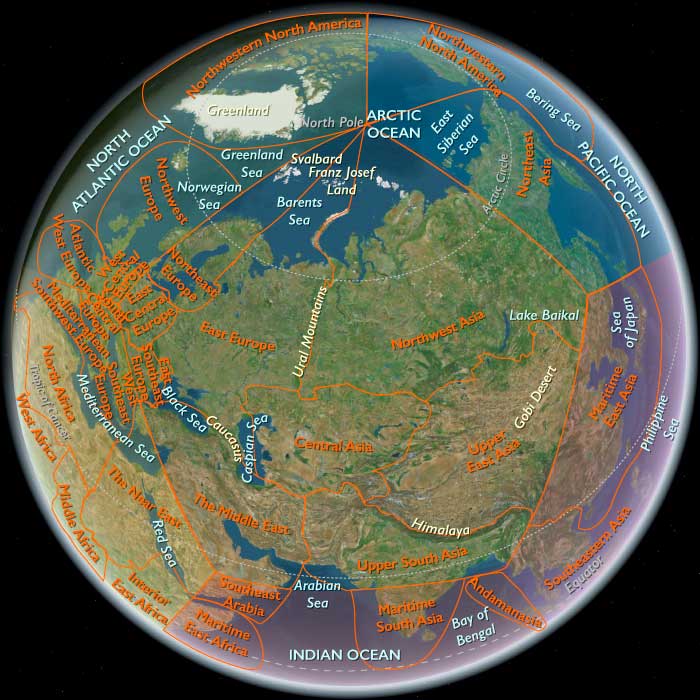
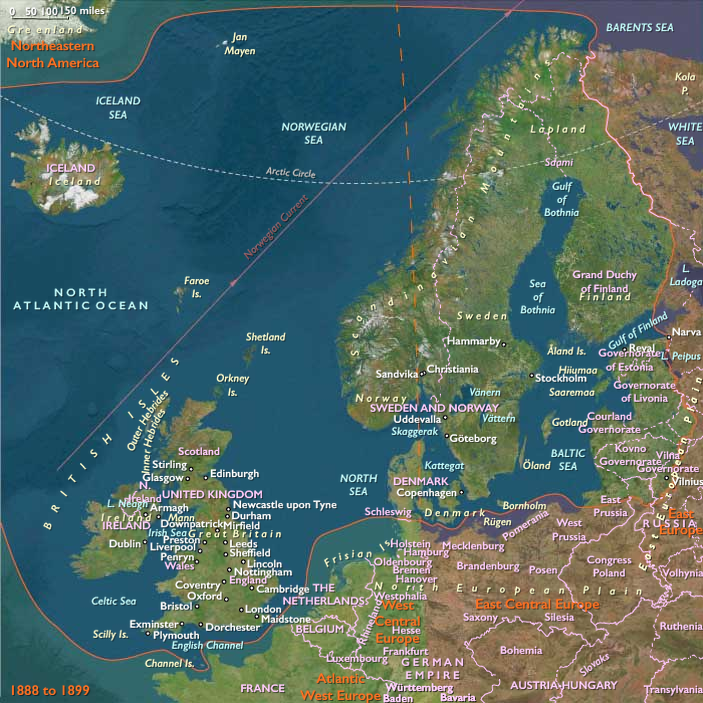
Northeast Europe comprised Sweden, Finland, Estonia, Latvia, Lithuania, the Kaliningrad coast, eastern Denmark including Zealand and Copenhagen, and eastern Norway including the Oslofjord. Its historical field was organized less by modern borders than by the Baltic Sea, the Gulf of Finland, the Gulf of Bothnia, the Øresund, the Stockholm and Åland archipelagos, the Estonian islands, the forest-and-lake interiors of Sweden and Finland, the lowland river basins of the eastern Baltic, and the sheltered coastal corridors linking Scandinavia with continental Europe and the lands of Rus’.
The region was never environmentally uniform. Southern Sweden, Denmark, Lithuania, Latvia, and parts of Estonia contained comparatively productive agricultural districts, while central and northern Sweden and Finland were dominated by boreal forest, lakes, bogs, rocky uplands, and short growing seasons. Archipelagos fragmented the coastline into thousands of channels, anchorages, fishing grounds, and seasonal routes. Rivers such as the Daugava, Nemunas, Neva, and the smaller waterways flowing into the Baltic connected inland farming, hunting, mining, and forest-product districts to maritime exchange.
Environmental Continuity
Throughout the epoch, the Baltic remained the principal connective environment. Coastal settlements, island communities, fishing grounds, forest clearings, river mouths, lake systems, and winter routes endured beneath successive layers of royal, religious, commercial, imperial, national, and industrial organization. Even when large ports, castles, shipyards, railways, or factories emerged, much of the subregion continued to consist of small farms, dispersed villages, managed woodland, wetlands, archipelagic fisheries, and seasonal transport corridors.
The forest was not an empty margin awaiting development. It supported hunting, trapping, swidden cultivation, livestock grazing, tar burning, charcoal production, timber cutting, berry gathering, ironworking, and the movement of Sámi, Finnic, Scandinavian, and Baltic communities. Lakes and coastal waters supplied fish, seals, waterfowl, reeds, winter crossings, and transport routes. Agricultural and maritime systems overlapped continually rather than replacing one another.
Climate and Environmental Change
The opening centuries of the epoch coincided with relatively favorable medieval conditions that modestly lengthened navigation seasons and supported agricultural expansion in southern Scandinavia and parts of the eastern Baltic. These conditions did not eliminate regional risk. Storms, short summers, shallow soils, spring floods, and winter sea ice continued to regulate farming, fishing, and sailing.
From the later thirteenth and fourteenth centuries, colder and less predictable conditions associated with the Little Ice Age shortened growing seasons and increased the frequency of severe winters. Harbors, rivers, and gulfs could remain frozen for extended periods, while wet summers or early frosts damaged grain harvests. Famines in Sweden, Finland, and the Baltic provinces demonstrated the vulnerability of cereal-dependent districts, especially during the 1690s and again during the Finnish famine of 1866–1868. Households responded through fisheries, livestock, forest products, food storage, seasonal migration, and local exchange.
Industrialization introduced new environmental pressures. Logging, river modification, mining, urban sewage, pulp production, shipbuilding, and chemical industries altered waterways and coastal ecologies. By the mid-twentieth century, pollution and eutrophication had become serious Baltic-wide problems, even as scientific forestry, protected areas, wildlife regulation, and municipal environmental planning began to emerge.
Peoples and Regional Societies
At the beginning of the epoch, Svear, Götar, Danes, and eastern Norwegian communities occupied agricultural, coastal, and lake districts connected by maritime retinues, local assemblies, and exchange. Finnic-speaking communities in Finland, Karelia, Åland, Estonia, and Livonia maintained farming, fishing, hunting, and forest economies linked to Scandinavian and Rus’ networks. Baltic-speaking Curonians, Semigallians, Latgalians, Lithuanians, and related societies organized around households, clan territories, hillforts, river routes, and local chiefly authority.
The Sámi occupied extensive northern and interior landscapes through fishing, hunting, reindeer use, seasonal mobility, and exchange. Their territories were gradually divided among Scandinavian and Russian taxation systems, missionary jurisdictions, mining districts, and national borders, but Sámi communities retained distinctive languages, ecological knowledge, ceremonial traditions, and economic practices.
German merchants, artisans, clergy, soldiers, and landlords became especially influential in Livonia, Estonia, Latvia, and Prussia. Slavic and Rus’ communities connected the eastern Baltic to Novgorod, Pskov, Polotsk, and later Moscow. Jewish communities contributed to trade, crafts, scholarship, and urban life, particularly in Lithuania and the larger towns, while Romani, Russian, Polish, German, Swedish, Finnish, Estonian, Latvian, Lithuanian, Danish, and Norwegian populations created a culturally layered region that could not be reduced to a single Scandinavian or Baltic identity.
Productive Landscapes
Agriculture remained the foundation of most settled districts. Rye, barley, oats, peas, flax, hemp, and later potatoes supported rural households, while cattle, sheep, pigs, horses, and dairy production supplemented grain cultivation. Southern Scandinavian agriculture gradually adopted heavier ploughing, crop rotations, drainage, land consolidation, and more intensive livestock management. In forest districts, svedjebruk and related swidden systems allowed communities to produce rye and other crops from temporarily cleared woodland.
Fishing remained indispensable along the Baltic, the gulfs, archipelagos, lakes, and Norwegian-facing waters. Herring fisheries supported coastal households, seasonal markets, and royal revenues, while inland lakes yielded pike, perch, salmon, and other freshwater species. Seal hunting survived in northern gulfs and archipelagic zones.
Forestry connected rural households to expanding commercial systems. Timber, tar, pitch, charcoal, potash, resin, bark, and firewood moved toward ports, shipyards, mines, and industrial towns. Swedish iron districts, including Bergslagen, combined ore extraction with charcoal-producing forest hinterlands. Finland developed major timber, tar, and later pulp-and-paper economies. Baltic estates exported grain, flax, timber, and forest products through Riga, Tallinn, Klaipėda, and other ports, often through coercive labor systems that concentrated wealth among noble and merchant elites.
Maritime and Overland Circulation
During the ninth and tenth centuries, clinker-built vessels connected Mälaren, Gotland, Åland, the Gulf of Finland, Estonia, Curonia, and the river routes leading toward Ladoga, Novgorod, the Volga, and the Dnieper. Market settlements such as Birka concentrated craft production and exchange without controlling the whole region. Furs, wax, honey, amber, iron, slaves, and falcons moved outward, while silver, glass, silk, weapons, and fine metalwork arrived from western Europe, Byzantium, and the Islamic world.
As Islamic silver inflows declined, merchants increasingly used German, English, Scandinavian, and locally minted coinage. Sigtuna, Lund, Stockholm, Copenhagen, Oslo, Visby, Riga, Tallinn, and other towns became increasingly important, while smaller landings and seasonal markets continued to connect farming, fishing, and forest districts to long-distance commerce.
The Hanseatic League reorganized Baltic trade around merchant privileges, urban warehouses, bulk shipping, and standardized commercial practices. Cogs and hulks carried grain, salt, cloth, timber, tar, wax, iron, and fish between Baltic ports and the North Sea. Hanseatic influence did not eliminate local cabotage, island traffic, river boats, sled routes, or household exchange. Rather, large commercial nodes depended upon dense networks of small producers, boatmen, porters, fishers, peasants, and forest workers.
Later roads, canals, steamships, railways, telegraph lines, icebreakers, ferries, and motor transport compressed travel times and strengthened capitals and industrial ports. Yet winter ice, archipelagic navigation, shallow coasts, marshes, and long forest distances continued to constrain movement.
Religion and Symbolic Geography
Norse, Finnic, Baltic, and Sámi religious systems initially shaped sacred groves, burial landscapes, household ritual, seasonal assemblies, offering places, water cults, and ancestral territories. Norse worship associated with Odin, Thor, Freyr, and other deities coexisted with Finnic reverence for sky, water, forest, and household spirits and with Baltic traditions centered on sacred groves, thunder deities, fertility, and seasonal cycles.
Christian missions established fragile early communities before conversion became closely linked to royal authority. The consolidation of Latin Christianity in Denmark, Norway, Sweden, and Finland introduced parish churches, bishoprics, monasteries, cemeteries, schools, written law, and ecclesiastical taxation. Christianization remained uneven, negotiated, and sometimes coercive. Older practices survived within household customs, folk traditions, sacred landscapes, healing, song, and seasonal ritual.
In Karelia and the eastern Baltic borderlands, Orthodox Christianity advanced through Novgorodian and later Russian institutions. Latin and Orthodox jurisdictions competed in Finland, Karelia, Livonia, and Lithuania. The Northern Crusades imposed Christian rule upon parts of Estonia and Latvia through military conquest, castle construction, forced tribute, land seizure, and the subordination of local communities.
The Reformation established Lutheranism across Scandinavia and Swedish-ruled Finland and Estonia. Parish literacy, vernacular catechisms, church registers, and religious schooling strengthened state administration while also contributing to Finnish, Swedish, Estonian, Latvian, Danish, and Norwegian written cultures. Lithuania retained a strong Catholic identity while also containing Orthodox, Protestant, Jewish, and later Russian imperial religious institutions.
Political Consolidation and Fragmentation
Early political authority remained distributed among chieftains, assemblies, royal households, fortified settlements, and maritime followings. Scandinavian kings gradually coordinated taxation, military service, law, ports, and Christian institutions, but royal authority remained dependent upon local elites and assemblies such as the ting.
Denmark controlled the western entrance to the Baltic through Zealand, Skåne, and the Øresund, while Sweden expanded around Mälaren and eventually eastward into Finland. Norway’s eastern districts remained closely tied to the Oslofjord and Danish-Swedish political competition. In the eastern Baltic, fortified local societies negotiated, resisted, or were conquered by Scandinavian, German, Polish, Lithuanian, and Rus’ powers.
The Livonian Brothers of the Sword, the Teutonic Order, and later the Livonian Order established fortified Christian territories in Prussia, Estonia, and Latvia. Their rule combined religious warfare, tribute, urban colonization, landed estates, and the political ascendancy of German-speaking elites. Indigenous Baltic and Finnic populations survived within these systems as farmers, fishers, laborers, soldiers, and local communities, though often under increasingly coercive obligations.
The Grand Duchy of Lithuania developed into a major multiethnic polity extending far beyond the Baltic coast. Its union with Poland connected the region to a wider Commonwealth while preserving distinct institutions for much of the period. The Kalmar Union attempted to unite Denmark, Norway, and Sweden under a single crown, but competing noble, mercantile, and regional interests repeatedly fractured its authority.
From the sixteenth century, the Baltic became a contested imperial field among Sweden, Denmark–Norway, the Polish–Lithuanian Commonwealth, and Russia. Sweden built a militarized Baltic empire supported by taxation, conscription, ports, iron production, and administrative reform. Its defeat in the Great Northern War transferred Estonia, Livonia, Ingria, and later influence over Finland toward the Russian Empire. Denmark retained control over Norway until 1814, while Finland became a Russian grand duchy in 1809.
War, Coercion, and Displacement
Military conflict repeatedly damaged the productive landscapes upon which states depended. Viking raiding, dynastic warfare, crusading conquest, Danish-Swedish rivalry, Muscovite expansion, the Livonian War, the Northern Wars, the Great Northern War, and Napoleonic conflicts brought requisitioning, burned settlements, conscription, famine, disease, and population movement.
Peasants in Estonia, Latvia, Lithuania, Finland, Sweden, and Denmark faced taxation, noble estate expansion, military levies, compulsory transport, and labor obligations. Serfdom and estate authority became particularly severe in the eastern Baltic. Sámi communities endured overlapping taxation, missionary pressure, settler expansion, mining, reindeer-land encroachment, and the division of seasonal territories by state borders.
The nineteenth and twentieth centuries introduced mass conscription, national border enforcement, industrial warfare, deportation, occupation, and ideological repression. Finland’s Civil War, the Winter War, and the Continuation War displaced large populations, especially from Karelia. The Soviet annexation of Estonia, Latvia, and Lithuania brought executions, imprisonment, collectivization, deportations, and the restructuring of landholding and urban life. German occupation introduced mass murder, including the near-destruction of the region’s Jewish communities, forced labor, military requisitioning, and further displacement.
Denmark and Norway experienced German occupation, resistance, collaboration, persecution, and economic control. Sweden remained formally neutral but was deeply affected through trade, refugee movements, military preparation, and diplomatic accommodation. Kaliningrad was transformed after 1945 through the expulsion or flight of its German population, Soviet settlement, military reconstruction, and the destruction or repurposing of much of the earlier cultural landscape.
Industrialization and National Infrastructure
Industrialization initially followed existing ecological corridors. Sawmills, ironworks, shipyards, textile mills, paper factories, and food-processing plants developed beside rivers, harbors, forests, and mining districts. Railways connected inland timber and agricultural regions to Stockholm, Helsinki, Turku, Riga, Tallinn, Copenhagen, Oslo, Vilnius, and other ports and capitals. Icebreakers and improved harbors extended winter trade, while telegraph and postal systems strengthened national administration.
Hydropower transformed rivers in Sweden, Finland, and Norway, supporting electrification, metalworking, pulp and paper production, engineering, and urban growth. Cooperative dairies, mechanized forestry, scientific agriculture, and rural credit systems altered household economies. Log driving, horse transport, and small coastal shipping persisted alongside railways and trucks for much of the modern period.
Twentieth-century capitals and industrial towns acquired tramways, apartment districts, shipyards, power stations, warehouses, modernist housing, and suburban transport. These systems remained geographically concentrated. Beyond them, much of Northeast Europe continued to consist of farms, fishing villages, islands, forests, wetlands, small towns, and Sámi pastoral territories.
National Movements and Cultural Transformation
Vernacular literacy, parish schooling, folklore collection, newspapers, associations, song festivals, cooperatives, and political movements contributed to the formation of modern national identities. Finnish-language literature drew upon oral poetry later assembled in the Kalevala. Estonian and Latvian song traditions became central to cultural mobilization. Lithuanian resistance to the Russian press ban was sustained by the knygnešiai, who carried prohibited books across imperial borders.
National awakenings did not produce culturally uniform states. Swedish-speaking communities remained important in Finland; German, Russian, Polish, Jewish, Sámi, Romani, and other populations continued to shape regional life. Urban culture drew upon international artistic, architectural, industrial, and political movements, while rural communities preserved local building forms, textile traditions, music, seasonal festivals, fishing knowledge, and cooperative institutions.
After independence in 1918, Finland, Estonia, Latvia, and Lithuania developed national administrations, educational systems, land reforms, and cultural institutions. Authoritarian governments later emerged in parts of the region, while the Soviet annexation of the Baltic states imposed new ideological, linguistic, economic, and demographic structures. Nordic welfare-state development after the Second World War expanded public housing, education, healthcare, transport, and social insurance in Sweden, Denmark, Norway, and Finland.
Adaptation and Resilience
Northeast European resilience rested upon diversification. Farms combined grain, livestock, gardens, fishing, forest work, craft production, and seasonal employment. Coastal communities shifted among herring, cod, sealing, shipping, boatbuilding, and port labor. Forest households produced timber, tar, charcoal, potash, berries, game, and fodder. Sámi communities adjusted reindeer movement, fishing, trade, and household production under changing taxation, borders, and market pressures.
Communal institutions also mattered. Village assemblies, parishes, cooperatives, guilds, mutual-aid societies, labor organizations, religious congregations, and extended family networks redistributed food, labor, credit, and information. Modern welfare institutions expanded this capacity but did not replace local knowledge of winter travel, food preservation, forestry, fishing, and climatic variability.
Political survival likewise required flexibility. Finland preserved sovereignty through difficult accommodation between Soviet security demands and western commercial ties. Sweden combined neutrality with military preparation and international trade. Denmark and Norway entered NATO while strengthening Nordic cooperation. Estonia, Latvia, and Lithuania maintained cultural memory, language, religious life, and national identification despite Soviet repression and demographic transformation.
Legacy of the Epoch
Between 820 and 1971 CE, Northeast Europe developed from a dispersed field of forest, farming, fishing, and maritime societies into one of the world’s most intensively connected cold-water regions. Baltic exchange, Christian institutions, Hanseatic commerce, crusading conquest, royal administration, estate agriculture, Swedish and Russian imperial expansion, national movements, industrial infrastructure, world war, Soviet annexation, and Nordic welfare development accumulated without erasing the environmental systems beneath them.
The epoch’s most enduring structure was not any single kingdom, empire, city, or ideology. It was the repeated organization of movement across a difficult mosaic of sea, archipelago, forest, lake, river, bog, field, and winter ice. Ports, churches, castles, estates, railways, shipyards, factories, and national capitals depended upon households that continued to farm, fish, herd, cut timber, maintain boats, preserve food, cross frozen waterways, and adapt to short growing seasons.
By 1971, Northeast Europe had become both a highly integrated Baltic corridor and a divided Cold War frontier. Nordic welfare states, neutral Sweden, treaty-constrained Finland, NATO-aligned Denmark and Norway, Soviet-ruled Estonia, Latvia, Lithuania, and militarized Kaliningrad occupied the same connected sea. Ferries, railways, electrical grids, industrial ports, communications systems, and cultural institutions bound the region together even as political borders restricted movement. Beneath that division remained the older environmental and cultural continuities that would shape later ecological cooperation, renewed Baltic sovereignty, Sámi political revival, and the post-industrial rebalancing of the region.
-
{# Image navigates to the detail page; the magnifying-glass chip is the only Fancybox lightbox trigger (kept a separate sibling — anchors can't nest). #}
 The Great Crossroads
World
-
{# Image navigates to the detail page; the magnifying-glass chip is the only Fancybox lightbox trigger (kept a separate sibling — anchors can't nest). #}
 North Europe
Region
-
{# Image navigates to the detail page; the magnifying-glass chip is the only Fancybox lightbox trigger (kept a separate sibling — anchors can't nest). #}
 Northeast Europe
Subregion